FITNESS SUPERSTORE BLOG

Whether you're a beginner or a seasoned gym owner, we've got you covered with expert tips on how to maximize each piece of equipment to achieve your fitness goals! From selecting the perfect gear to crafting tailored workout routines, our blog is your ultimate resource for unlocking your full potential

No articles found matching your search.

Comparisons

Side-by-side image of two women performing overhead barbell lifts in a gym, each using weight plates from different brands.
James C.

French Fitness vs. Titan Fitness: A Detailed Equipment Comparison

Shopping for gym equipment means wading through dozens of brands, each claiming to offer the best combination of quality and...

See more
Shopping for gym equipment means wading through dozens of brands, each claiming to offer the best combination of quality and price. Two names that consistently come up are French Fitness and Titan Fitness, but these two take very different approaches to getting equipment into your gym. French Fitness assembles commercial-grade gym equipment in California, emphasising craftsmanship and durability. Titan Fitness keeps prices low by importing equipment and offering one of the industry's broadest product catalog. Both strategies work, but they work for different people. With that in mind, we’ve put together a Titan vs French Fitness review to help you decide which makes the most sense for your needs. French Fitness vs. Titan Fitness – Key Differences at a Glance Quality and Construction: Where Your Equipment Comes From Matters Design and Engineering: Depth vs. Breadth Warranty and Support: The Real Cost of Ownership Pricing and Long-Term Costs: The Math You Need to Do Which Brand is Right for Your Gym? French Fitness vs. Titan Fitness – Key Differences at a Glance Choosing between French Fitness and Titan Fitness? Here’s the quick breakdown that shows exactly which brand delivers more value for your home or commercial gym: Feature French Fitness Titan Fitness Manufacturing Assembled in Benicia, California Primarily imported from China with some USA-made items Quality Control 7-step inspection process in California Standard factory QC at point of manufacture Primary Materials Commercial-grade steel comparable to premium brands High-grade materials with focus on affordability Core Focus Quality craftsmanship and long-term durability Aggressive pricing and broad accessibility Frame Warranty Lifetime 1 Year Parts Warranty 10 Years 1 Year Labor Warranty 1 Year Not explicitly included Price Range Mid-range pricing Budget-friendly pricing Quality and Construction: Where Your Equipment Comes From Matters The origin of your gym equipment isn’t just a detail. It’s the difference between years of reliable performance and constant repairs: French Fitness: Assembled and Inspected in California Every French Fitness machine is assembled in Benicia, CA, where it goes through a 7-step quality control process before it ships. This isn't a quick once-over. Technicians check the frame, test the motion, inspect the cosmetics, and ensure everything works as it should. It's the kind of attention you'd expect from a company whose founder spent years taking apart and rebuilding equipment from brands like Cybex and Life Fitness. That background matters. When you've spent two decades fixing other people's machines, you learn exactly where they fail and why. French Fitness uses that knowledge to build equipment with commercial-grade steel and the exact specifications you'd find in premium brands, just without the premium price tag. The result is equipment that feels solid the moment you use it. Titan Fitness: Volume and Variety at Low Prices Titan Fitness keeps costs down by importing most of its equipment, enabling it to offer an enormous catalog at hard-to-beat prices. If you're trying to outfit a home gym on a tight budget, this approach makes a lot of sense. They do manufacture some items in the USA, but the majority of their products are made in overseas factories. The trade-off is straightforward: you get functional equipment that does the job, but you're not getting the same level of hands-on quality control as gym equipment assembled in California. Titan's equipment is built with high-grade materials and designed for regular use. That said, the inspection process happens at the factory level rather than unit-by-unit in the United States. What This Means for You If you care about where your equipment is made and want peace of mind knowing experienced technicians have inspected every unit, French Fitness is your best choice. If your main concern when comparing commercial gym equipment is getting equipment quickly at the lowest possible price, Titan's import model is designed for exactly that. Design and Engineering: Depth vs. Breadth When it comes to gym equipment, doing more isn’t the same as doing it better. Actual performance comes from deeper design, not a more expansive catalog: French Fitness: Built by People Who Fix Equipment for a Living There's something to be said for learning by doing. French Fitness grew out of Fitness Superstore, a business that specialized in remanufacturing and servicing high-end gym equipment. That means the people designing French Fitness machines have spent years working on equipment from the world's best brands. That meant learning what breaks, what lasts, and what makes a machine feel right. This expertise shows up in the details. French Fitness equipment is built to be durable and safe over the long term, not just functional out of the box. They also offer customisation options, such as custom color and logo placement, which are rare in high-end commercial equipment. If you're outfitting a facility and want your equipment to match your branding, that's a significant advantage. Titan Fitness: Something for Everyone Titan's strength is variety. They offer an extensive catalog that covers almost every piece of equipment you might need. Their catalog is organized into tiered product lines (T-2, T-3, X-3, and TITAN) that let you choose based on your budget and feature requirements. This makes it easy to start with a basic setup and upgrade over time as your needs change. The downside is that with such an extensive catalog, maintaining consistency can be more difficult. Some products are excellent for the price, while others may have quality control issues. This can be a common challenge for brands that rely on high-volume imports. What This Means for You French Fitness offers a more focused selection built on deep industry knowledge, which appeals to people who want equipment designed to last. Titan offers more options across a wider price range, which is helpful if you need flexibility or want to mix and match based on your budget. Warranty and Support: The Real Cost of Ownership A great deal isn’t great if the support disappears when you need it. The warranty behind the equipment shapes your long-term costs: French Fitness: A Decade of Protection Any worthwhile comparison of commercial gym equipment has to take warranties into account. French Fitness backs their commercial gym equipment with a lifetime warranty on the frame, 10 years on parts, and 1 year on labor. That's one of the best warranties in the industry, and it reflects how the equipment is built. The warranty covers mechanical and electrical issues, labor costs, on-site technician services, and complete parts replacement. This coverage matters more than you might think. A power rack or functional trainer isn't a small purchase, and knowing that it's protected for a decade gives you absolute peace of mind. French Fitness also offers weekend customer support and direct CEO involvement in resolving issues, unusual for a company of their size. Titan Fitness: One Year and You're On Your Own Titan offers a 1-year warranty on all products, covering manufacturing defects. That's standard for budget-focused brands, but it's worth understanding what it means. If something breaks after the first year, you're responsible for repairs or replacement. The warranty also requires that claims be submitted within 90 days of a reported failure, which can be a tight window if you overlook an issue right away. For equipment that costs a few hundred dollars, a one-year warranty might be acceptable. For larger, more expensive pieces, it's a risk you need to consider. What This Means for You The warranty difference is enormous. French Fitness protects your investment for up to a decade, helping you save hundreds or even thousands of dollars on repairs and replacements. Titan's one-year coverage is fine for inexpensive items, but for major equipment, it leaves you exposed after the first year. Pricing and Long-Term Costs: The Math You Need to Do If you’re only comparing price tags, you’re missing the math that actually matters. Long-term cost is where good decisions pay off. French Fitness: Pay More Now, Save Later French Fitness sits in the mid-range price category. You'll pay more upfront than you would for Titan, but less than you'd pay for premium brands like Precor or Life Fitness. The key is to think about the cost of ownership per year. If a French Fitness power rack costs $1,500 and lasts 15 years with minimal repairs (thanks to that 10-year parts warranty), you're paying $100 per year. If a $700 Titan rack needs to be replaced after 5 years, you're paying $140 per year, and that's assuming no repair costs. This isn't just hypothetical. Equipment that's built better and backed by a strong warranty simply lasts longer and costs less to maintain. Titan Fitness: Low Entry Point, Higher Risk Titan's appeal is simple: you can build a functional home gym for significantly less money up front. Free shipping on all orders sweetens the deal even more. If you're starting on a tight budget or are not sure how committed you are to your fitness routine, this makes sense. The trade-off is that you're accepting more risk. The equipment may not last as long, and once the warranty expires, you're on your own. For some people, that's a perfectly acceptable trade-off. For others, it's not. What This Means for You Run the numbers based on your situation. If you're building a commercial gym or a serious home setup that you'll use for years, French Fitness is likely the more intelligent financial decision over time. If you need to keep upfront costs low and are willing to replace equipment later, Titan gets you started faster. Which Brand is Right for Your Gym? Titan Fitness makes sense if: You need to outfit a gym on a strict budget and can't afford mid-range pricing right now. You're comfortable accepting some risk in exchange for lower upfront costs. You may be new to fitness and want to start with affordable equipment before committing to higher-end gear. French Fitness makes sense if: You want equipment that's built to last, backed by a warranty that actually protects you, and assembled in California by people who know what they're doing. You're thinking about the next 10-15 years, not just the following year. You value quality and are willing to pay a bit more upfront to avoid headaches later. Explore how French Fitness equipment is engineered for durability and value — Shop French Fitness Equipment. Titan Fitness® is a registered trademark of Titan Distributors, Inc. French Fitness is not affiliated with or endorsed by Titan Fitness or any other mentioned brands. Product data used for comparison is based on publicly available information as of November 2025.
Athlete setting up for a barbell deadlift inside a gym featuring French Fitness all-in-one training equipment and rigs.
James C

Powerlifting vs. Strongman: 12 Key Differences You Must Know

Powerlifting and Strongman training both celebrate raw strength, but they do it in very different ways. Powerlifters focus on mastering...

See more
Powerlifting and Strongman training both celebrate raw strength, but they do it in very different ways. Powerlifters focus on mastering three lifts: the squat, bench press, and deadlift, chasing absolute precision and measurable progress. Strongman athletes, on the other hand, thrive on variety, pushing their limits through unconventional challenges like atlas stones, logs, and yokes. Whether your goal is to increase your one-rep max or build total-body power that performs in real life, you need commercial-grade powerlifting equipment and strongman training gear that’s built to last. At Fitnes Superstore, we supply power racks, bars, and functional trainers designed to fuel serious strength athletes in both worlds, at prices that make sense. Both athletes chase power, but how they build it couldn’t be more different. Let’s break down what truly separates Powerlifting from Strongman. 1) Powerlifting Has Specific Strength Goals 2) Strongman Prioritizes Versatility and Functional Power 3) Powerlifting Relies on Static Strength 4) Strongman Combines Strength with Endurance and Speed 5) Powerlifting Uses Standardized Equipment 6) Strongman Training Uses Unconventional Implements 7) Powerlifting Focuses on Precision and Form 8) Strongman Encourages Adaptability 9) Progressive Overload Works Differently 10) Powerlifting Competitions Focus on Three Core Events 11) Strongman Competitions Feature a Wide Variety of Events 12) Coaching and Recovery Differ Between the Two Recommended Equipment Comparison Chart Which Should You Choose? FAQs 1. Powerlifting Has Specific Strength Goals Powerlifting revolves around three key lifts: the squat, bench press, and deadlift. Every rep is about generating maximum power in a single controlled movement. The goal is simple yet demanding: lift as much weight as possible for one repetition while maintaining perfect form. This structure provides athletes with measurable progress and clear benchmarks to pursue. Powerlifters thrive on precision and consistency, refining their technique to squeeze every ounce of power from each lift. For anyone who values structure, accountability,  and long-term progression, powerlifting provides a clear path toward disciplined strength. 2. Strongman Prioritizes Versatility and Functional Power Strongman is built on the principle of adaptability. Rather than focusing on three standardized lifts, Strongman athletes prepare for unpredictable, full-body challenges that mimic real-world movement. They lift, carry, drag, and press objects of all shapes and sizes, from stones and logs to kegs and yokes. This training develops functional strength that goes beyond the gym, improving grip, endurance, and overall athleticism. Each event demands strength under fatigue, quick problem-solving, and mental toughness. Strongman competitors must be prepared for anything, making this sport ideal for lifters who enjoy variety and thrive in ever-changing environments. For gym owners or athletes seeking the same versatility, the French Fitness FFB Black Dual Adjustable Pulley (New) delivers full-body strength training with unlimited movement options. 3. Powerlifting Relies on Static Strength In powerlifting, strength is measured in static positions. The barbell doesn’t move across distances or through unpredictable ranges; the athlete moves it vertically, under strict control. Static strength enables lifters to channel all their energy into a single explosive moment. Each movement is slow, deliberate, and precise, emphasizing power production from a solid base. This type of training conditions the body to recruit as many muscle fibers as possible and to develop superior neuromuscular control. Static strength not only builds a powerful frame but also reinforces joint and tendon stability. It’s an approach rooted in patience, precision, and technique, perfect for athletes who love measurable progress and the pursuit of personal bests. 4. Strongman Combines Strength with Endurance and Speed Strongman training bridges the gap between strength and conditioning. Athletes not only lift heavy weights but also carry them over distances, flip massive tires, or push vehicles under time pressure. This blend of endurance and strength creates total-body athleticism. Success depends on moving heavy loads efficiently and quickly, a test of both muscle and heart. Unlike powerlifting, where rest between sets is long, Strongman training often uses circuits or timed intervals that challenge cardiovascular capacity. The combination of speed and stamina ensures that athletes develop explosive power that can be maintained under fatigue. It’s a sport that rewards those who can stay strong when others tire out. 5. Powerlifting Uses Standardized Equipment Powerlifting’s appeal lies in its consistency. Every competition uses the same barbell, plates, bench, and squat rack, allowing athletes to train and compete under identical conditions. This standardization ensures that progress is measurable and fair.  In training, lifters rely on quality commercial-grade equipment that mirrors competition setups, stable benches, rigid racks, and calibrated plates. The focus on uniformity helps athletes perfect their technique with precision and safety. Train like a pro with commercial-grade Power Racks and adjustable benches that replicate competition conditions. Consistency builds confidence, and confidence builds results. 6. Strongman Training Uses Unconventional Implements Strongman athletes rarely train with just a barbell. They lift stones, carry sandbags, press logs, drag sleds, and flip tires. These unpredictable objects require more than brute force; they test grip, leverage, and balance. You can replicate this style at home or in your gym with Functional Trainers, sleds, and grip accessories that target total-body power safely. Strongman training builds usable strength that transfers to everyday movement and real-world tasks. At Fitness Superstore, we recommend versatile tools like the French Fitness FSR90 Functional Trainer Smith & Squat Rack Machine (New) and sleds for those who want to safely replicate Strongman-style exercises at home or in a commercial gym. 7. Powerlifting Focuses on Precision and Form Perfecting technique is the foundation of powerlifting success. From the angle of your feet to the bar path, every detail affects performance and safety. Lifters spend years refining form to maximize leverage and reduce injury risk. Training cycles are often divided into phases, volume work, intensity blocks, and peaking periods, to reinforce both strength and form. The mental focus required makes powerlifting as much a discipline of patience as of power. Mastering proper alignment and breathing patterns allows lifters to perform consistently and confidently. Precision ensures longevity in the sport and steady progress toward personal records. 8. Strongman Encourages Adaptability Strongman athletes must constantly adapt to new events, equipment, and challenges. One competition might include a truck pull, while the next features a keg toss. Because of this variability, Strongman training builds problem-solving skills and resilience. Athletes must quickly assess how to grip, lift, or move an object they’ve never encountered before. This adaptability extends to mental toughness; every session demands perseverance under pressure. It’s what makes Strongman training unpredictable, exciting, and deeply rewarding. For athletes who dislike repetitive routines, this format delivers constant challenges and opportunities to grow stronger across multiple dimensions of performance. 9. Progressive Overload Works Differently In powerlifting, training follows a linear progression, gradually adding weight to the bar in a predictable structure. This systematic overload helps lifters build strength steadily and prevent plateaus. Strongman training, however, takes a more flexible approach. Athletes might increase distance, reps, or time under load rather than just weight. This nonlinear style simultaneously develops multiple attributes, such as strength, endurance, and coordination. Both methods rely on progressive overload, but Strongman demands creativity, while powerlifting thrives on precision. Each approach can complement the other; many lifters combine them to achieve both controlled power and functional strength in their overall training programs. 10. Powerlifting Competitions Focus on Three Core Events Powerlifting meets are simple in structure but intense in execution. Every athlete performs three lifts —the squat, bench press, and deadlift —each with three attempts. The heaviest successful lift in each category is combined for a total score. Competitions emphasize discipline, technique, and composure under pressure. Because rules are standardized, success comes down to preparation and precision. Every detail, from warm-ups to rest timing, affects the outcome. For athletes who enjoy structure, clear rules, and direct competition with measurable results, powerlifting offers a fair and focused platform to showcase pure strength. 11. Strongman Competitions Feature a Wide Variety of Events Strongman contests are unpredictable and dynamic. Events change from one competition to another, testing not only strength but also versatility. Athletes might press logs overhead, carry farmers’ handles, or load atlas stones onto platforms. Some events test endurance, while others reward explosive power. The variety keeps both athletes and audiences engaged, as no two contests are identical. This unpredictability makes Strongman one of the most entertaining strength sports in the world. Train for this diversity with French Fitness All-in-One Trainers that let you safely replicate strongman-style compound movements. 12. Coaching and Recovery Differ Between the Two Powerlifters often train under structured coaching programs designed around volume, intensity, and recovery. Every rep is tracked, and deload weeks are scheduled to maintain progress. Strongman athletes, however, must tailor recovery around highly varied workloads. They rely heavily on mobility work, soft tissue therapy, and active recovery days. Coaching in Strongman emphasizes versatility, and programming includes heavy lifts, conditioning, and skill work for multiple event types. Both athletes value rest as much as training, since recovery is where strength truly builds. Choosing the right balance between effort and recovery defines long-term success in either sport. Recommended Equipment for Powerlifters and Strongman Athletes Whether you’re chasing powerlifting records or training for Strongman events, having the right equipment makes all the difference. Here’s what every serious strength athlete should have in their setup: Power Racks & Cages: Heavy-duty frames for squats, presses, and pulls, offering safety, stability, and adjustability for progressive strength training. Weight Benches: Durable adjustable benches for flat, incline, and decline presses. Ideal for powerlifting and accessory strength work.. Functional Trainers: Versatile cable systems for dynamic strength, stability, and conditioning. Great for Strongman accessory training.. Plates & Bars:  Precision-calibrated plates and balanced barbells built for accuracy, safety, and consistent heavy lifting performance. Powerlifting vs. Strongman: The Complete Comparison Beyond the Barbell While both sports demand incredible strength, the way that powerlifters and Strongman athletes train, compete, and measure success couldn’t be more different: Category Powerlifting Strongman Primary Objective Achieve the highest possible one-rep max in squat, bench, and deadlift Display total-body power, speed, and endurance across varied events Skill Development Focused on perfecting limited lifts with precision and control Builds adaptability, coordination, and real-world strength Event Scoring Based on total combined lift weight (Wilks or DOTS formula) Scored by time, distance, reps, or total load across multiple events Judging Criteria Strict form enforcement and standardized depth/range of motion Looser technical judging, emphasizing completion and speed Injury Risk Profile Lower risk due to controlled movement patterns Higher due to unpredictable events and fatigue-based activities Training Frequency Typically 3–4 structured sessions per week Often 4–6 varied sessions mixing strength and conditioning Mental Approach Precision, patience, and long-term progression Resilience, problem-solving, and grit under chaos Nutrition Focus Emphasis on maintaining power-to-weight ratio and recovery Prioritizes calorie surplus for mass, hydration, and endurance fuel Equipment Cost Relatively affordable: rack, bench, barbell, and plates Higher, includes specialty gear such as logs, yokes, stones, sleds, and harnesses Community Culture Technical and data-driven; individual performance emphasis Tight-knit and supportive; community-driven and event-based Body Composition Trend Compact, dense physiques optimized for leverage Larger, bulkier builds to manage load and momentum Career Longevity Easier to sustain due to structured mechanics and lower volume Physically demanding with shorter peak competitive years Powerlifting vs. Strongman: Which Should You Choose? Both sports build strength, confidence, and discipline, but they cater to different personalities. Powerlifting suits those who thrive on structure and measurable progress. Strongman appeals to those who crave variety, functional movement, and challenge. Some athletes even blend both, using powerlifting to build base strength and Strongman to apply it. Regardless of the path you choose, success starts with high-quality equipment. At Fitness Superstore, we offer commercial-grade racks, barbells, and all-in-one trainers built for both training styles, helping you push limits safely and effectively. Ready to take your training to the next level? Shop premium French Fitness strength equipment today or visit our Benicia showroom to experience the difference in person. FAQs About Powerlifting and Strongman Training 1: What equipment do I need to start powerlifting at home? Start with a sturdy power rack, adjustable bench, Olympic barbell, and quality weight plates. Add flooring and spotter arms for safety. 2: Can Strongman training replace traditional gym workouts? Yes. Strongman workouts improve strength, endurance, and coordination, making them an excellent alternative or complement to standard training. 3: Is powerlifting safer than Strongman? Both are safe with proper technique, programming, and recovery. Strongman adds more dynamic elements, so supervision and preparation are key. 4: Can women compete in Powerlifting and Strongman? Absolutely. Both sports have female divisions with inclusive weight classes and supportive communities. 5: How often should I train for either sport? Most powerlifters train three to four days a week. Strongman athletes train four to five times weekly, combining strength and conditioning work.  
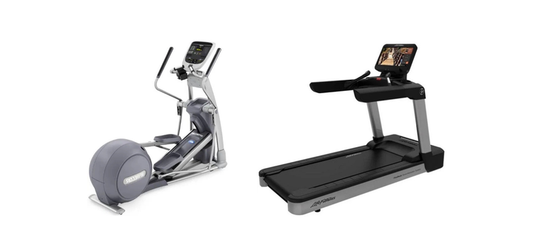
Side-by-side comparison of an elliptical trainer and a treadmill with a large VS symbol in the center, representing a comparison between the two cardio machines.
James C

Elliptical vs Treadmill: Which Machine Fits Your Fitness Needs Best?

Choosing between an elliptical vs treadmill depends on how you train and how your body responds to impact. A treadmill simulates outdoor running...

See more
Choosing between an elliptical vs treadmill depends on how you train and how your body responds to impact. A treadmill simulates outdoor running and is popular with athletes who want speed, incline, and endurance conditioning. An elliptical is easier on the knees and a great option for low-impact aerobic exercise, since using an elliptical can reduce pressure on your joints while still challenging your muscles. Unlike treadmills, which often require more floor space and are generally pricier than ellipticals, an elliptical can deliver a low-impact workout that engages more muscles. In fact, ellipticals activate more upper-body and quadriceps muscles than treadmills, and some models mimic the motion of running without added strain. For buyers who want long-term value, the elliptical is better than the treadmill for joint protection, while a treadmill suits those prioritizing calorie burn and outdoor training realism. At Fitness Superstore, you'll find both ellipticals and treadmills built for commercial gyms or home setups, making it simple to invest in the machine that truly supports your goals. Key Takeaways on Elliptical vs Treadmill Workouts Key Differences: Motion, Muscle Engagement, and Impact Level Calories Burn: Do Treadmills Help You Burn More Than Ellipticals? Joint Safety: Which Cardio Machine Is Better for Low-Impact Exercise? Full-Body Workout Comparison Weight Loss Efficiency Cost Breakdown Choosing the Right Machine Where to Buy: Fitness Superstore Making the Final Choice FAQs Key Takeaways on Elliptical vs Treadmill Workouts Before going deep into specifications and comparisons, here are the essential key points every buyer should know about the cardio comparison between these two machines: Calorie Burn & Decision Factors: Treadmills generally burn more calories per hour at running pace (around 600-800 calories), while ellipticals burn 400-600 calories depending on resistance. The difference narrows when you factor in workout sustainability and joint comfort. Elliptical Benefits for Joint Protection: Ellipticals deliver the clear advantage for low-impact exercise. Your feet never leave the pedals, reducing stress on knees, hips, and ankles by up to 50% compared to treadmill running. Treadmill Advantages for Runners: Treadmills offer higher impact, which can strengthen bones and provide the most realistic training for outdoor running. These treadmill advantages make them ideal for race preparation and speed work. Muscle Engagement Differences: Ellipticals activate upper-body muscles (arms, chest, shoulders) through moving handlebars, plus recruit quadriceps and glutes. Treadmills focus almost entirely on lower-body muscles with minimal upper-body involvement. Cost & Decision Factors: Ellipticals typically start at $500-$1,500 for quality home models, while treadmills range $800-$3,000. Commercial-grade options push higher, but ellipticals consistently cost 20-40% less than comparable treadmills. Space Requirements: Treadmills demand more floor space (averaging 6.5' x 3') and weigh significantly more. Ellipticals offer a smaller footprint (5' x 2.5') and easier portability, making them ideal for apartments or multipurpose rooms. Best for Long-Term Use: The elliptical benefits include sustainable cardio that protects joints while building cardiovascular endurance, making them the top choice for anyone managing arthritis or seeking injury-free training. Key Differences: Motion, Muscle Engagement, and Impact Level Treadmills and ellipticals both support cardio, but they function differently in how they move, which muscles they engage, and how much stress they place on joints. Comparison Factor Treadmill Elliptical Motion Patterns Linear, weight-bearing stride that mimics walking or running. Feet strike the belt with each step, creating repetitive impact. Incline adjustments change stride angle and intensity. Gliding, elliptical arc with feet secured to pedals. No foot strike or impact phase. Handlebars create synchronized upper and lower body movement. Reverse stride option changes muscle emphasis. Muscle Activation Primarily targets lower body: glutes, quadriceps, hamstrings, and calves. Core engages for stability during incline work. Upper body remains mostly passive unless using handrails for balance. Engages both upper and lower body simultaneously. Quadriceps, glutes, and hip flexors drive leg motion. Arms, chest, shoulders, and back activate through handlebar push-pull. Core stabilizes throughout the movement. Joint Impact High-impact exercise with repetitive foot strikes generating 2-3x body weight force per step. Cushioned decks reduce but don't eliminate stress on knees, hips, and ankles. Higher bone density stimulus but greater injury risk for sensitive joints. Low-impact, zero-strike cardio. Feet remain in constant contact with pedals, eliminating ground reaction forces. Reduces joint stress by up to 50% compared to running. Ideal for arthritis, joint recovery, or long-term sustainability without wear. These differences in motion patterns, muscle activation, and joint impact influence which machine feels more natural or sustainable for individual users based on their training history, physical limitations, and long-term fitness objectives. Calories Burn: Do Treadmills Help You Burn More Than Ellipticals? Both machines burn calories effectively, but the amount depends on speed, intensity, and resistance. Studies show treadmills have slightly higher calorie expenditure at running pace (600-900 calories per hour), while ellipticals can match this energy burn with increased resistance (500-700 calories per hour). The real difference comes down to workout intensity and sustainability. Treadmill vs Elliptical: Calories Burned at Different Intensities Intensity directly impacts calorie burn comparison between these machines. Treadmills at running pace (6 mph) burn ~360 calories in 30 minutes, while ellipticals at moderate resistance levels burn ~324 calories. Adding incline or increasing resistance levels can boost calorie expenditure 20-40% on either machine. Intensity Level Treadmill (155 lb person) Elliptical (155 lb person) Walking Pace (3.5 mph, flat) ~140 calories/30 min N/A (not comparable) Moderate Running (6 mph, flat) ~360 calories/30 min ~324 calories/30 min (moderate resistance) High-Intensity Running (8 mph or 5% incline) ~450-500 calories/30 min ~400-450 calories/30 min (high resistance + active arms) HIIT Intervals (sprint/recovery cycles) ~500-550 calories/30 min ~450-500 calories/30 min (max resistance intervals) Which Machine Keeps You in the Optimal Calorie-Burning Zone? Treadmills raise heart rate faster with high-intensity intervals, ideal for peak calorie-burning zones during short workouts. Ellipticals allow steady-state cardio that keeps users in the fat-burning zone longer without joint fatigue, supporting sustained metabolic rate elevation over 45-60 minute sessions. Choose treadmills for explosive HIIT training bursts or ellipticals for consistent cardio you can maintain without overloading your body. Heart Rate Zone Benefits: Treadmill vs Elliptical Treadmill – Peak Cardio Zone (80-90% max HR): Interval sprints and incline runs spike heart rate quickly, maximizing calorie burn in 20-30 minutes. Best for time-efficient workouts and athletes training for performance. Elliptical – Fat-Burning Zone (65-75% max HR): Smooth, sustained motion keeps heart rate elevated in the optimal fat oxidation range. Ideal for longer sessions (45+ minutes) without joint stress or burnout. Workout Duration Impact: Treadmills excel in short, intense sessions where you push limits. Ellipticals shine in extended cardio where sustainability matters more than peak intensity. Sustainability Factor: Ellipticals let you stay in calorie-burning zones longer because reduced impact means less muscle fatigue and joint strain, supporting consistent training frequency week after week. Joint Safety: Which Cardio Machine Is Better for Low-Impact Exercise? Ellipticals are widely recommended for low-impact exercise because your feet never leave the pedals, eliminating the repetitive joint stress that comes with treadmill running. Treadmills deliver higher impact with every foot strike, but they offer benefits for bone density development and functional strength when used at walking pace. Joint Safety Comparison: Elliptical vs Treadmill Impact Force Reduction: Ellipticals eliminate ground reaction forces entirely (zero impact), while treadmills generate 2-3x body weight with each step. For a 180-pound person, that's 360-540 pounds of force per stride on a treadmill versus zero on an elliptical. Knee Pain Management: Ellipticals are the clear winner for knee pain. The gliding motion removes the compression phase that aggravates patellar tracking issues and meniscus inflammation. Treadmills can worsen knee problems, especially at running speeds. Arthritis-Friendly Design: Medical professionals routinely prescribe elliptical training for osteoarthritis patients because the smooth, controlled motion maintains cardiovascular fitness without inflaming sensitive joints. This arthritis-friendly approach allows consistent training without flare-ups. Bone Density Benefits: Treadmills provide weight-bearing impact that stimulates bone growth, making them valuable for preventing osteoporosis in younger, healthy users. Ellipticals don't offer this skeletal loading, so they won't strengthen bones the same way, though they preserve joint health for long-term training consistency. Full-Body Workout Comparison: Upper, Lower, and Core Engagement Muscle engagement differs significantly between treadmills and ellipticals, with each machine targeting different body zones based on movement patterns and resistance options. Treadmills focus almost entirely on lower-body development, while ellipticals recruit both upper and lower muscle groups simultaneously for true full-body workout potential. Understanding muscle recruitment patterns and core stability demands helps you choose the machine that aligns with your strength and conditioning priorities. Upper Body Activation with Ellipticals Moving handlebars on ellipticals recruit biceps, triceps, chest, shoulders, and core muscles, turning standard cardio into strength-supportive training. As you push and pull the resistance handles in rhythm with your leg stride, your arm muscles engage continuously, with higher resistance levels amplifying upper body engagement across your back, deltoids, and abdominal stabilizers. Lower Body Focus with Treadmills Treadmills target glutes, quadriceps, hamstrings, and calves through walking, running, and incline work, building leg strength and muscular endurance with every stride. The glutes and quadriceps power forward propulsion, while hamstrings control deceleration and calves stabilize each foot strike. Incline walking at 8-15% grades shifts emphasis to your glutes and hamstrings, creating a posterior chain workout that rivals many strength training exercises, though treadmills provide minimal upper-body activation beyond core stabilization. Elliptical Reverse Stride: Targeting Glutes, Hamstrings, and Calves Reversing stride direction on an elliptical changes muscle emphasis dramatically, hitting hamstrings and calves more directly while still engaging glute activation throughout the backward motion. This reverse stride pattern forces your posterior chain to work as the primary driver instead of your quadriceps, creating a strength training effect that forward motion simply can't replicate. It's a unique advantage ellipticals have over treadmills, allowing you to target different muscle groups without switching machines or adding separate leg exercises to your routine. Weight Loss Efficiency: Elliptical Resistance vs Treadmill Running Both treadmills and ellipticals contribute to weight loss efficiency, but results depend on intensity, workout duration, and sustainability over weeks and months of consistent training. Treadmills typically burn calories faster due to higher impact and full body weight displacement, making them effective for creating the calorie deficit needed for fat loss. Ellipticals provide consistency with less joint stress, allowing longer workout duration without fatigue or injury risk, which can balance or even exceed total weekly calorie expenditure when you factor in adherence and recovery time. Elliptical vs Treadmill: Which Burns More Fat Over Time? Treadmills produce higher short-term calorie burn rate (600-900 calories/hour at running speeds), creating aggressive energy deficits quickly. Ellipticals encourage longer sessions due to reduced impact, which may balance or surpass fat loss over time when users can consistently train 45-60 minutes without joint pain cutting workouts short. The real advantage comes down to adherence: treadmill intensity wins for speed if you can sustain 3-4 sessions weekly without injury, but elliptical comfort often produces superior long-term results when it enables 5-6 days of consistent endurance training and higher total weekly calorie expenditure. Which Machine Supports Long-Term Weight Management Best? Successful long-term weight management depends on adherence, and the machine you'll actually use consistently beats the one that burns slightly more calories per session. Treadmills work best for athletes training intensely who can handle impact without injury, while ellipticals serve as a sustainable option for those with joint issues or anyone who needs consistency over years of training rather than months. Long-Term Weight Management Factors: Sustainability: Ellipticals win for users who need to train 5-6 days weekly without joint fatigue or recovery issues. Treadmills suit those who can manage 3-4 high-intensity sessions and recover adequately between workouts. Injury Risk: Treadmill impact increases injury probability over time, especially for heavier users or those over 40. Ellipticals nearly eliminate overuse injuries, supporting decades of consistent training without wear on knees, hips, or ankles. Program Variety: Both machines offer interval programs, hills, and heart rate zones, but ellipticals add reverse stride and adjustable resistance patterns that keep workouts fresh without requiring speed increases that risk injury. User Preference: The machine you enjoy using determines long-term success more than any calorie calculation. If treadmill running feels natural and motivating, it's your answer. If elliptical gliding feels sustainable and comfortable, that adherence will deliver better weight management results over 6-12 months of consistent use. Cost Breakdown: Which Machine Offers Better Value for Home or Gym Use? Cost comparisons matter for both home gym and commercial gym owners making smart equipment cost investments. Treadmills generally come with higher upfront costs but are valued for their realistic training and versatility across various user types. In contrast, ellipticals often offer affordability, along with reduced maintenance needs, which lower total ownership expenses and deliver better value for money over 5-10 years of consistent use. Upfront and Long-Term Ownership Costs Purchase price ranges vary significantly, with treadmills costing $800-$3,000 and ellipticals starting at $500-$1,500 for quality home models. Cost Factor Treadmill Elliptical Upfront Price (Home Quality) $800 - $3,000 $500 - $1,500 Upfront Price (Commercial Grade) $3,000 - $10,000+ $2,000 - $6,000 Annual Energy Usage $50 - $100 (motorized belt) $15 - $30 (minimal electronics) Typical Repair Costs $200 - $500/year (belt, motor, deck) $50 - $150/year (pedals, bearings) Warranty Coverage 1-3 years parts, 5-10 years frame 2-5 years parts, 10-20 years frame Treadmills demand higher maintenance costs due to motorized components, while ellipticals require minimal upkeep and deliver better long-term warranty coverage. Space, Storage, and Maintenance Factors Treadmills demand larger footprints and more frequent upkeep, while ellipticals offer compact designs that fit tight spaces with simpler long-term care. Home gym owners and apartment dwellers need to consider space requirements, portability, and ongoing maintenance needs when choosing between these machines. Practical Space and Maintenance Factors: Space Footprint: Treadmills average 6.5' x 3' and require additional clearance behind the belt for safety. Ellipticals need roughly 5' x 2.5' with no rear clearance necessary, saving 8-10 square feet in tight home gyms. Portability: Ellipticals weigh 150-200 lbs and feature transport wheels for easier repositioning. Treadmills range 200-350 lbs with motorized components that make moving them a two-person job requiring careful handling. Storage Options: Folding treadmills reduce footprint by 50% when stored vertically, though they still occupy wall space. Most ellipticals don't fold, but their smaller base footprint means they fit corners and multipurpose rooms without dominating the space. Upkeep Frequency: Treadmills need belt lubrication every 3-6 months, deck inspection quarterly, and motor servicing annually. Ellipticals require bearing checks twice yearly and occasional pedal tightening; maintenance takes 15 minutes versus an hour for treadmills. Treadmill or Elliptical: Choosing the Right Machine Based on Your Fitness Goals and Space The best machine depends on your personal fitness goals, current fitness level, and available space. Runners, beginners, and home gym owners face different priorities when selecting cardio equipment, and understanding your training needs helps narrow down which machine delivers the results you're after. Treadmill vs Elliptical: Best Choice for Runners and Endurance Training Treadmills excel for speed workouts, incline training, and race preparation because they replicate outdoor running mechanics precisely. Ellipticals serve as valuable supplemental training, delivering cardiovascular conditioning and endurance training without joint strain between hard running days or during recovery weeks. Elliptical or Treadmill: Safest Pick for Beginners and Joint Recovery Ellipticals are the safer option for beginners or those recovering from injuries due to reduced impact and intuitive motion patterns. Treadmills work for slow walking and controlled progression when users start at 2-3 mph with zero incline. Injury recovery favors ellipticals because the gliding motion eliminates joint compression, making them beginner-friendly while building cardiovascular fitness, and their superior joint safety allows consistent training without setbacks during rehabilitation periods. Which Machine Saves More Space: Elliptical or Treadmill for Small Home Gyms? Ellipticals generally take less room with their smaller footprint and vertical design, but compact equipment like folding treadmills can also work in tight spaces. Space-Saving Considerations: Machine Dimensions: Ellipticals average 5' L x 2.5' W x 6.5' H, while treadmills need 6.5' L x 3' W x 5.5' H. That's roughly 12.5 sq ft for ellipticals versus 19.5 sq ft for treadmills, a 35% difference in floor space. Storage Options: Folding treadmills reduce footprint by 50% when stored vertically against a wall. Most ellipticals don't fold, but their smaller base means they fit corners and can slide under higher ceilings without modification. Portability: Ellipticals weigh 150-200 lbs with transport wheels, allowing one person to reposition them. Treadmills range 200-350 lbs and require two people to move safely, limiting flexibility in space-saving layouts for home gyms. Ceiling Height Clearance: Treadmills need 8-9 ft ceilings for taller users running at speed. Ellipticals require 7.5-8 ft minimum due to their arcing motion, making them better for basements or rooms with lower clearances. Where to Buy Reliable Ellipticals and Treadmills: Fitness Superstore's Advantages Fitness Superstore stands as the trusted source for high-quality treadmills and ellipticals that serve both home and commercial gym environments. With a large inventory spanning entry-level home models to professional-grade equipment, buyers find the reliable equipment they need without compromising on quality or overpaying for brand markup. Commercial-Grade Equipment at Home Gym Prices Fitness Superstore delivers commercial-grade treadmills and ellipticals at prices that compete with consumer home equipment. You get the same durability found in professional gyms without paying the premium markup that big-box retailers charge. This value for money approach means your machine withstands daily use for 10-15 years, not the 3-5 year lifespan typical of budget home models, making it a smarter investment whether you're outfitting a personal training studio or building a serious home gym. French Fitness: Exclusive Brand with 10-Year Warranty Coverage French Fitness represents an exclusive brand available only through Fitness Superstore, positioning itself alongside global leaders like Life Fitness, Precor, and Technogym. Every French Fitness treadmill and elliptical comes backed by a 10-year warranty on parts, creating long-term reliability that budget brands simply can't match. This warranty coverage protects your investment through a decade of training, giving you the confidence to push hard without worrying about repair costs or premature equipment failure. Save Up to 60% on Remanufactured Treadmills and Ellipticals Fitness Superstore's remanufactured equipment delivers commercial-grade machines at 30-60% below retail pricing, creating massive cost savings without sacrificing performance. Remanufactured Quality Assurance: Cosmetic Restoration: Each machine undergoes professional refinishing, fixing scratches, worn grips, and faded consoles to restore like-new appearance while maintaining structural integrity. Mechanical Testing: Technicians rebuild motors, replace worn belts and bearings, calibrate resistance systems, and test every function under load to ensure flawless operation for years of training. Warranty Protection: All remanufactured treadmills and ellipticals include comprehensive warranties covering parts and labor, protecting your investment just like new equipment purchases. Price Advantage: Save $1,500-$4,000 compared to buying new while getting the same quality assurance and performance that corporate gyms and hotels rely on daily. White-Glove Delivery, Professional Assembly, and Custom Gym Setup Fitness Superstore handles the entire installation process with white-glove delivery, professional assembly, and complete custom setup tailored to your space. Nationwide delivery brings your treadmill or elliptical directly to your preferred room, with technicians unpacking, assembling, and testing every function before they leave. This service advantage saves you 3-5 hours of frustration with instruction manuals and eliminates the risk of improper assembly that voids warranties, giving you peace of mind and letting you start training the same day your equipment arrives. Making the Final Choice: Elliptical or Treadmill for Your Lifestyle The decision between treadmill vs elliptical depends on your lifestyle, personal goals, and physical needs. Runners benefit from treadmill realism, while those prioritizing joint health find ellipticals more sustainable for consistent training. Fitness Superstore serves as your trusted source for finding the right equipment at the best value, whether you need commercial-grade durability or space-saving home models that deliver professional results without the premium price tag.  Shop Ellipticals Shop Treadmills Frequently Asked Questions 1. Is 30 minutes on the elliptical better than walking on a treadmill? It depends on intensity and incline. 30 minutes on the elliptical burns more calories (270-320) than flat treadmill walking (135-150) while engaging upper body muscles. However, treadmill walking at 10-12% incline matches elliptical calorie burn and targets glutes more directly. 2. Is 30 minutes of elliptical a day enough for fitness? Yes, 30 minutes of elliptical a day is enough for cardiovascular health. This meets the American Heart Association's recommendation of 150 minutes weekly moderate cardio. For weight loss or athletic goals, extend to 45-60 minutes or increase resistance. 3. Can you lose belly fat with an elliptical? Yes, you can lose belly fat with an elliptical by creating a calorie deficit. Ellipticals burn 400-600 calories per hour, contributing to overall fat loss including your midsection. Combine with proper nutrition for optimal results, as spot reduction doesn't exist. 4. Which cardio machine is best for losing belly fat? The best cardio machine for losing belly fat is the one you'll use consistently. Treadmills burn slightly more calories (600-900/hour) at running speeds compared to ellipticals (400-600/hour), but ellipticals allow more frequent training without joint stress for better long-term adherence. 5. What are the disadvantages of using an elliptical machine? Elliptical machine disadvantages include limited bone density stimulus, less running-specific training carryover, and potential movement monotony. The fixed gliding path doesn't strengthen bones like weight-bearing treadmill exercise, and the predetermined motion feels unnatural to some users compared to free walking. 6. Do elliptical steps count toward daily step goals? It varies by device. Most fitness trackers count elliptical strides as steps because the motion mimics walking cadence, registering 3,000-4,000 steps per 30 minutes. However, these aren't true weight-bearing steps, so some fitness purists don't include elliptical activity in their 10,000 daily step goal.  
Arc Trainer vs. Elliptical vs. Adaptive Motion Trainer – Which One Wins the Burn?
Yan P

Arc Trainer vs. Elliptical vs. Adaptive Motion Trainer – Which One Wins the Burn?

The Calorie Burn Showdown When shopping for commercial cardio equipment, one question always comes up: Which machine burns the most...

See more
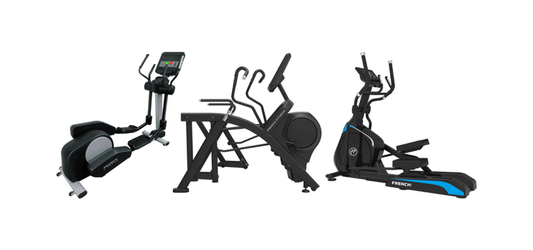
The Calorie Burn Showdown When shopping for commercial cardio equipment, one question always comes up: Which machine burns the most calories? Three heavy-hitters dominate commercial gyms: Cybex Arc Trainer Precor Adaptive Motion Trainer (AMT) Classic Elliptical Trainer Based on averages, here’s how they compare in calories burned per minute: Machine Calories/Min Arc Trainer 10.8 AMT 9.9 Elliptical 9.3 Winner: The Arc Trainer – leading by up to 1.5 more calories per minute over a standard elliptical. How the Movements Differ Arc Trainer – Arc Path with Options Your feet move in an arc-shaped path that reduces joint stress while engaging the quads, glutes, and hamstrings. Resistance and incline settings allow you to switch between climbing and striding. Two Arc Trainer Styles: With Moving Arms: Delivers a total-body workout, recruiting arms, shoulders, and back. Without Moving Arms: Focuses exclusively on lower body, often preferred for athletes targeting power output. Elliptical – Fixed and Familiar Ellipticals are loved for being low-impact and accessible. The drawback? A fixed stride path, which can feel repetitive and less muscle-targeting over time. AMT – Adaptive Stride Freedom The AMT is like three machines in one, adjusting stride length automatically. You can mimic stepping, jogging, or sprinting without pressing a button. Two AMT Versions: Open Stride: Lets you adjust stride height and length (up to ~36”), creating virtually infinite motion options. Fixed Stride (Non-Open): Dynamic stride length only, without the adjustable stride height. Lower price, but less versatile. Weight Loss & Program Variety Arc Trainer: Famous for its Weight Loss Program — light resistance + low incline + interval bursts. AMT: Built for variety — endless stride combinations, especially with Open Stride. Elliptical: Reliable steady-state cardio, but limited variety. Tip: French Fitness Arc Trainers and AMTs deliver commercial performance at 30–60% below MSRP. Muscle Building Benefits Calorie burn is great, but muscle engagement determines long-term results. Arc Trainer: Superior for building glutes, hamstrings, and quads. Higher resistance/incline = strength plus calorie burn. AMT: Strong total-body recruitment, especially with Open Stride and moving arms. Elliptical: Minimal muscle-building benefits; best for endurance and steady cardio. Comparison at a Glance Feature Arc Trainer AMT (Open Stride) AMT (Fixed Stride) Elliptical Calorie Burn Highest High High Moderate Muscle Building Yes Moderate Moderate Minimal Movement Arc Path Adjustable Height + Stride Adjustable Height Only Fixed Ellipse Upper Body Optional Arms Moving Arms Standard Moving Arms Standard Moving Arms Standard Program Variety High Highest High Moderate Cost $$$ $$$$ $$$ $$ Final Thoughts If calorie burn and muscle building are your top goals, the Arc Trainer (with moving arms) is hard to beat.If you want maximum versatility, go with the AMT Open Stride.For a budget-friendly, low-impact cardio option, the elliptical is still a reliable choice. Pro Tip: Remanufactured models at Fitness Superstore let you own premium Arc Trainers and AMTs at nearly half the cost. FAQS Which AMT version should I buy — Open Stride or Fixed? If you want maximum versatility and stride customization, go with Open Stride. If budget is a concern, the Fixed Stride version still delivers adaptive movement at a lower cost. Do Arc Trainers burn more calories with moving arms? Yes. Moving arms add upper-body engagement, increasing calorie burn and muscle recruitment compared to the no-arm version. Is the AMT better than an elliptical? Yes — the AMT offers dynamic stride lengths and greater versatility, while the elliptical is limited to a fixed motion. Which machine builds the most muscle? The Arc Trainer at higher resistance and incline settings provides the most lower-body strength benefits. Are remanufactured AMTs and Arc Trainers reliable? Absolutely. At Fitness Superstore, every remanufactured unit undergoes rigorous testing and often performs like new — at 30–60% off MSRP. Shop Commercial Cardio at Fitness Superstore Browse Arc Trainers Compare AMTs Explore Ellipticals
Refurbished (Remanufactured) Gym Equipment vs. Brand New: What’s the Smarter Choice for Your Gym?
Tim F

Refurbished (Remanufactured) Gym Equipment vs. Brand New: What’s the Smarter Choice for Your Gym?

When upgrading or launching a fitness space, the big question is: buy brand-new machines, or choose refurbished (remanufactured) gym equipment? At...

See more
When upgrading or launching a fitness space, the big question is: buy brand-new machines, or choose refurbished (remanufactured) gym equipment? At Fitness Superstore, we use the term remanufactured to describe our deeper process (full teardown, rebuild, refinish, and testing), while we also use the word refurbished throughout this guide to match how customers search online. The goal: help you find the best value and performance for your budget. Warranty Advantage: Every remanufactured unit includes a 1-year parts & labor warranty standard, with options up to 5 years parts & labor—often longer than warranties on new machines. Want to see real equipment? Browse our Remanufactured Equipment page for videos and photos from our warehouse showroom. What “Remanufactured” Means (and Why It Beats Basic Refurbishing) Full teardown & inspection of frames, drive systems, electronics, and consoles. New or reconditioned parts installed where needed; belts and bearings checked or replaced. Refinish & calibration to deliver like-new appearance and performance. Final testing for safety, durability, and smooth biomechanics. Refurbished (Remanufactured) vs. Brand New: Quick Comparison Factor Refurbished / Remanufactured Brand New Upfront Cost 40–60% less than new; scale faster on budget Highest initial cost Performance Like-new feel after rebuild & calibration New out of box Warranty 1-year parts & labor standard; up to 5-year options Typically 1–3 years (brand/model dependent) Sustainability Extends product life; less waste New manufacturing footprint Availability Premium commercial brands at attainable prices Broader model-year choices at full price Top Brands We Remanufacture We specialize in premium commercial brands—rebuilt to perform like new: Precor, Life Fitness, Technogym, and Matrix. Refurbished vs. Used: Not the Same Used gym equipment is typically sold as-is (no rebuild, limited testing, limited or no warranty). Our remanufactured process results in refurbished equipment that’s fully rebuilt, tested, refinished, and backed by a strong warranty—so you get commercial-grade reliability at a fraction of the cost. Who Benefits Most? Commercial gyms & studios: Outfit an entire floor for the cost of a few new units. Hotels & multi-housing: Premium amenities, controlled budgets. Home users: Commercial quality for consumer pricing. Ready to compare models? Explore our full selection of Refurbished (Remanufactured) Gym Equipment for Sale or view showroom videos & photos. Shop Refurbished / Remanufactured See Videos & Photos FAQs What’s the difference between refurbished and remanufactured? Refurbished is the common search term customers use. At Fitness Superstore, remanufactured means a deeper process: full teardown, rebuild with new or reconditioned parts, refinish, and comprehensive testing to perform like new. What warranty is included? We include a 1-year parts & labor warranty standard on remanufactured equipment, with extended options up to 5 years parts & labor. That often exceeds coverage on new units. Can I see the equipment before I buy? Yes—visit our Remanufactured Equipment page for videos and photos from our warehouse showroom.
Weight Plates, Barbell and Dumbbell Types: An In-Depth Comparison
admin

Weight Plates, Barbell and Dumbbell Types: An In-Depth Comparison

You might think that free weights are all pretty much the same. After all, their basic function involves being a...

See more
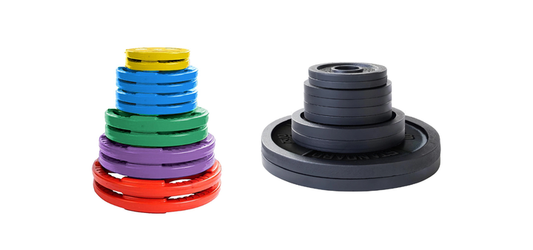
You might think that free weights are all pretty much the same. After all, their basic function involves being a certain poundage to provide resistance when exercising. That’s hardly rocket science, right? When it comes to free weights, however, the details can make a big difference. In this article, we compare and contrast the various types of weight covering materials to help you make the smartest purchasing decisions when it comes to bumper plates, olympic plates, barbells, kettlebells and dumbbells. The 4 Main Weight Coverings There are four basic types of workout weight, with each having a distinct covering. The free weight options discussed here have a cast iron core, so the actual weight you’re lifting is pretty much the same. It’s the different types of covering that make each one unique. Painted Weights Painted dumbbells, barbells or weight plates simply coat the cast iron weight with an anti rust covering. These are the least expensive types of fixed dumbbells and barbells that you can buy. The main problem with painted weights is that the paint can easily chip off. Dumbbells are subject to some pretty harsh treatment so most painted dumbbells will get banged up pretty quickly. Painted weights are also more noisy than coated ones as there is no padding to absorb the noise of the impact when you drop them. They are also more prone to have sharp edges, not to mention the fact that paint flecks are liable to fall into your eyes when you’re doing the dumbbell bench press (trust me, I know from experience!). You are likely to find painted dumbbells, barbells and plates in dungeon style industrial gyms. Chrome Plated Chrome dumbbells and barbells usually have a shiny silver, gleaming boutique appearance. They usually top out at around 20 pounds, being mainly for light gym use. These weights are electroplated with a light covering of chrome. The handles typically attach to the head with a screw in the handle. Rubber Rubber covered dumbbells, barbells and plates are quite popular due to their protective covering to prevent damage to floors and racks. Rubber is a relatively durable cast iron covering. However, you will see wear and tear over time. Rubber does not do well when exposed to sunlight so you will want to keep your rubber weights indoors. There are three qualities of rubber that may be used. These are: Recycled Rubber Styrene-Butadiene Rubber Natural Rubber The end quality of the rubber in terms of elasticity, fluidity, strength and durability will depend on the mixing ratio. Each manufacturer guards his mixing ratio closely. However, none of them use 100 percent original rubber. All rubber emits an odor. Generally speaking, the stronger the odor, the lower the quality of the rubber that has been used. Most rubber dumbbells will have a cast iron head but a steel handle. Rubber dumbbell shapes include hexagonal, round and 12-sided. The hex shape provides the greatest stability as it will not roll around on the floor when you’re doing exercises like renegade rows. When it comes to that vital combination of premium quality and value for money in a rubber dumbbell set, you won’t get much better than French Fitness. They offer a wide rage of rubber dumbbell set configurations, including racks and benches, that will save you some serious dollars! Urethane Urethane is the cream of the crop when it comes to weight coverings. Not surprisingly, it is also the most expensive. Unlike rubber, there is no odor with urethane weights. However, urethane dumbbells, barbells and plates look very much like rubber. This material is also extremely hardy, meaning that it is easily the most durable dumbbell, barbell and weight plate covering material. That factor should be taken into account when looking at the cost comparison with rubber or other types of weight; they generally work out more cost effectively in the long run. Urethane dumbbells are available in a range of shapes, including the ever popular hexagonal design. Urethane weight coverings are technically called polyurethane or PU. There are two types: CPU TPU The main difference between the two is that TPU weights are injection molded under high temperatures while CPU gets melted in a mold. CPU weights will last about twice as long as TPU, with a lifespan of around 8 years. CPU is not as environmentally friendly as the material cannot be recycled. The head of a CPU dumbbell is constructed of steel whereas that of a TPU weight is made of cast iron. CPU weights will always be slightly more expensive than TPU. Types of Weight Plates Bumper Plates Bumper Plates are exclusively made from rubber or urethane apart from a small metal insert in the middle. This allows them to bounce when dropped. That means they will not damage your floor. They are popular for Crossift and Olympic lifting. The range of Bumper Plates available from French Fitness includes some packages offering spectacular bulk purchase savings. Rubber Rubber coated Olympic weight plates are the most popular option for both commercial and home use. French Fitness Rubber plates feature wide rims, along with three gripping spaces. They are also available in budget priced package deals. Cast Iron Solid cast iron plates are powder coated and feature a built in lip and flat surface to assist with loading and offloading. They are available in solid and easy grip designs. The Cast Iron finish is popular with kettlebells, providing the natural grip and feel that this unique training tool demands. If you’re on the hunt for premium level cast iron kettlebells at a great price, French Fitness offers them singly and in sets ranging from 5-70 lbs with hard-to-beat deals . Urethane Urethane plates may look similar to their rubber counterparts but there are some key differences. They will not produce an odor and are much stronger and more durable. You’ll also notice the difference in feel, with urethane having a more non tacky texture to them. Urethane Olympic plates can also be customized with logos and branding. Urethane dumbbells are odorless, more durable than rubber and have greater shock resistance for longer life. French Fitness Urethane 8-sided hexagonal dumbbells are available in the following sets: 5-50 lbs 5-60 lbs 5-100 lbs If your preference is for round pro style dumbbells, French Fitness also offer sets ranging from 5 to 100 lbs. In addition, they offer a premium urethane EZ-Curl barbell set (20-110 lbs) that features solid steel knurled handles and black urethane plating.
Traditional Steam Saunas VS Infrared Saunas
Nicole O

Traditional Steam Saunas VS Infrared Saunas

Why Is Infrared Heat Better Than Traditional Sauna? Dynamic Saunas produce the same type of heat as produced by the...

See more
Why Is Infrared Heat Better Than Traditional Sauna? Dynamic Saunas produce the same type of heat as produced by the sun and our bodies. Infrared heat is very safe and not at all like the heat produced by microwaves. In an infrared sauna, only 20 percent of the energy is used to heat the air, leaving the rest of the energy to heat the body. The radiant heat can penetrate deep below the skin producing a gentle warming inside the body. The temperature inside an infrared sauna is adjustable and averages a comfortable 100 °F to the upper 140 °F range, depending on the sauna model. A typical session last 20 to 30 minutes and can be repeated once or twice during the day to maximize the benefits. Infrared saunas leave you feeling invigorated and rejuvenated, but not depleted like conventional saunas. Infrared heaters warm the body in the same manner as natural sunlight. Far Infrared Heat therapy uses the wavelength of the visible and non-visible light spectrum of sunlight that heats the body normally. Traditional saunas raise the temperature of the air to a very high level within the chamber to warm the body. Some people have difficulty breathing in this extremely warm air. Far infrared saunas work differently. Instead of heating the air within the enclosure, far infrared saunas heat the body directly. The result is deeper tissue penetration. In the far infrared sauna, the body perspires and receives all of the healthy benefits and avoids the harmful and extremely hot air of a traditional steam sauna. What Is A FAR Infrared Sauna and What Can A FAR Infrared Sauna Do For You? An infrared sauna makes the same rays that come from the sun and filters out the UV radiation. The high temperatures help to lower blood pressure and increase blood circulation. Infrared saunas raise your metabolism and help you to burn calories as you sweat. You can burn up to 700 calories without lifting a finger! When you sweat, you’re sweating out toxins and heavy metals through the skin. FAR Infrared Saunas Help With: Fibromyalgia, Arthritis, Rheumatoid Arthritis, Detoxification, Hypertension, Insomnia, Weight Loss Depression, Lowers Cholesterol, Lowers Blood Pressure, Enhances Skin Tone, Removes Cellulite, Relaxes Muscles, Reduces Muscle Spasms, Increases Blood Circulation, Helps The Immune System, Promotes Healing, etc.
Article image
admin

Low EMF vs Near Zero - What's the Difference?

Carbon Ultra Low EMF Heat Emitter An Electromagnetic Field is a physical field produced by electrically charged objects. It is...

See more
Carbon Ultra Low EMF Heat Emitter An Electromagnetic Field is a physical field produced by electrically charged objects. It is one of the fundamental forces of nature. The field can be viewed as the combination of an electric field and a magnetic field. The electric field is produced by stationary charges and the magnetic field by moving charges referred to as currents. Although all of our sauna products have been developed to have low EMF, several of our model saunas use our advance Carbon Ultra Low EMF technology (patent pending) which significantly reduces the amount of EMF exposure resulting in very low EMF or less than 3 milligauss (mG)(@2 inches)(test results average between 3mG-5mG including background EMF). GoldenDesigns Incorporated Near Zero EMF Heat Emitter The manufacturer of our model saunas is also the creator of the technology behind the Near Zero EMF Heat Emitter which eliminates electromagnetic waves. A typical carbon heating panel takes electric energy and transforms it into heat. In doing so, EMF is produced. The critical manufacturing process of our Near Zero EMF Heat Emitter incorporates a method that extensively reduces the amount of EMF given off. Simply put, as the magnetic field passes through the carbon heat emitter, it is greatly neutralized resulting in Near Zero EMF being generated. GoldenDesigns Incorporated EMF & RF Safety Levels - A Comparative Guide It can be very hard to say exactly what levels of EMF are safe, because safety in this arena is often a relative concept based on frequency, exposure time, and possible individual sensitivity. Even then, studies are often considered inconclusive plus there is the potential for political and financial agenda to steer perception one way or the other. ScanTech How do we characterize EMF exposure? No one knows which aspect of EMF exposure, if any, affects human health. Because of this uncertainty, in addition to the field strength, we must ask how long an exposure lasts, how it varies, and at what time of day or night it occurs. House wiring, for example, is often a significant source of EMF exposure for an individual, but the magnetic fields produced by the wiring depend on the amount of current flowing. As heating, lighting, and appliance use varies during the day, magnetic field exposure will also vary. Southern California EDISON
Treadmill vs. Rower: Which Burns More Calories?
Nicole O

Treadmill vs. Rower: Which Burns More Calories?

Treadmill vs. Rower: The Calorie Battle When it comes to cardio machines, two contenders stand out: the treadmill and the...

See more
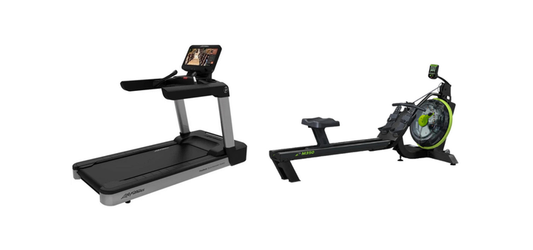
Treadmill vs. Rower: The Calorie Battle When it comes to cardio machines, two contenders stand out: the treadmill and the rowing machine. Both deliver serious calorie burn, but the best choice depends on your workout style and fitness goals. Light Workouts: Rower Takes the Lead At lower intensities, the rower burns more calories than the treadmill. That’s because rowing activates your legs, core, back, and arms all at once, making it an efficient full-body workout. Moderate Intensity: Neck and Neck When you increase the treadmill’s speed or incline, it matches the rower in calorie burn. The difference comes down to preference: Treadmill Great for walking, jogging, or running while boosting cardiovascular health. Rowing Machine Perfect for low-impact training that strengthens both upper and lower body. High-Intensity Training: Treadmill Wins If your goal is maximum calorie burn, the treadmill comes out on top. Running at higher speeds or steep inclines pushes calorie expenditure beyond what most people can sustain on a rowing machine. Which Machine Is Best for You? Choose a Treadmill If you love running and want the highest calorie burn potential. Choose a Rowing Machine If you want a joint-friendly, full-body workout that builds strength and endurance. The best option is the one you’ll stick with consistently. Both machines can help you torch calories and improve overall fitness. Pro Tip: Mix It Up Alternating between treadmill and rower sessions keeps your routine fresh, prevents overuse injuries, and balances muscle development. Calorie Burn Comparison Chart Here’s a quick look at approximate calories burned on a treadmill vs. a rower at different intensity levels (30 minutes). Intensity Treadmill (calories) Rower (calories) Light (30 min) Moderate (30 min) High (30 min) 200 350 500 250 350 450 Frequently Asked Questions Does rowing burn more calories than running? At moderate intensity, rowing can burn more calories because it engages the whole body. However, running at higher speeds or inclines on a treadmill usually burns more overall. Is a rowing machine better for weight loss than a treadmill? Both are effective for weight loss. A treadmill may burn more calories in less time, but a rower provides a low-impact, full-body workout that can be easier to sustain consistently. Which is easier on the joints: treadmill or rower? Rowing is low-impact, making it gentler on knees, hips, and ankles. Treadmill running puts more stress on joints but can be adjusted with incline walking or slower speeds. Can I use both treadmill and rower in one workout? Yes! Combining both machines creates a balanced routine: treadmill for cardiovascular endurance and calorie burn, and rower for strength and full-body conditioning. Shop Treadmills Shop Rowers Browse Cardio
Technogym Console Comparisons
admin

Technogym Console Comparisons

Technogym ARTIS UNITY Corded, w/TV, Wifi/Ethernet, Apps like Netflix, youtube, videos, internet browsing, social media, virtual training, news, SEE LINK...

See more
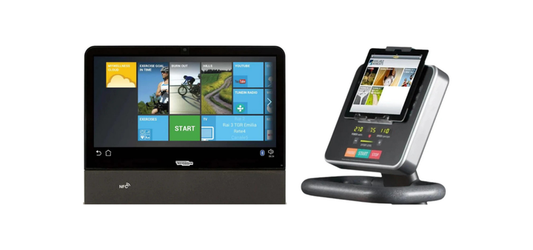
Technogym ARTIS UNITY Corded, w/TV, Wifi/Ethernet, Apps like Netflix, youtube, videos, internet browsing, social media, virtual training, news, SEE LINK BELOW to Video Explaining more. Technogym Artis Run Treadmill w/Unity 2.0 Console Technogym Artis Vario Elliptical Cross Trainer Technogym Excite Recline Unity 1000 Recumbent Bike Technogym Excite Unity 1000 Upright Bike Technogym Excite Unity RUN 1000 Treadmill Technogym Top Excite 700e w/Unity 2.0 Console Technogym Excite Recline Recumbent Bike w/Unity 3.0 Console Technogym Artis Run Treadmill w/Unity 3.0 Console Technogym Forma SEE LINK BELOW to Manual Explaining more. Technogym Excite Forma Upright Bike Technogym Recline Excite Forma Recumbent Bike Technogym Synchro Excite Forma Elliptical Technogym LED Cordless, Basic Console: No TV, No internet, etc, SEE LINK BELOW to Manual Explaining more. Technogym 700i Excite Crossover w/ LED Elliptical Technogym EXC Jog 700 Treadmill LED Technogym EXC Run 700 Treadmill w/LED Technogym EXC Run 500 Treadmill LED Technogym EXC Run 900 Treadmill LED Technogym Synchro 700I Elliptical w/LED Console Technogym Vario EXC 700i w/LED Technogym VISIOWEB Corded, w/TV, Wifi/ethernet,Internet browsing, youtube, social media etc. (unit must be registered with TG to allow wellness to work), SEE LINK BELOW to Video Explaining more. Technogym 700e Recumbent Recline Bike w/Visioweb Technogym Cardio Wave 700e w/Visioweb Technogym EXC Jog 700 Treadmill w/Visioweb Technogym EXC Run 700 Treadmill w/ Visioweb Technogym EXC Run 900 Treadmill w/ Visioweb Technogym Excite 700e Upright Bike w/Visioweb Technogym Excite Crossover 700e Elliptical w/Visioweb Technogym Synchro 700e Elliptical w/Visioweb Technogym Top Excite 700 UBE w/Visioweb Technogym Vario 700e w/Visioweb Technogym WELLNESS TV Corded, w/TV, SEE LINK BELOW to Video Explaining more. Technogym Cardio Wave 700e w/TV Technogym EXC Run 700 Treadmill w/TV Technogym EXC Run 900 Treadmill w/TV Technogym Excite 700e Recumbent Exercise Bike w/TV Technogym Excite 700e Stepper w/TV Technogym Excite 700e Upright Exercise Bike w/TV Technogym Excite Crossover 700e Elliptical w/TV Technogym Synchro 700e Elliptical w/TV Technogym Top Excite 700e UBE w/TV + Touch Screen Technogym Vario EXC 700 IP w/Touch Screen + TV
Best French Fitness Squat Racks: Review and Comparison
Tim F

Best French Fitness Squat Racks: Review and Comparison

If you're committed to weight training, a squat rack is an absolute must-have. While it's essential for squats—providing the safety...

See more
If you're committed to weight training, a squat rack is an absolute must-have. While it's essential for squats—providing the safety and stability to help you push your limits—it also unlocks a wide range of other fundamental exercises like pull-ups, bench presses, and overhead presses. Investing in a high-quality squat rack can transform your entire workout, making it more effective and versatile. In this guide, we'll explore the best squat racks from French Fitness to help you find the ideal match for your fitness goals. French Fitness DHR80 Double Half Rack/Cage New At the top of the list is the French Fitness DHR80 Double Half Rack/Cage New, which is designed to provide a comprehensive training environment. Made with 11-gauge steel, it is a commercial-grade rack that can handle heavy use. It is designed with two lifting stations for multiple athletes to use simultaneously. In terms of storage, this rack has twelve premium weight-storage horns, helping you maintain a clutter-free workout area. The French Fitness DHR80 has multi-grip pull-up bars that can be adjusted to different angles, allowing you to choose your grip position. The rack comes with dip horns, landmine, jammer arms, power-band holders, band pegs, and racks for different equipment, so users can customize their training setup however they want. Pros Accommodates two athletes at the same time with multiple workout options. Offers a variety of add-ons and attachments for extensive training. Protected from wear and tear with quick-adjust UHMW-lined sandwich j-cups. Adjustable spotter arms prolong the safe zone for athlete safety. Cons The dimensions of the rack might not be suitable for smaller training spaces. French Fitness SHR80 Single Half Rack/Cage New Next is the French Fitness SHR80 Single Half Rack/Cage New, a heavy-duty, commercial-grade 11-gauge steel half rack. You can extend the use of this squat rack as it comes with a wide range of attachment and storage solutions—all of which can be used to build a diverse training space. The spotter arms and the UHMW inner liners are also adjustable, for added safety and convenience. The French Fitness SHR80 is versatile enough for personal trainers, coaches, and athletes. It has an open-front design for easy entry, exit, and convenient movement. With its twelve premium weight-storage horns, keeping all your accessories organized and reducing clutter is easy. This machine is the same as the French Fitness DHR80, except that the SHR80 has only one station. Pros Durable construction with heavy-duty gauge steel for long-lasting use. Has adjustable features like the quick-adjust j-cups and spotter arms for convenience. The multi-grip pull-up bars allow varied grip positions for different muscle groups. Offers multiple lifting stations and accessories to match different kinds of exercises. Cons Limited to one station to accommodate a single athlete at a time. French Fitness R30 Monster Power Rack New Another great option is the French Fitness R30 Monster Power Rack New, constructed with 11-gauge steel. This squat rack has a specific hole spacing, making it sturdy and versatile for different strength-training needs. Plus, you can attach various accessories with laser-cut holes for a custom workout experience. These accessories include a dip horn, power-band holder, jammer arms, dumbbell rack, ball rack, step-up platform, band pegs, bumper-plate rack, and kettlebell rack. It also comes with bar catches to support your free-weight workout. The j-hooks can be positioned at various levels, according to your preference. For long-lasting use, the squat rack is designed with a powder-coated finish. If you want a rack extension, consider the French Fitness R30-RE, which is next on our list. Pros Supports different workouts, including upper-body exercises with straight pull-up bars. Highly durable with 11-gauge steel and powder-coated finish. Comes with bar catches, reducing danger during exercise. Customizable setup with laser-cut holes that can accommodate different accessories. Cons Large dimensions may require significant space. French Fitness R30-RE Monster Power Rack New For something more advanced than the French Fitness R30, consider the French Fitness R30-RE Monster Power Rack New. It builds upon the strengths of the standard model and incorporates a rear extension for stability and accessibility. The sturdy framework can accommodate intense workouts, and the rear extension provides stability during heavy lifts and easy access to spotters. With laser-cut holes spaced 2″ center-to-center, the rack is flexible enough for accessories such as spotter arms, landmine attachments, and dip bars. Eight weight-storage horns allow you to organize weight plates and other equipment. It also has two straight pull-up bars for upper-body workouts. Adjustable j-hooks can be positioned inside or outside at various heights. Pros The rear extension promotes safer lifting and rack stability. Made with heavy-duty steel and a powder-coated finish for longevity. Adjustable j-hooks can be mounted at different heights for exercise flexibility. Includes eight weight horns for accessible and organized plate storage. Cons The rear extension increases the rack’s overall footprint. French Fitness R20 Full Squat Rack Power Cage New Finally is the French Fitness R20 Full Squat Rack Power Cage New, another high-quality rack made with a heavy-duty steel frame reinforced by a durable powder-coated finish. With its small footprint and height of 89″, it can fit easily in home gyms, garages, and other spaces with limited room. It features spotter arms that adjust to multiple heights for safety—protecting you if you drop the barbell while lifting. The various height adjustments also increase stability while working out. You can mount the j-hooks at different levels to create a bench-press or squat setup. Pros Small footprint fits well in tighter spaces. Includes adjustable j-hooks and spotter arms for convenience and safety. Accommodates versatile workouts, including a straight pull-up bar. Sturdy 11-gauge-steel construction. Cons The 89″ height may not suit users who prefer higher clearance. Criteria to Consider When Choosing the Best Squat Rack When choosing the best French Fitness squat rack, consider size, weight capacity, storage space, safety features, available accessories, and overall user-friendliness. All five racks share the same steel tubing, hole sizes, and hole spacing, so they accept the same rig attachments. Size & Dimensions The French Fitness DHR80 is more suitable for larger spaces and dual-athlete use. The French Fitness R30 also has a sizable footprint, while the R30-RE requires even more space because of its rear extension. For limited areas, the French Fitness R20’s compact design or the single-station SHR80 may be preferable. Storage Space The DHR80 and SHR80 each offer twelve premium weight-storage horns, eliminating the need for separate weight trees. The R30 and R30-RE provide ample storage for accessories, whereas the compact R20 has less built-in storage. Weight Capacity The DHR80, R30, and R30-RE are built from heavy-duty 11-gauge steel to accommodate high loads. The SHR80 is robust but intended for lighter use, and the compact R20 supports less weight overall. Safety The DHR80, SHR80, and R30 include adjustable spotter arms, while the R30-RE’s rear extension offers improved spotter access. The R20 includes spotter arms and bar catches in a smaller frame. Accessories & Attachments The DHR80 features landmine attachments, dip horns, power-band holders, and various racks. The R30 and R30-RE support numerous add-ons, including the rear extension. The SHR80 offers a solid set of attachments but fewer than the larger models, while the R20 sticks to essentials such as pull-up bars and adjustable hooks. Final Take on the Best Squat Racks To take your workout to the next level, investing in a top-quality squat rack from French Fitness is a game-changer. These racks aren't just for squats; with the right accessories, they transform into versatile all-in-one machines, allowing you to perform a wide range of exercises while maximizing space and efficiency. Explore the model that best fits your goals, available space, and budget—and experience the difference in your training regimen.
French Fitness Elliptical Comparison Guide
Nicole O

French Fitness Elliptical Comparison Guide

If you’re seeking a low-impact, full-body workout, elliptical machines are an excellent choice. Perfect for both home gyms and commercial...

See more
If you’re seeking a low-impact, full-body workout, elliptical machines are an excellent choice. Perfect for both home gyms and commercial fitness spaces, they help improve cardio, tone muscles, and burn calories. Elliptical workouts are weight-bearing, meaning they support your body weight and strengthen your bones, while also being gentle on your joints. In this guide, we compare three of the top elliptical machines from French Fitness, offering tips and advice on to help you choose the best one for you: French Fitness E500 Elliptical French Fitness E200 Commercial Elliptical French Fitness Arc Elliptical Trainer (Available in Black and Silver) French Fitness E500 Elliptical The French Fitness E500 Elliptical is the top choice for your personal home gym, with 20 workout intensities and 20 magnetic resistance levels. This elliptical machine also comes with multiple handlebars to keep your arms active while your legs are moving. It’s equipped with a strong magnet on the flywheel, which will automatically adjust the absorption resistance. It also features a self-powered bidirectional transmission that allows you to control your pace better. The E500 machine is fitted with sensors on the handles that monitor your heart rate while you exercise. For extra safety, it’s designed with stabilizers on the base and large anti-slip pedals. You can easily move the machine around your space with its built-in wheel. Pros It features versatile magnetic resistance with 20 levels and bidirectional transmission. It provides a full-body workout with multiple handlebars. Hand grips are designed with a heart-rate monitoring sensor. Offers improved safety with the base stabilizers and large anti-slip pedals. It features a cordless design with an alternator and battery for ease of use. Cons Limited to 3 pre-set workout programs. French Fitness E200 Commercial Elliptical Next is the French Fitness E200 Commercial Elliptical which offers 20 resistance levels and a 20-inch stride to suit your evolving fitness goals. Like the French Fitness E500, this machine is also fitted with heart-rate sensors. The E200 Commercial Elliptical features eight preset programs and four target programs, offering more diverse workout options. It is powered by a front drive train and dual track system that adds to its stability. The machine also uses an alternator and battery for power, making it a convenient option for commercial fitness centers and home gyms. Pros Engages the lower and upper body with synchronized handlebars and pedals. It comes with 12 programs to meet a variety of workout goals. The 20″ stride length offers an ergonomic design for most users, giving a comfortable stride. Features 20 levels of adjustable resistance which cater to different fitness levels. LED displays show important workout metrics to help users monitor progress. Cons The high step-up height makes it less accessible to users with a shorter stature. French Fitness Arc Elliptical Trainer Another model to consider is the French Fitness Arc Elliptical Trainer, which is constructed with high-quality steel tubes for maximum durability. This machine can push your limits with its 900 W 18 rpm resistance, 20 incline levels, and 24″ stride length. The Arc Elliptical Trainer is designed for a comprehensive fitness and health experience with its contact-type heart-rate monitoring system in the hand grips. The machine also comes with a step-up height of 7 inches, making it suitable for individuals of varying heights. Pros It provides a comprehensive workout with varied programs and moving arms. It offers accurate tracking of your heart rate through hand grips. Easy to adjust and customize with 20 levels of resistance and incline levels. It has a compact and user-friendly design that fits in home gyms. It is available in two colors—black and silver. Cons It cannot fit through doors under 33.5″ even when disassembled. French Fitness E500 Elliptical vs. E200 Commercial Elliptical vs. Arc Elliptical Trainer: Factors to Consider Choosing the perfect French Fitness elliptical machine can be challenging with the variety of options available. When making your decision, consider factors such as resistance levels, weight, stride length, space requirements, and the range of exercises each machine offers. Here are some key points to help you select the ideal French Fitness elliptical machine for your needs. Drive Type The French Fitness E500 comes with a self-generating system with EMS self-powered bidirectional transmission. This provides a smooth and efficient drive mechanism. Meanwhile, the French Fitness E200 uses a front-drive system with a dual-track setup, which improves stability and provides a seamless elliptical motion. The Arc Elliptical Trainer has a versatile drive system that supports different exercise modes, including elliptical, climbing, and skiing. Stride Length The stride length differs notably among the French Fitness models. The E500 and E200 feature the same stride length of 20 inches, which is ideal for different kinds of users, providing an elliptical motion. The Arc Elliptical Trainer has an extended stride length of 24 inches. This accommodates taller users and those who want a more extended range. Resistance Levels With these three French Fitness models, you get 20 levels of adjustable resistance. The E500 comes with a magnetic resistance mechanism, making it precise and quiet. The Arc Trainer is the most powerful option, with a 900 W 180 rpm resistance system that offers a broad range of intensity for challenging workouts. Space Consumption The E500 has the largest footprint with dimensions of 86, 29.87, and 64.37 inches in length, width, and height. This makes it ideal for large workout spaces. Meanwhile, the E200 is slightly more compact, with dimensions of 80 inches in length, 26 inches in width, and 69 inches in height. If you want a small elliptical machine, you should consider the Arc Elliptical Trainer. It has ample width space but still maintains a relatively low height. Elliptical Motion The French Fitness E500 and E200 provide a more traditional elliptical motion, with the former featuring a magnetic resistance system while the latter has a dual track system. The E500 comes with multiple handlebars that are in sync with the pedals, with low pressure on your joints. On the other hand, the E200 has an alternate rhythmic movement of the handlebars and pedals. As for the Arc Elliptical Trainer, it has 20 adjustable incline levels, which allows individuals to use a wide range of workouts. You can target different muscle groups effectively. It has moving arms that synchronize with the different modes. Maximum User Weight The E200 is the machine with the highest maximum user weight, at 440 pounds. It also has a step-up height of 12.9 inches, although this might be inaccessible for users with short stature. The French Fitness E500 can accommodate up to 350 pounds and has a lower step-up height of 10 inches. As a compact exercise machine, the Arc Elliptical Trainer supports up to 330 pounds and has a step-up height of 7 inches. Brake System The E500 uses an Electromagnetic Resistance (EMS) system for precise control. Meanwhile, the E200 and the Arc Elliptical Trainer use electronic resistance control for easy use of your brake system. Comfort and Ergonomics The three elliptical exercise machines have heart-rate monitoring sensors in their hand grips for easily tracking your body condition while exercising. The French Fitness E500 comes with large padded armrests and anti-slip pedals, which provide extra comfort during your use. As for the E200 model, it has a high step-up height and a compact 3-inch pedal spacing. Perhaps the most comfortable is the Arc Elliptical Trainer, with the lowest step-up height, a long stride length, and adjustable incline levels. Workout Variety The French Fitness E500 comes with four workout programs, including a manual, which might be limited for most users. The E200 has a wider range that might appeal to most exercise buffs. It has eight preset programs and four target programs, which gives you a total of 12. With the Arc Trainer, you can enjoy five exercise modes, which include elliptical, climbing, skiing, manual, and automatic mode. Which French Fitness Elliptical Machine Should You Choose? Based on our review of the three French Fitness elliptical machines, you can consider the best one for your exercise needs. The French Fitness E500 is a robust exercise machine with a large footprint and efficient resistance. For a high-capacity elliptical machine with an ergonomic design, consider the E200. It’s also ideal for commercial use. Finally, the Arc Elliptical Trainer stands out with its compact design and adaptable workout options. Consider your exercise goals, the available space in your home or commercial space, and your body type to choose the ideal one for you.
French Fitness Treadmill Comparison Guide
Tim F

French Fitness Treadmill Comparison Guide

Whether you’re a beginner looking to start a new exercise routine or an exercise buff, a treadmill is a good...

See more
Whether you’re a beginner looking to start a new exercise routine or an exercise buff, a treadmill is a good addition to your gym. A treadmill is suitable for walking, jogging, running, and climbing in one spot and is the best way to burn excess calories and improve strength. It’s also suitable for improving cardiovascular health. Still, it might be hard to choose the one that is suitable for you. In this guide, we take a closer look at the three top French Fitness treadmills that stand out: French Fitness FT500 Light Commercial Folding Treadmill French Fitness T600 Treadmill French Fitness T800 Treadmill French Fitness FT500 Light Commercial Folding Treadmill The French Fitness FT500 Light Commercial Folding Treadmill is a commercial-grade treadmill that can handle long exercise sessions and multiple users. The folding design means that it folds up and comes with transport wheels for easy storage when not in use. The treadmill is designed with a 2.0-HP motor and has running speeds as high as 12.9 miles per hour, making it ideal for tough workouts. The T800 treadmill also has a 10% incline. For better performance, it is also designed with air foot protection and shock absorption. The hand grips come with a touch-sensitive heart rate monitoring sensor, allowing you to keep track while exercising. Pros Durable and sturdy construction that supports users up to 330 pounds. It offers speeds up to 12.9 miles per hour with a 2.0-hp motor, ideal for consistent performance. Comes with a shock absorption system and soft running board for reducing joint impact. The folding design makes for easy storage in small homes and spaces. User-friendly integrated technology like the heart monitoring grips and LED display. Cons Lowest incline among the three treadmills. French Fitness T600 Treadmill Next is the French Fitness T600 Treadmill, which is a suitable choice for users who want to lose weight, stay active, or improve their cardiovascular health. With a maximum weight capacity of 400 pounds, this treadmill is ideal for different kinds of users without sacrificing performance. The T600 is known for operating quietly, as it is designed with a low-noise continuous AC motor. This makes it suitable for home gyms and apartments. Despite running quietly, it is powered by an impressive motor with 7.0 HP and an incline range of up to 20%. The speed range is between 6 and 15 mph, making it ideal for different kinds of exercises. Pros It is designed with a powerful and quiet motor, offering a high-speed range. Offers a generous running area to accommodate all exercise styles. Comes with a user-friendly design including a 7-inch LCD and 12 preset programs. Its high weight capacity and sturdy build are ideal for heavy users. It is fitted with a wide incline range and seamless speed adjustments. Cons It might not be suitable for beginners. French Fitness T800 Commercial Treadmill The French Fitness T800 Commercial Treadmill is a suitable choice for home and commercial gyms. It is designed for extended workouts and features a low-maintenance design. With an incline range of 15%, you can enjoy a moderate intensity level of exercise. One of the highlights of the T800 treadmill is the integrated double-wheel system, which effectively improves the stability of the machine. It also features a self-lubrication system and ergonomic features like a holder for a water bottle or phone. This, combined with a running speed of 14 mph, makes this the right commercial treadmill for your exercise goals. Pros Robust build that supports various users up to 400 lbs. Features a powerful performance with a 3.0 HP motor and wide speed range. Comes with a self-lubrication system for seamless use. The console comes with heart rate monitoring and an LED display. It features a convenient workout system with preset programs. Cons A bulky size might not be ideal for small spaces. French Fitness FT500 vs. T600 vs T800: Factors to Consider When Choosing One There are different factors to consider when selecting one from the French Fitness FT500 Light Commercial Folding Treadmill, French Fitness T600 Treadmill, and French Fitness T800 Commercial Treadmill. Incline and Resistance The incline of a treadmill determines the intensity of your workout. The French Fitness T600 Treadmill offers the widest incline range, from 0 to 20%, making it ideal for users that need more intense incline training. Meanwhile, the French Fitness T800 Commercial Treadmill comes with a moderate incline range of 0 to 15%, while the T500 Light Commercial Folding Treadmill offers the least incline from 0 to 10%. Space Consumption The FT500 is the best option for home gyms with limited spaces because it has a folding design that allows for easier storage. It weighs 313 pounds with a compact design. Meanwhile, the T800 has a pretty large footprint, with a weight of 406 pounds. It is better suited for large home gyms or commercial settings. You can also consider the T600 for your commercial gym, as it is quite heavy and requires a dedicated space. Motor and Horsepower The three French Fitness treadmills have impressive motors, depending on your needs. The French Fitness T600 and T800 are powered by a 3.0 HP motor but can go as high as 7.0 HP. But what makes the T600 stand out is the continuous AC motor, which offers quiet operation along with speed. The FT500 has a 2.0 HP continuous AC motor, making it suitable for light commercial use and general fitness. Workout Variety The French Fitness T800 has the most comprehensive variety of preset and user-defined programs. The preset programs are from P1 to P8, including manual, 5K, and alpine passes. The T600 model is also ideal for different training needs with 12 preset programs, which include high-intensity interval training and endurance training. If you’re a beginner, consider the FT500, which comes with basic preset workout programs and standard metrics like time, calories, and distance. Comfort and Ergonomics With the French Fitness FT500, you get air foot protection and a shock absorption system with thick, elastic rubber pads. The soft running board reduces the impact on your joints. The French Fitness T600 is ideal for heavy users, as it comes with padded handrails and a cushioned running surface for a comfortable running experience. The T800 will also protect your joints during your exercise, as it comes with a high-strength running board and belt. Speed The FT500 is ideal for beginners and moderately advanced runners, with a speed range from 0.62 to 12.9 mph. For a higher speed range, consider the T800, which goes from 1.0 to 14.0 mph. It is ideal for different workout intensities, from walking to running fast. The highest speed range is offered by the French Fitness T600, which has a speed range from 0.6 to 15 mph. It is ideal for intense running and sprinting. Weight Capacity The FT500 has a maximum user weight of 330 pounds, which is ideal for most users but might also be limiting to heavier individuals. Meanwhile, the T600 and T800 have the same maximum user weight of 400 pounds, which can accommodate a wide range of users. This also makes them ideal for intense commercial use and heavier individuals. Safety Features The FT500 offers a quality shock absorption and air foot protection system, which will prevent injury and joint impact. It also comes with a step-up height of 8 inches, which is ideal for most users to exercise safely. The T600 also reduces injury risk with the padded handrails and cushioned running surface. This supports up to 400 pounds, which reduces the risk of machine overload. Finally, the T800 has a high-strength, durable running board ideal for extensive use. It also features heavy-duty construction that prevents wobbling when used. Final Verdict on French Fitness Treadmills If you’re looking to set up your home gym or commercial workout space, then you should consider one of these three French Fitness treadmills. The French Fitness FT500 Light Commercial Folding Treadmill is an ideal option for anyone who requires a space-saving, foldable treadmill with basic features. Meanwhile, the French Fitness T600 is suitable for users who need a high-speed capability and a wide incline range. It’s a good choice for intense workouts. Finally, the French Fitness T800 offers robust performance and extensive workout variety, which fits both commercial and demanding home workout environments. It’s best to check your specific workout goals and needs and choose a French Fitness treadmill that is ideal for you.
French Fitness Dual Adjustable Pulley Functional Trainers Comparison
Tim F

French Fitness Dual Adjustable Pulley Functional Trainers Comparison

To enhance your exercise experience, consider a Dual Adjustable Pulley Functional Trainer (DAPFT). This versatile fitness equipment is ideal for...

See more
To enhance your exercise experience, consider a Dual Adjustable Pulley Functional Trainer (DAPFT). This versatile fitness equipment is ideal for creating efficient and comprehensive workout sessions, perfect for both personal and commercial gyms. The DAPFT supports a wide range of exercises and offers customizable resistance for targeted and functional training. French Fitness offers some of the best value-for-money DAPFT machines available. Their models are known for their durability, versatility, and innovative features, making them a top choice for fitness enthusiasts and gym owners alike. In this guide, we'll help you compare and select the best French Fitness dual adjustable pulley functional trainer to suit your workout needs. We'll explore key features, benefits, and considerations to ensure you make an informed decision and get the most out of your investment. French Fitness Rig & Rack Functional Trainer 78 French Fitness FTS-F1 Functional Training System French Fitness Rig & Rack Functional Trainer 49 French Fitness DAP50 Dual Adjustable Pulley French Fitness FFB Black Dual Adjustable Pulley (Available in Black and Silver) French Fitness Rig & Rack Functional Trainer 78 First off is the French Fitness Rig & Rack Functional Trainer 78”, an impressive addition to any home gym. This model combines functional training with integrated storage and offers 71 inches of storage across three tiers—an expansion over its 49-inch counterpart. The DAPFT has robust 11-gauge steel uprights with durable electrostatic powder coating. Its 1-inch laser-cut holes provide precise attachment positioning, and the fully adjustable cable system lets you train every major muscle group. Pros 71 inches of integrated storage across three tiers. Heavy-duty construction for longevity and stability. Adjustable cable system targets multiple muscle groups. 1-inch laser-cut holes allow a customizable setup. Dual 175-lb weight stacks for consistent resistance. Cons Complex design and accessories may overwhelm beginners. French Fitness FTS-F1 Functional Training System The French Fitness FTS-F1 Functional Training System features dual 165-lb weight stacks and a 2:1 pulley ratio so you can fine-tune resistance for different routines. It also includes a multi-position swivel-pulley system and multi-grip chin-up bar. Self-aligning nylon pulleys and bearings keep movements smooth and reduce wear. Pros Heavy-duty steel construction. Versatile swivel-pulley system. Quick pull-pin height adjustments. Smooth, self-aligning pulleys and bearings. Multi-grip chin-up bar. Cons 2:1 ratio halves effective resistance, limiting max load. French Fitness Rig & Rack Functional Trainer 49 The French Fitness Rig & Rack Functional Trainer 49 is a streamlined alternative with a robust cable system and three-tier storage—though less than the 78-inch model. Laser-cut holes accommodate accessories, and an electrostatic powder-coated frame ensures durability and a sleek finish. Pros Three-tier storage keeps accessories organized. Versatile cable system. 11-gauge steel frame for longevity. Precision accessory placement with laser-cut holes. Smooth, high-quality pulleys. Cons Heavy unit requires a fixed gym location. French Fitness DAP50 Dual Adjustable Pulley The corner-friendly French Fitness DAP50 Dual Adjustable Pulley delivers full functionality in a compact footprint. Dual pulleys support high- and low-cable work, and an accessory rack keeps tools organized. Its 1:2 cable ratio offers extended travel and lower starting resistance, while a 12-gauge steel frame with protective weight-stack enclosures boosts safety. Pros Space-efficient, corner-fit design. 1:2 ratio for longer cable travel and lighter starting loads. Sixteen high/low pulley positions. Integrated multi-grip pull-up bars. Protective steel weight-stack enclosures. Cons Numerous adjustments may feel complex to newcomers. French Fitness FFB Black Dual Adjustable Pulley (Black & Silver) The French Fitness FFB Black Dual Adjustable Pulley delivers sleek styling and ultra-smooth movement via fiberglass-impregnated nylon pulleys. Standard dual 220-lb stacks (upgradeable to 324 lbs) and US-mil-spec nylon-coated cables underscore durability in a compact frame. Pros Ultra-smooth nylon pulleys with sealed bearings. Customizable resistance and height settings. Multi-grip pull-up bar. Military-grade, long-lasting cables. Non-slip urethane grips with aluminum collars. Cons Overall height (93 in) limits low-ceiling placement. Factors to Consider When Choosing a Dual Adjustable Pulley Functional Trainer Match your goals with adjustment range, exercise variety, usability, storage options, and customization features when selecting a unit. Multiple Adjustments FTS-F1 offers a fully swiveling pulley system, while Rig & Rack 78 and 49 add laser-cut holes for accessories. DAP50 provides a 16-position high/low setup, and FFB Black grants multiple height settings. Smooth & Customizable Resistance Rig & Rack models supply dual 175-lb stacks; FTS-F1 delivers 165-lb stacks at 2:1. DAP50 raises stacks to 200 lbs at 1:2, and FFB Black starts at 220 lbs (upgradable) with a 2:1 ratio. Ease of Use FTS-F1’s pull-pin system, Rig & Rack’s laser-cut holes, DAP50’s corner design, and FFB Black’s smooth cables each simplify setup in different ways. Storage Attachments Rig & Rack 78/49 include integrated three-tier storage. FTS-F1, DAP50, and FFB Black trade storage for compact footprints. A Quality Chin-Up Bar All five trainers feature built-in bars with multiple grip options. Long Pulley Travel FTS-F1’s 112-inch travel leads; DAP50’s 1:2 ratio extends range; FFB Black doubles stack travel for added variety. Space Consumption Rig & Rack 78 occupies the most room; 49 is smaller but still sizeable. FTS-F1 fits home gyms, DAP50 tucks into corners, and FFB Black maintains a compact footprint. Final Thoughts There is a wide range of dual adjustable pulley functional trainers that you can consider, all of which have unique benefits and cater to different needs. Consider ease of use, workout variations, customization, and space requirements when purchasing your DAPFT. With the right equipment, you can engage in exercises for your chest, back, legs, arms, and core. In all, the DAPFT is a comprehensive fitness equipment ideal for individuals who need a versatile workout solution.
French Fitness Cable Crossovers Comparison
Nicole O

French Fitness Cable Crossovers Comparison

Cable crossovers are a staple exercise in strength training, particularly effective for targeting the chest muscles, shoulders, and arms. Utilizing...

See more
Cable crossovers are a staple exercise in strength training, particularly effective for targeting the chest muscles, shoulders, and arms. Utilizing a cable machine, this exercise allows for continuous tension throughout the movement, providing a unique challenge compared to free weights. The versatility of cable crossovers makes them a popular choice for building muscle definition, improving functional strength, and enhancing overall upper body stability. In this article, we will be featuring five cable crossovers that stand out in the market for their quality and functionality: French Fitness DSCC Dual Stack Cable Cross French Fitness Newport Dual Cable Cross French Fitness Venice Dual Cable Cross French Fitness Phoenix Dual Cable Cross Aspen Cable Cross Let's dive into what makes each of these cable crossovers unique and how they can benefit your workout routine. French Fitness DSCC Dual Stack Cable Cross French Fitness DSCC Dual Stack Cable Cross is a versatile piece of equipment designed for a variety of standing strength exercises. Ideal for speed and ballistic training, it is also wheelchair accessible, making it suitable for rehabilitation purposes. Additionally, it can be used with stability balls and workout benches. With its extension arm offering 150” vertical and 165” horizontal adjustments, the DSSC Dual Stack Cable Cross allows you to perform a wide range of exercises. The ball-bearing swivel pulleys enhance the fluidity and responsiveness of the cable crossover, making it perfect for sport-specific training. Pros Suitable for bilateral and unilateral exercise training. It is designed with hydraulically supported arms, which makes it safe and easy to adjust. Versatile arm adjustments accommodate any movement pattern. Accessible for wheelchairs and other workout accessories. It features comprehensive weight options and strength levels. Cons The machine is heavy and bulky, making it unsuitable for smaller workout areas. French Fitness Newport Dual Cable Cross The French Fitness Newport Dual Cable Cross is a highly versatile and robust exercise machine, distinguished by its independent rotating arms and dual 200-pound weight stacks, which offer numerous workout possibilities. This machine offers eight vertical and five horizontal settings for arm rotation, allowing users to perform both basic movements and sport-specific patterns. Additionally, it is wheelchair accessible and designed with dual independent weight stacks, enabling two users to exercise simultaneously. This flexibility caters to both unilateral and bilateral training, making it an excellent choice for diverse exercise routines. Pros Dual 200-pound weight stacks with independent rotating arms. It comes with enclosed weight stacks for safety and an open design. Allows two users to exercise at the same time, making it ideal for shared workout spaces. It features an 11-gauge steel, electrostatic spraying, three coatings, and black paint finish for durability and longevity. It is equipped with stainless steel guide rods and nylon-encapsulated steel wire ropes for fluid movement. Cons The extended height of 98.4” makes it unsuitable for rooms with low ceilings. French Fitness Venice Dual Cable Cross The French Fitness Venice Dual Cable Cross provides extensive exercise possibilities for various muscle groups. With eight vertical and five horizontal settings, it offers exceptional flexibility to accommodate different workout routines. The Venice Dual Cable Cross features well-shrouded weight stacks that restrict access to moving parts, providing added safety. Its independent arms support unilateral exercises, while the swivel pulleys offer an unrestricted range of motion. This versatility allows for a wide range of exercises, enabling users to personalize their workouts effectively. Pros Elegant silver finish ensures long-lasting durability. It comes with safety features like shrouded weight stacks and inclusivity for wheelchair users. It supports simultaneous workouts for two users, making it ideal for shared spaces. Independent arm rotation supports varied and customizable exercise patterns. The dual 200-pound weight stacks allow for balanced or asymmetrical resistance. Cons It has a large footprint when extended, which requires significant space. French Fitness Phoenix Dual Cable Cross The French Fitness Phoenix Dual Cable Cross sets a new standard in fitness equipment with its sophisticated design and comprehensive functionality. Featuring dual adjustable pulley systems, this machine supports a wide range of exercises for every muscle group, allowing users to easily transition from isolation to compound movements. Designed for both beginners and seasoned fitness enthusiasts, the French Fitness Phoenix Dual Cable Cross boasts a smooth pulley system that offers a controlled range of motion, minimizing the risk of joint strain and injury. The cables move independently, promoting balanced muscle development. Additionally, the machine includes a convenient tablet holder, enabling users to place their device securely during workouts. Pros It offers versatile exercise options with its dual adjustable pulleys. You can easily switch between different training approaches. It has an aesthetic and functional design with a sleek silver finish. You can customize the resistance level from 200 lbs weight stacks per side based on your fitness needs. It is wheelchair accessible and reduces the risk of joint strain and injury. Cons The exercise machine will need a permanent installation spot due to its size. French Fitness Aspen Cable Cross The French Fitness Aspen Cable Cross offers impressive versatility and functionality, making it an excellent addition to any workout routine. Featuring dual adjustable pulley systems, it is ideal for both isolation and compound exercises, particularly for those aiming to enhance overall strength through integrated movements. Designed with optimal biomechanics, the French Fitness Aspen Cable Cross minimizes joint strain, while its smooth pulley system ensures a controlled range of motion, reducing the risk of injury. Its sleek black finish combines aesthetic appeal with robust construction, capable of withstanding heavy usage. Additionally, the adjustable handle heights and angles allow for a fully customizable workout experience. Pros It supports different kinds of exercises, including isolation, integration, and full-body workouts. The pulley system provides smooth movement to minimize joint strain. Independent cable handles will prevent muscle imbalances. Adjustable handle angles and heights for seamlessly switching exercises. The guided movements assist beginners in learning the right exercise form. Cons Heavyweight and lack of mobility require a fixed installation spot. Criteria to Consider When Choosing a Cable Crossover Machine When selecting a cable crossover machine, several factors significantly impact the quality and versatility of your workouts. Here's a comparison of the top 5 French Fitness Cable Crossovers according to different criteria: Workout Variations Choose a machine based on its workout variety. The French Fitness DSCC offers extensive vertical and horizontal adjustments (150” vertical, 165” horizontal), accommodating a wide range of exercises from basic to complex patterns. The Newport, Venice, and Aspen models feature independent arm rotation with eight vertical and five horizontal settings, balancing isolation and compound movements. The Phoenix model stands out with 13 vertical and five horizontal adjustments, enhancing exercise variety through its dual pulley system. Weight Stack and Resistance Consider progressive strength training capabilities. The DSCC model has dual 160 lbs weight stacks, suitable for moderate resistance. The Newport, Venice, Phoenix, and Aspen models come with dual 200-lb weight stacks (total 400 lbs resistance) and a 2:1 cable ratio for smooth resistance. Space Consumption Evaluate space requirements for your gym. The DSCC model is the largest, with dimensions of 133” width and 90” height when fully extended, ideal for spacious areas. The Newport and Venice models are balanced with widths of 121.6” and heights of 98.4”. The Phoenix and Aspen models are more compact, with widths of 115.8” and heights of 84.4”, suitable for limited spaces. Comfort and Ergonomics Ensure comfort and safety during workouts. The DSCC model features ball-bearing swivel pulleys and hydraulically supported arms for fluid cable movements. The Newport and Venice models offer non-slip handles and electrostatically sprayed frames. The Phoenix and Aspen models provide refined construction, smooth pulley systems, and adjustable handle heights and weights. Build Quality and Durability Consider long-term durability. The Newport and Venice models feature 11-gauge steel frames and stainless steel guide rods to resist wear and corrosion. The DSCC model uses heavy-duty steel and ball-bearing pulleys for durability. The Phoenix and Aspen models are built for heavy-duty use with durable frames and meticulous finishes. Adjustability and Smooth Pulley System The DSCC model offers extensive vertical and horizontal adjustments and smooth cable movement with ball-bearing swivel pulleys. The Newport and Venice models ensure fluid workout transitions with swivel pulleys. The Phoenix and Aspen models provide advanced pulley systems for diverse exercise customization. Consider these factors to select the best cable crossover machine that meets your fitness needs and enhances your workout experience. Final Verdict: Which Is Best For You? If you're considering adding a cable crossover machine to your exercise routine, it's essential to choose one that offers the flexibility and effectiveness needed to reach your fitness goals. Cable crossovers like the French Fitness DSCC, Newport, Venice, Phoenix, and Aspen models provide impressive versatility, making them suitable for both home and commercial gyms. These machines allow you to perform a wide range of exercises and target various muscle groups, all while featuring smooth pulley systems and adjustable resistance for effective training and functional fitness. Assess your specific fitness needs to select the best machine for balanced muscle development and optimal workout sessions.
Life Fitness PowerMills vs Stair Steppers vs Summit Trainer
Tim F

Life Fitness PowerMills vs Stair Steppers vs Summit Trainer

Climbing machines come in different forms. Some emulate climbing actual stairs while others use a rotating walkway. Among the biggest...

See more
Climbing machines come in different forms. Some emulate climbing actual stairs while others use a rotating walkway. Among the biggest fitness-equipment brands building climbers, Life Fitness offers the most complete range. In this comparison review, we’ll dive into their PowerMills, Stair Steppers, and Summit Trainers. What are Life Fitness PowerMills, Stair Steppers, and Summit Trainers? PowerMills, Stair Steppers, and Summit Trainers are cardio machines made by Life Fitness. They come in multiple models for home and commercial use, so you can always find one that suits your space and goals. The PowerMill replicates a revolving staircase; the Stair Stepper moves on a steeper, vertical plane; and the Summit Trainer blends step-climbing with an elliptical stride. Intensity Level of Workout The Summit Trainer delivers the least intense workout. The PowerMill sits in the middle, while Stair Steppers demand the most effort because climbing vertically is harder than jogging horizontally. Muscle Engagement All three machines hit the quads, glutes, hamstrings, and calves. Summit Trainers also recruit the arms thanks to moving handles. PowerMills, however, provide the strongest core activation and the deepest quad/glute burn because of their continuous-stair design. Stress on Joints PowerMills generate a medium-to-low impact on knees and ankles. Stair Steppers are gentler—pain usually comes only from bad form or over-training. Summit Trainers offer the smoothest, lowest-impact ride. Range of Motion Steppers move strictly up-and-down on fixed pedals. PowerMills allow drill variations on each step. Summit Trainers are the most versatile, letting you alter stride length and direction. Calorie Burn Because they’re the hardest, Steppers burn the most calories. PowerMills come next. Summit Trainers burn the least but are often more enjoyable for longer sessions. Factors to Consider When Choosing Power Supply PowerMills require a wall outlet. Stair Steppers are self-powered. Summit Trainers are self-powered with an optional plug-in. Noise Level Steppers and Summit Trainers are quiet. PowerMills get louder at higher speeds. Ceiling Height PowerMill: Your height + 33–36 in. Stair Stepper: Your height + 18–20 in. Summit Trainer: Between the two. Space Consumption PowerMills occupy the biggest footprint (and height). Summit Trainers cover more floor than PowerMills but are shorter. Steppers are the most compact. Maintenance PowerMills have the most electronics, so they need the most care. Summit Trainers need occasional lubrication. Steppers are simplest. Pros & Cons Life Fitness PowerMills Pros Full lower-body activation Core balance work Excellent cardio (≈360 cal in 45 min for 150 lb user) Highly customizable speed/resistance Cons  Medium joint stress • Large footprint Life Fitness Stair Steppers Pros Low-impact leg training Strong cardio/endurance benefits Joint-friendly More affordable Cons Limited movement variety Life Fitness Summit Trainers Pros Full-body workout Very low impact  Smooth feel Broad program/resistance range Cons Bulky Slight learning curve Price Ranges PowerMills — $6,000 – $7,300 Stair Stepper — ≈ $3,000 Summit Trainer — $3,400 – $3,800 Comparison Table — Life Fitness PowerMill Models PowerMill Integrity PowerMill (Int. C) Discover SE 95PS Discover SI Discover SE3 HD 95P Discover SE3 95PS Discover ST Price $5,999 $6,099 $6,599 $6,299 $6,999 $6,699 $7,299 Resistance Lvls 25 0–25 0–25 25 0–25 26 26 Heart Monitoring Lifepulse, Polar Contact — Lifepulse Digital Polar/Bluetooth Lifepulse Digital — Max User WT 400 lb (all models) Unit Weight 473 lb (all models) Key Tech — SureStep, dual brakes, LED BT headphone sync, QR export SureStep, 10" LCD, 21 workouts 16" touch, apps, GymKit 16" touch, interactive courses 16" touch, dual stop-assist Comparison Table — Life Fitness Stair Stepper Models 9500HR 95Si 95SE Integrity CLSS Price $3,199 $3,099 $3,199 $3,199 Programs 23 (+5 zone) 26 (+5 zone) 26 (+5 zone) 27 (+5 zone) Heart Rate Touch & Polar Contact/WL Contact/WL Contact/WL Power Self Self or Plug-in Self Self or Plug-in Weight 165 lb 170 lb 170 lb 165 lb Comparison Table — Life Fitness Summit Trainer Models Integrity Series 95li 95le Price $3,599 $3,399 $3,799 Programs 25 (+5 zone) 27 27 (+25 resistance) Heart Rate Lifepulse/Polar Contact/WL Lifepulse Digital Integrations iPod rack & tray Dual bottle + display Reading rack + display Design Self- or plug-in, erg handles Oversized pedals Belt-drive incline tech Conclusion The Life Fitness PowerMill, Stair Stepper, and Summit Trainer all strengthen the lower body and boost cardio, but differ in intensity, footprint, noise, and cost. Balance those factors—plus ceiling height and maintenance appetite—before you choose the best climber for your space.
Matrix ClimbMill vs StairMaster Gauntlet Stepmill vs Life Fitness PowerMill Climbers
Tim F

Matrix ClimbMill vs StairMaster Gauntlet Stepmill vs Life Fitness PowerMill Climbers

A stair climber machine, also known as a stair mill or step mill, is a piece of exercise equipment designed...

See more
A stair climber machine, also known as a stair mill or step mill, is a piece of exercise equipment designed to simulate the act of climbing stairs. It provides a cardiovascular workout by engaging the muscles in the legs, glutes, and core. Stair climbers are popular in both home and commercial gyms because of their ability to provide a challenging and efficient, sweat-inducing workout while also strengthening and toning the lower body. You can use it as either a warm-up to your workout or a calorie-burning finisher to your routine. The three most popular stair-climber brands are the Matrix ClimbMill, the StairMaster Gauntlet, and the Life Fitness PowerMill. In selecting among these three fitness machines, you have to consider your fitness goals, preferences, and budget. In this guide, we compare the top three brands and their variations to help you decide which stair climber best suits your requirements.     Matrix ClimbMill The Matrix ClimbMill is suitable for home or commercial gyms. Its belt-driven mechanism makes it run quietly and smoothly. The machine has multiple resistance, speed, and incline settings that make it suitable for workout enthusiasts of all fitness levels. You can easily go from a slow-paced sweat session to an intense leg workout in a matter of minutes. It also has pre-programmed settings that enhance the user experience by providing variety, structure, and convenience, making workouts more enjoyable and effective. Depending on the model, you get to enjoy extra features like a heart-rate monitoring system and entertainment options. Pros Wide range of resistance, speed, and incline levels that you can customize Pre-programmed workouts Designed for ergonomics, providing a comfortable, secure grip Smooth, belt-driven system that makes it quiet when it's running Most attainable price ranges among the three popular brands Cons Higher initial cost than other stair climbers     StairMaster Gauntlet The StairMaster Gauntlet is a classic stair-climbing machine that offers a more challenging workout with its rotating stairs. It has eight steps with different console options, step-rate adjustments, and intensity levels, allowing you to work out at your own pace and preference. The caveat: the machine is chain-driven so it runs louder compared to other stair climbers. Pros Rugged design that is suitable for heavy use in your fitness center Ideal for intense cardio workouts that replicate a real stair-climbing motion The revolving staircase design has eight steps, measuring 8 × 12 × 22 Offers 20 adjustable step rates from 24 to 162 steps per minute Cons Lacks comfort features like adjustable handrails and entertainment Louder noises during exercise     Life Fitness PowerMill Climbers The Life Fitness PowerMill Climber is a motor-driven, revolving staircase. With a large step space and over 20 resistance levels, it can cover your warm-ups up to intense cardio workouts that can burn roughly 360 calories in 45 minutes. This stair climber features the SureStepSystem Technology, which ensures smooth motion and a wider range of speeds for more workout variations. It provides multiple intensity levels and pre-programmed workouts for users, catering to everyone’s fitness goals. Pros Smooth and quiet operation that is ideal for home gyms and fitness centers The rotating staircase design makes your workout more challenging while minimizing impact on joints Belt-driven operation which makes it run quietly Includes a large step space and anti-toe-pinch design for secure footing Cons More expensive than other stair-climbing machines     Factors to Consider: Matrix ClimbMill vs StairMaster Gauntlet vs Life Fitness PowerMill Climbers Intensity Level of Workout All options offer an extensive range of resistance levels at 20-26, making every brand and variation a great choice for those looking for slower paces to higher-intensity workouts. The key difference is that the Matrix ClimbMill and the Life Fitness PowerMill provide a full range of motion through their adjustable settings. Meanwhile, the StairMaster Gauntlet offers a fixed range of motion and mimics actual stair climbing. If you’re looking for more flexibility and a wider range of motions, the ClimbMill or the PowerMill may be your best bets. Space Consumption Stair climbers often consume a larger footprint and it’s important to consider the size of the exercise equipment to ensure that it fits into your home gym or fitness center. The Matrix ClimbMill and Life Fitness PowerMill machines are larger in size compared to the StairMaster Gauntlet. Noise Level If you’re concerned about noise, the Matrix ClimbMill and the Life Fitness PowerMill are the quieter options. The StairMaster Gauntlet runs on a chain, causing louder sounds. Maintenance The Matrix ClimbMill requires occasional maintenance for its electronic components and software updates. Similarly, the Life Fitness PowerMill needs regular software updates and occasional servicing. The StairMaster Gauntlet involves minimal maintenance because of its simple mechanical design—routine cleaning and lubrication are usually sufficient.     Comparison Table of Matrix ClimbMills     Matrix ClimbMill C5x (Remanufactured) Matrix ClimbMill C7xe (Remanufactured) Matrix ClimbMill C7Xi (Remanufactured) Matrix ClimbMill C3x (Remanufactured) Price $5,299 $5,099 $5,799 $5,399 Step Depth and Height 10” and 8” 10” and 8” 10” and 8” 10” and 8” Compatibility iPod for charging Nike + iPod, Virtual Active, iPod for video and audio playback, Netpulse, IPTV, Asset Management, mPower IPTV, RFID, most smartphones and tablets - Display Intuitive LED console display. 15-inch touchscreen display with FitTouch Technology 16-inch class projective capacitive touchscreen LCD 8x16 LED graphic display Technology Control Zone sensor, Sweat Management System, Step position software Vista Clear Television Technology, Step position software, Control Zone sensor, Sweat Management System, Vista Clear Television Technology, 3-speed personal fan, Virtual Active programming, Sweat Management System, Control Zone Sweat Management System, ECB modular drive system, Step position software Comfort and Design Ergo foam grips on handlebars with pause, stop, and resistance controls, step-up plate, anti-rust design, removable side panels Optimized handlebar design with Ergo Form grips, rear locking and leveling castors, removable side panels, anti-rust design Step-up plate, ergo foam grips on the handlebars, integrated controls and accessibility, rear locking, and leveling castors, removable side access panels Anti-rust design, removable side panels, Ergo Foam grips, integrated pause, stop, and resistance controls Comparison Table of StairMaster Gauntlets StairMaster 4 Series Gauntlet w/10” LCD (New) StairMaster 4 Series Gauntlet w/10” Touch (New) StairMaster 4 Series Gauntlet w/15” Embedded Display (New) StairMaster 10 Series 10G Gauntlet w/10 Touch Display (New) Price $5,999 $6,499 $9,799 $13,299 Resistance Levels 20 20 20 25 Step Rate 24-162 steps per minute 24-162 steps per minute 24-162 steps per minute 24-190 steps per minute Step Depth and Height 10” and 7” 10” and 7” 10” and 7” 12” and 8” Display Choose between 10’ non-touch, 10’ touch and 15’ OpenHub display Choose between 10’ non-touch, 10’ touch and 15’ OpenHub display Choose between 10’ non-touch, 10’ touch and 15’ OpenHub display LCD 10’ and 15” display Workout Options Landmark Challenge program Landmark Challenge program Landmark Challenge Program Standard console program, Landmark Challenge program, OverDrive Training Mode Comparison Table of Life Fitness PowerMill Models Life Fitness PowerMill Integrity Series Climber (Remanufactured) Life Fitness PowerMill w/ Integrity C Console (95PS C WIFI) (Remanufactured) Life Fitness Discover SE 95PS Elevation PowerMill Climber (Remanufactured) Life Fitness Discover SI PowerMill Climber (Remanufactured) Life Fitness Discover 95P SE3 HD PowerMill (Remanufactured) Life Fitness Discover SE3 95PS PowerMill (Remanufactured) Life Fitness Discover ST PowerMill (Remanufactured) Price $5,999 $6,099 $6,599 $6,299 $6,999 $6,699 $7,299 Resistance Levels 25 0-25 0-25 25 0-25 26 26 Step Depth and Height - 9.875” and 7.5” - - 9.875” and 7.5” - 9.875” and 7.5” Heart Monitoring Lifepulse, DSP, Polar, Telemetry Contact heart rate Lifepulse Digital Heart Rate, Polar Compatible Polar, Telemetry and Bluetooth, Heart Rate, Lifepulse, DSP Lifepulse, digital contact heart rate, polar, telemetry-compatible heart-rate monitoring system Max User Weight 400 lbs 4000lbs 400 lbs 400 lbs 400 lbs 400 lbs 400 lbs Weight 473 lbs 473 lbs 473 lbs 473 lbs 473 lbs 473 lbs 473 lbs Tech Features Dual remote stop and speed controls, SureStep technology, dual braking system, bullhorn handlebar design, LED display, 4 available workouts, optional attachable TV, Connect Bluetooth to compatible headphones and heart rate devices. Save workout results via a QR code. SureStepSystem Technology, 10-inch LCD touch screen, 21 available workouts, 12-185 steps per minute 16” LCD touchscreen with readouts like speed, incline, heart rate, pace, elapsed time, time distance remaining, calories, 22 languages, includes games and apps, virtual courses, compatible with Apple Watch GymKit and Samsung Galaxy Watch. Multiple workouts and interactive courses, LCD surface capacitive touch screen, 16-inch screen, Compatible with Android and iOS, wide on-slip two-tone stair pedals, integrated reading rack. Touchscreen navigation, integrated TV, and display readouts include: speed, incline, heart rate, pace, elapsed time, calories, distance climbed and remaining, dual stop-assist, and auto-detect future Console 16-inch LCD capacitive touch screen, 3.5mm stereo, USB charging, ethernet, and optional WiFi, Includes a TV, virtual courses, solitaires app 10-inch LCD surface capacitive touch screen, 3.5mm stereo, USB charging, ethernet and optional WiFi, attachable TV option, virtual courses, solitaire app 16-inch LCD capacitive touch screen, 3.5mm stereo, ethernet, and included WiFi, includes a TV, virtual courses, Bluetooth compatible, apps include TV, internet browser, Netflix, Hulu, Pandora Radio, YouTube, ESPN, BBC, Newsy, Economistt 16-inch LCD capacitive touch screen, 3.5mm stereo, ethernet, and included WiFi, includes a TV, virtual courses, Bluetooth compatible, apps include TV, internet browser, Netflix, Hulu, Pandora Radio, YouTube, ESPN, BBC, Newsy, Economistt     Which one should you purchase? The Matrix ClimbMill, StairMaster Gauntlet, and Life Fitness PowerMill are all quality stair climbers that can stand heavy usage. They are made with top-quality materials, manufactured by trusted brands, and can carry out basic warm-up exercises to higher-intensity cardio workouts. So, in selecting which one you should purchase, the answer solely depends on your budget, space availability, maintenance capacity, and personal preferences when it comes to design and tech features. If you need more personalized assistance in choosing the best stair climber to suit your requirements, feel free to contact us at sales.cs@fitnesssuperstore.com.
Life Fitness CMDAP Cable Motion DAP Signature Series vs French Fitness FFS Dual Adjustable Pulley
Nicole O

Life Fitness CMDAP Cable Motion DAP Signature Series vs French Fitness FFS Dual Adjustable Pulley

Enhance your workout experience and effectively target a variety of muscle groups with a dual-adjustable-pulley exercise machine. These versatile machines...

See more
Enhance your workout experience and effectively target a variety of muscle groups with a dual-adjustable-pulley exercise machine. These versatile machines feature two weight stacks connected by cables that can be adjusted to different heights, enabling you to perform a wide range of exercises such as chest presses, lat pulldowns, and rows. When it comes to selecting the best dual-adjustable-pulley system, the Life Fitness CMDAP Cable Motion DAP Signature Series and the French Fitness FFS Dual Adjustable Pulley are standout choices. In this comprehensive comparison, we delve into the key differences between these two top-tier brands and models, examining everything from design and functionality to pricing and unique features. Our goal is to provide you with the insights needed to make an informed decision tailored to your specific fitness objectives. Life Fitness CMDAP Cable Motion DAP Signature Series The Life Fitness CMDAP Cable Motion DAP Signature Series provides multidimensional strength training, supporting different kinds of exercises with user-defined motion paths. It is constructed with an 11-gauge steel frame for reliable structural integrity. When considering comfort and ergonomics, the Life Fitness DAP has molded foam cushions, urethane hand grips, and easy seat adjustments. It offers a low starting resistance with high-speed movements for sport-specific functional training and a dual-roller mechanism for smooth and easy adjustment. You can perform over 225 exercises with the 22 adjustment positions per column. You can also add accessories such as revolving lat bars, press-down bars, T-tricep ropes, straight bars, and revolving curl bars. The remanufactured unit costs $4,999, while a factory-new model is $9,118 on the official Life Fitness website. Pros Supports over 225 exercises thanks to 22 adjustment positions per column Easy to use with contoured, molded foam cushions and seat adjustments Durable urethane composite grips with aluminum collars prevent slipping 11-gauge steel frame for durability and structural stability Optional accessories expand functionality Cons Comes with a higher price tag—even when remanufactured Must be secured to the floor during installation, limiting placement options French Fitness FFS Dual Adjustable Pulley The French Fitness FFS Dual Adjustable Pulley is a seamless dual-adjustable-pulley machine with a smooth mechanism and varied exercise options made possible by multiple grip positions and adjustable cables. It is constructed with 11-gauge steel and nylon-coated cables that meet US military specifications for strength and durability. Compact dimensions make it suitable for home or commercial gyms, and it is a more affordable option. For ease of use, the French Fitness FFS DAP features fiberglass-impregnated nylon pulleys with sealed bearings. To prevent slipping, it has durable urethane composite hand grips. Despite offering similar capabilities to the Life Fitness model, the French Fitness FFS DAP costs just $2,999—and it is also available in black. Pros Quality components: fiberglass-impregnated nylon pulleys and urethane hand grips Durable 11-gauge steel frame and nylon-coated cables Ultra-smooth dual-pulley mechanism Adjustable cables and multiple pull-up-bar grips Provides features comparable to the Life Fitness DAP at a lower price Cons Heavy weight and size may limit installation and placement Factors to Consider When Choosing a Dual Adjustable Pulley Solid Construction Both models use 11-gauge steel frames for structural integrity. The French Fitness unit adds US-military-spec nylon-coated cables for extra longevity. Multiple-Position Pulleys Adjustable cables on both machines allow diverse exercises. The French Fitness model adjusts to any height along the posts, while the Life Fitness DAP offers 22 positions per column—supporting over 200 exercises. Multiple Accessories French Fitness offers accessories such as tricep ropes, revolving straight bars, carabiners, strap handles, sport-stick handles, and dual-hook straight bars. Life Fitness provides revolving lat bars, revolving low-pulley bars, single grips with rotating handles, T-tricep ropes, straight bars, press-down bars, and revolving curl bars. Ease of Use and Convenience The French Fitness DAP delivers smooth motion via fiberglass-impregnated nylon pulleys and sealed bearings. The Life Fitness unit features gas-assisted springs and molded foam cushions for comfort. Both include urethane hand grips to prevent slipping. Price The French Fitness FFS retails for $2,999, whereas the Life Fitness Signature Series costs $4,999 (remanufactured). Given that both machines offer similar features, the French Fitness option represents greater value. Final Verdict: Life Fitness vs French Fitness Dual Adjustable Pulley When upgrading your training setup, both the Life Fitness CMDAP Cable Motion DAP Signature Series and the French Fitness FFS Dual Adjustable Pulley provide sturdy construction, versatile exercise options, and user-friendly design. However, the significant price difference makes the French Fitness model the stronger value proposition for most buyers.

Buying Guides

Matrix recumbent and Life Fitness upright exercise bikes positioned side by side, ideal cardio equipment for small home gyms.
James C

Top 8 Exercise Bikes for Small Spaces

You don’t need a full gym to stay consistent with your fitness routine. A compact exercise bike can transform even...

See more
You don’t need a full gym to stay consistent with your fitness routine. A compact exercise bike can transform even the smallest space into a complete workout zone that fits your lifestyle. These bikes combine smooth magnetic resistance, quiet operation, and simple technology that keeps every ride efficient and enjoyable. They fit easily into apartments, studios, or shared spaces, giving you the freedom to stay active without sacrificing comfort or floor space. In this guide, we’ll look at why compact bikes are ideal for home fitness, what to consider before buying, and which models deliver the best mix of performance, comfort, and size. Why Choose a Compact Exercise Bike for Your Home Best Exercise Bikes for Small Spaces 1) Life Fitness Integrity SE3 HD Upright 2) Expresso Fitness HD Upright HDU 3) Precor RBK 885 Recumbent 4) French Fitness UB400 Upright 5) Technogym Artis Recumbent 6) French Fitness MIC20 Indoor Cycle 7) Matrix H7xi Hybrid 8) Life Fitness Discover SE 95R Decide Which Type Fits You Buying Guide Final Thought FAQs About Compact Exercise Bikes Why Choose a Compact Exercise Bike for Your Home Adding a compact exercise bike to your home gym is one of the simplest ways to stay active without giving up valuable space. Here’s what makes them such a smart choice: Save space with slim, easy-to-move frames: Compact exercise bikes are designed for tight layouts, allowing you to create a functional workout area without overwhelming small rooms or shared living spaces. Quiet magnetic resistance ideal for apartments: Smooth, belt-driven systems produce minimal noise, so you can train early in the morning or during work hours without disturbing anyone nearby. Smart consoles that track progress and sync with apps: Modern displays monitor distance, calories, and heart rate while connecting to popular fitness apps for real-time tracking and personalized challenges. Low-impact workouts gentle on joints: The circular pedaling motion reduces stress on knees and hips, making these bikes suitable for consistent training and long-term fitness routines at any level. Durable builds designed for everyday use: Commercial-grade materials, sealed bearings, and stable bases ensure your bike holds up under regular use, offering reliability that lasts for years. Best Exercise Bikes for Small Spaces Finding the right bike for limited space doesn’t mean settling for less performance. Each model below offers a smart balance of size, comfort, and capability. 1. Best Compact Luxury Upright: Life Fitness Integrity SE3 HD Upright Bike The Life Fitness Integrity SE3 HD Upright Bike brings commercial gym quality to home or studio settings with advanced digital interactivity. Its ergonomic seat design and easy-mount step-through frame make it accessible for all users, while the SE3 HD console offers immersive entertainment and performance tracking through a 16" HD touchscreen display. Ideal for fitness centers, apartments, or home gyms, it blends comfort, durability, and technology into a compact footprint that suits any space. Spec Highlights Feature Details Condition Remanufactured, Commercial Grade Console SE3 HD 16” touchscreen with on-demand workouts, internet, Bluetooth, and streaming apps Resistance System 25 digital levels with smooth magnetic drive Drive Type Belt-driven for quiet and consistent operation Seat Comfort Curve Plus™ ergonomic seat with deluxe back support Adjustments Easy seat height and handlebar adjustments for all user sizes Heart Rate Monitoring Lifepulse™ digital sensors + Polar telemetry compatible Connectivity WiFi, Bluetooth, LFConnect compatibility, mobile device sync Workouts 42 preloaded programs + 8 customizable profiles Power Requirements 120V AC Dimensions Approx. 43" L × 24" W × 65" H Product Weight 176 lbs (80 kg) Max User Weight 400 lbs (181 kg) Warranty 1 Year Parts & Labor; extended options up to 5 years Why We Like It SE3 HD 16” console provides an interactive, app-connected training experience. Commercial build ensures unmatched stability and long-term reliability. Belt-driven system operates quietly, perfect for shared or small spaces. 25 resistance levels adapt easily for all fitness levels. Ergonomic seat and adjustable design enhance comfort and posture. 42+ programs offer a variety from endurance rides to HIIT sessions. WiFi and Bluetooth allow seamless connectivity with fitness apps. 2. Best Interactive Upright: Expresso Fitness HD Upright Bike HDU (Remanufactured) The Expresso Fitness HD Upright Bike HDU delivers a true interactive ride with commercial strength in a compact frame. You can steer through virtual routes, join challenges, and track your progress on a crisp 23-inch HD screen. With 30 automatic resistance levels and fully adjustable seating, it’s built for comfort and variety. Quiet performance and space-saving design make it ideal for apartments or home gyms. Spec Highlights Feature Details Condition Remanufactured, Commercial Grade Display 23" HD touchscreen with interactive routes, games, and performance tracking Resistance 30 gears that automatically adjust to terrain shown on screen Seat Adjustment 20 height positions, 7 horizontal positions, interchangeable with standard bike seats Steering Turnable handlebars for interactive riding control Drive System Belt-driven for smooth, quiet operation Connectivity Wireless (WiFi 802.11n+), Wired (Gigabit LAN+), TV compatible with coax cable Subscription Option Compatible with Expresso eLive for online content and community challenges Power 100–220V AC, 50/60 Hz Dimensions 52" L × 24" W × 60" H Product Weight 155 lbs (70 kg) Max User Weight 400 lbs (181 kg) Warranty 1 Year Parts & Labor; extended options up to 5 years Why we like it: Immersive 23-inch HD touchscreen enhances engagement with virtual courses and races Commercial-grade build offers long-term reliability and professional quality Compact upright frame ideal for home use or small fitness studios Real steering handlebars make rides feel more dynamic and lifelike Smooth, belt-driven system keeps operation nearly silent during workouts Fully adjustable seat allows a customized fit for riders of all sizes Compatible with Expresso eLive for group challenges and performance tracking 3. Best Compact Recumbent: Precor RBK 885 Recumbent Bike w/ P82 Console (Remanufactured) The Precor RBK 885 Recumbent Bike combines comfort and advanced technology in a sleek, compact design. Its step-through frame and low seat height make it easy to access for all users, while the ventilated Air Flex seat keeps every ride cool and supportive. The 15-inch P82 touchscreen console adds entertainment, detailed tracking, and connectivity. It’s the ideal fit for smaller home gyms that need professional-grade comfort and quiet, smooth performance. Spec Highlights Feature Details Condition Remanufactured, Commercial Grade Console 15" P82 LCD Capacitive Touchscreen, entertainment apps, TV, Preva® network capable Resistance System 25 levels, eddy current resistance powered by a 3-phase generator Drive System Dual-stage belt drive for quiet, consistent performance Seat Air Flex ventilated seat with floating suspension for comfort and airflow Seat Adjustment Single-hand adjustment with 20+ positions for easy setup on or off the bike Pedals Dual-sided, with or without integrated straps; extra-wide to fit all users Step-Through Design 14" (36 cm) wide entry with 4" (10 cm) low step-over height Frame Powder-coated steel frame with rust-resistant undercoat Power 120V/15A circuit; no backup battery needed Connectivity WiFi, Ethernet, iPod/iPhone compatible, headphone jack Dimensions 67" L × 23" W × 53.5" H Product Weight 219 lbs (99 kg) Max User Weight 350 lbs (159 kg) Warranty 1 Year Parts & Labor; extended options up to 5 years Why we like it: Step-through frame makes mounting easy for all ages and fitness levels Air Flex seat provides unmatched ventilation and support during long workouts P82 console offers touchscreen entertainment and real-time progress tracking Smooth dual-belt system keeps noise low, ideal for quiet spaces Built-in WiFi and Preva network capability expand workout features and data storage Commercial-grade steel frame ensures long-lasting stability and durability Simple, one-hand seat adjustment allows quick changes between users 4. Best Commercial Compact Upright: French Fitness UB400 Commercial Upright Bike w/ LED Console (New) The French Fitness UB400 brings commercial-level quality to your home gym in a compact, easy-to-move design. It features 25 resistance levels, six preset programs, and a clear LED console that tracks all your essential metrics in real time. Ergonomic handlebars, a padded seat, and adjustable pedals make it comfortable for long sessions, while transport wheels keep it practical for smaller workout areas. Spec Highlights Feature Details Condition New, Commercial Grade Console LED display showing speed, calories, heart rate, distance, and time Resistance Levels 25 adjustable levels with smooth transitions Programs 6 preset + 1 user-defined program Seat Adjustable padded seat for comfort and proper alignment Handlebars Multiple position and quick-adjust design for ergonomic posture Pedals Adjustable with secure straps for stability Added Features Fan, tablet holder, cup holder, and accessory tray Power 110V Dimensions 47.24" L × 19.68" W × 57.08" H Product Weight 165 lbs (75 kg) Max User Weight 330 lbs (150 kg) Warranty Lifetime Frame, 10 Years Parts, 1 Year On-Site Labor Why we like it: Compact, upright frame fits easily in smaller home or commercial gym spaces 25 resistance levels provide progressive training for all fitness stages Padded seat and ergonomic handlebars enhance comfort for long rides Smooth magnetic resistance system runs quietly during workouts LED console displays clear, easy-to-read workout metrics Lifetime frame and long parts warranty offer excellent value and reliability Built-in fan, tablet holder, and cup tray improve convenience and user experience 5. Best Premium Smart Recumbent: Technogym Artis Recumbent Bike w/ Unity Console (Remanufactured) The Technogym Artis Recumbent Bike blends comfort, innovation, and accessibility in a sleek, space-efficient design. It’s built for users who want a relaxed yet effective cardio experience with the sophistication of Technogym’s Unity smart console. Its extra-wide walkthrough and supportive backrest make getting on and off effortless. Whether you prefer guided programs, scenic rides, or light activity while watching TV, this recumbent offers a comfortable, connected way to stay active. Spec Highlights Feature Details Condition Remanufactured, Commercial Grade Console Unity Display with 32 programs, video streaming, and entertainment apps Programs 32 built-in workouts, including Quick Start, Fitness Test, Training Zone, and Military Tests Resistance 25 levels, Eddy Current drive for smooth transitions Seat Adjustment 34 positions with 4 adjustable backrest settings Design 50 cm wide walk-through, side support bars for easy access Heart Rate Hand sensors and telemetry compatible Drive Type Eddy current system for silent, consistent performance Power AC power line, 115V / 15A Dimensions 66" L × 24" W × 54" H Product Weight 215 lbs (98 kg) Max User Weight 484 lbs (220 kg) Warranty 1 Year Parts & Labor; extended options up to 5 years Why we like it: Unity console delivers HD workouts, streaming, and goal-based training 50 cm walk-through design provides industry-leading accessibility Support bars and ergonomic seat simplify mounting and dismounting 34 seat positions and 4 backrest angles allow precise comfort adjustment Quiet eddy current system maintains smooth, low-maintenance operation 32 diverse training programs suit a range of goals and ability levels 484 lb capacity supports a wide range of users, ensuring stability 6. Best Studio-Style Ride: French Fitness MIC20 Indoor Cycle w/ LED Console (New) The French Fitness MIC20 brings the authentic feel of outdoor cycling indoors. Its magnetic resistance and belt-drive system deliver a smooth, near-silent ride that’s perfect for home training or studio use. Designed for precision and comfort, it includes adjustable handlebars, a 4-way seat, and self-generating LED display. Compact yet powerful, the MIC20 is built to perform in small spaces without sacrificing intensity or durability. Spec Highlights Feature Details Condition New, Commercial Grade Flywheel 22 kg rear-mounted flywheel for balanced motion Display LED Flying Shuttle Control, self-powered Resistance System Two-way magnetic, 1–32 levels Drive System Belt-driven for silent and low-maintenance operation Adjustability 2-way handlebars, 4-way adjustable seat Pedals Anti-slip design with adjustable straps Connectivity Bluetooth enabled, includes heart rate armband Added Features Tablet holder, water bottle holder, transport wheels Power Cordless, self-generating with 9V A2 Dimensions 51.6" L × 21" W × 51" H Product Weight 132 lbs (60 kg) Max User Weight 330 lbs (150 kg) Warranty Lifetime Frame, 10 Years Parts, 1 Year On-Site Labor Why we like it: Magnetic resistance and belt drive ensure smooth, quiet operation for shared spaces Rear-mounted flywheel enhances balance and stability during high-intensity rides Compact frame fits easily in small home gyms or studios Bluetooth connectivity and included heart rate armband improve tracking accuracy Fully adjustable seat and handlebars allow customized fit for all users Self-powered LED display eliminates the need for cords or outlets Lifetime frame and 10-year parts warranty add long-term peace of mind 7. Best Hybrid Design: Matrix H7xi Hybrid Exercise Bike (Remanufactured) The Matrix H7xi combines the comfort of a recumbent with the energy of an upright bike, creating a versatile hybrid fit for all users. Its 16-inch touchscreen console offers streaming, virtual rides, and performance tracking in one streamlined display. This model pairs commercial-grade durability with a smooth brushless generator resistance system, making it ideal for both personal training studios and space-conscious home setups. Spec Highlights Feature Details Condition Remanufactured, Commercial Grade Console 16" FitTouch™ touchscreen with entertainment apps, Virtual Active™, and full web connectivity Resistance Range 30 levels, brushless generator system Programs Manual, Rolling Hills, Fat Burn, Interval Training, Sprint 8, and more Drive System Brushless generator for smooth, quiet operation Heart Rate Contact and telemetric HR sensors Connectivity WiFi, Bluetooth, USB, iPod/iPhone compatible, Apple Watch connection Added Features Integrated fan, bottle holder, remote resistance controls, reading rack Frame Colors Iced Silver or Matte Black Power Requirements 100V–240V AC, 50/60Hz Dimensions 57.8" L × 25.7" W × 61.7" H Product Weight 220 lbs (100 kg) Max User Weight 400 lbs (182 kg) Warranty 1 Year Parts & Labor; extended options up to 5 years Why we like it: Hybrid seating position supports both upright and recumbent riding styles 16-inch touchscreen console combines entertainment, tracking, and virtual courses Brushless generator provides smooth, consistent resistance without belts or friction wear Commercial frame ensures long-term durability and stability under heavy use Bluetooth and WiFi connectivity sync with wearables and fitness apps Integrated fan and bottle holder improve comfort during longer rides Virtual Active™ workouts simulate outdoor environments for immersive training 8. Best Compact Luxury Recumbent: Life Fitness Discover SE 95R Elevation Recumbent Bike (Remanufactured) The Life Fitness Discover SE 95R pairs commercial quality with comfort and connectivity. Its step-through design and Comfort Curve Plus seat make it easy to use for all fitness levels, while the 16-inch Discover SE console adds interactive courses, app access, and streaming options. Quiet magnetic resistance and side handlebars with integrated controls deliver smooth, customizable workouts, ideal for smaller home gyms wanting professional performance. Spec Highlights Feature Details Condition Remanufactured, Commercial Grade Console Discover SE 16" touchscreen with Internet, Bluetooth, TV, and integrated apps Resistance Levels 25 adjustable levels Seat Type Comfort Curve Plus seat with deluxe back support Design Step-through frame for easy access Handlebars Side handlebars with contact heart rate and optional armrest resistance controls Heart Rate Monitoring Lifepulse with DSP + Polar telemetry (optional chest strap) Workouts Up to 42 preset, 8 custom options, limitless user profiles Connectivity Bluetooth, LFconnect app compatible, WiFi, Android/iOS support Added Features Integrated reading rack, cup holder, and on-the-fly programming Power Requirements 110–120V (corded) Dimensions 65" L × 27" W × 53" H Product Weight 214 lbs (97 kg) Max User Weight 400 lbs (181 kg) Warranty 1 Year Parts & Labor; extended options up to 5 years Why we like it: Step-through design provides easy access for all user types 16-inch Discover SE console includes apps, streaming, and fitness tracking Quiet magnetic resistance ensures smooth pedaling in shared spaces Comfort Curve Plus seat supports posture during longer rides Bluetooth connectivity syncs workouts to phones and wearables Offers 42 preloaded workouts and 8 customizable programs Wide Ride pedals improve stability and comfort for multiple users Decide Which Type of Exercise Bike Fits You Before comparing features and specs, start by choosing the type of exercise bike that best matches your training goals and available space. Each type offers a distinct riding feel, posture, and purpose: 1. Upright Bikes Compact and space-efficient, upright bikes mimic the natural feel of outdoor cycling. They’re ideal for balanced cardio, endurance rides, and everyday training in tight home or studio setups. 2. Recumbent Bikes Designed for comfort, recumbent bikes feature a reclined seating position with back support that reduces pressure on joints. Perfect for low-impact workouts, long sessions, and users seeking extra comfort or recovery-focused exercise. 3. Indoor Cycles (e.g., French Fitness MIC20) Built for intensity, indoor cycles bring a studio-style experience into your home. They support high-cadence rides, HIIT sessions, and spin-class energy while staying compact and durable for limited spaces. Buying Guide: How to Choose the Right Exercise Bike for Small Spaces Choosing the best compact bike depends on your space, comfort, and training style. Keep these considerations in mind before you buy: Space: Measure your area carefully before buying. Compact bikes still need room for pedals, seat movement, and ventilation. Check floor space, ceiling height, and clearance around walls or nearby furniture. Bike Type: Upright bikes mimic outdoor cycling and save floor space. Recumbent models support your back and reduce joint strain, while indoor cycles provide a more intense, studio-style training experience. Comfort and Fit: Choose a model with a padded seat, ergonomic handlebars, and adjustable positioning. Proper alignment reduces fatigue, improves posture, and makes it easier to enjoy longer, consistent workouts. Resistance and Noise: Magnetic resistance and belt-driven systems run quietly and smoothly, making them ideal for apartments, shared homes, or early-morning workouts without disturbing others. They also require minimal maintenance. Technology and Tracking: Consider how much interactivity you want. LED consoles show key stats clearly, while touchscreens with Bluetooth and app compatibility offer immersive virtual rides and real-time performance tracking. Durability and Warranty: A sturdy frame and generous warranty make a big difference over time. Commercial or remanufactured bikes tend to offer better construction and longevity for daily, reliable use. Final Thought: Compact Bikes, Big Results A small space doesn’t have to limit your fitness goals. Modern compact exercise bikes blend smart features, quiet resistance, and commercial durability to deliver full-scale workouts without crowding your home. They make staying active simple, comfortable, and consistent. From adjustable seating to app-connected consoles, each model is designed to fit your routine while keeping your space organized and inviting. These bikes prove you don’t need size to achieve performance, comfort, and reliability. Whether you want a recumbent for comfort, an upright for simplicity, or a studio-style bike for energy, browse quality options in our full collection here. Shop Compact Exercise Bikes Visit Our Benicia Showroom FAQs About Compact Exercise Bikes 1. How much space do I need for a compact exercise bike? Most compact bikes need around 4 to 6 square feet of space. Make sure there’s enough room for pedal movement, seat adjustments, and airflow so you can ride comfortably. 2. Are compact exercise bikes stable for intense workouts? Yes. Compact models are designed with solid steel frames and balanced flywheels to stay sturdy during sprints or climbs, even in smaller workout areas. 3. How quiet are compact exercise bikes? Modern bikes use belt-drive and magnetic resistance systems that operate smoothly and quietly. They’re ideal for apartments or shared spaces where noise control matters. 4. Can I connect my bike to apps or devices? Many compact models include Bluetooth or WiFi, letting you track stats, sync data, or stream virtual rides from your favorite fitness apps and smart devices. 5. How long will a compact exercise bike last? With proper care and routine maintenance, a high-quality bike can last 8 to 12 years. Commercial and remanufactured models often deliver even longer performance.
A collage showing three Commercial elliptical trainers with sleek designs, large consoles, and advanced stride systems.
James C

Top 10 Commercial Ellipticals for Hotels & Gyms

When it comes to outfitting a hotel fitness center or commercial gym, choosing the right elliptical makes all the difference....

See more
When it comes to outfitting a hotel fitness center or commercial gym, choosing the right elliptical makes all the difference. Ellipticals provide a low-impact, total-body workout that appeals to beginners and seasoned athletes alike, making them one of the most versatile pieces of cardio equipment available. For hotels, they offer guests an easy-to-use, joint-friendly option that fits into short workout sessions. For gyms, they deliver durability, variety, and high performance to meet heavy daily demand. In this guide, we’ve highlighted the Top 10 Commercial Ellipticals for Hotels & Gyms, a mix of remanufactured and new models from trusted brands like Precor, Life Fitness, Technogym, Cybex, Octane, and French Fitness. 1. Precor EFX 833 Elliptical w/ Converging CrossRamp & P30 Console (Remanufactured) 2. Precor EFX 885 Elliptical w/ Converging CrossRamp & P82 Console (Remanufactured) 3. Technogym Artis Vario Elliptical w/ Unity 3.0 (Remanufactured) 4. Precor AMT 885 with Open Stride & P82 Console (Remanufactured) 5. Cybex 770AT Total Body Arc Trainer w/ E3 Console (Remanufactured) 6. Octane XT-One Elliptical w/ Smart Console (Remanufactured) 7. French Fitness E500 Elliptical (New) 8. Life Fitness Discover SE 95X Elevation Elliptical (Remanufactured) 9. Life Fitness Discover SE3 HD Arc Trainer (Remanufactured) 10. Life Fitness Integrity Series Elliptical CLSX (Remanufactured) How to Choose the Right Commercial Elliptical Why Choose Fitness Superstore as Your Sole Provider Elevate Your Fitness Space with the Right Elliptical FAQs 1. Precor EFX 833 Elliptical w/ Converging CrossRamp & P30 Console (Remanufactured) The Precor EFX 833 with Converging CrossRamp® is a commercial-grade elliptical built for hotels and gyms that need durability, ease of maintenance, and a natural workout feel.  Designed with Precor’s patented CrossRamp® technology, it allows users to adjust incline angles between 10 and 35 degrees to target different muscle groups, simulating natural walking and running motion. The converging stride path ensures that each step feels biomechanically correct, while the P30 console provides simple LED feedback and workout variety. With its covered ramp, rear-drive housing, and Active Status Light for easy maintenance, the EFX 833 is a true workhorse elliptical that delivers both reliability and performance. Spec Highlights Feature Details Stride Length 21" (min incline) to 25" (max incline) Ramp Angle 10° to 35°, adjustable Converging CrossRamp® Resistance System 20 levels, hybrid generator / eddy-current Power Self-powered, cordless (optional supply for standby) Console P30 LED display, numeric keypad, 6 workout keys, up to 27 programs Heart Rate Touch sensors on handlebars + telemetry chest strap compatible Step-up Height 8" (20 cm) Max User Weight 350 lbs (159 kg) Dimensions 80" L x 30" W x 67" H (203 x 76 x 170 cm) Product Weight 340 lbs (154 kg) Warranty 1 Year Parts & Labor (extended up to 5 years available) Pros Patented Converging CrossRamp® provides a natural, biomechanically correct stride. Adjustable ramp (10°–35°) targets multiple lower-body muscle groups. Covered ramp and sealed bearings = easy to clean, low maintenance. Smooth and consistent resistance with 20 levels. Self-powered design with optional PVS entertainment add-on. Compact footprint compared to some full-size commercial ellipticals. Cons P30 console is durable but lacks advanced entertainment features of P82/P62 consoles. Fixed handlebars limit upper-body engagement (lower-body focused). Heavy unit (340 lbs), not easy to move despite transport wheels. Standard warranty only 1 year unless extended. 2. Precor EFX 885 Elliptical w/ Converging CrossRamp & P82 Console (Remanufactured) The Precor EFX 885 is a premium elliptical designed for hotels, gyms, and facilities that want to offer members an engaging full-body workout paired with advanced entertainment. Featuring Precor’s patented Converging CrossRamp® technology, users can adjust incline angles from 10 to 35 degrees to target specific lower-body muscles while maintaining a natural stride path.  Moving handlebars allow for total-body training, making it versatile for all fitness levels. The standout feature is the P82 15” capacitive touchscreen console, which supports entertainment apps, live TV, WiFi, Bluetooth, and Preva® network integration, ensuring users stay engaged while training. Built with Precor’s legendary durability and service-friendly design, the EFX 885 is both powerful and user-friendly. Spec Highlights Feature Details Stride Length 21" (min incline) to 25" (max incline) Ramp Angle 10° to 35°, Converging CrossRamp® Resistance System 20 levels, hybrid generator / eddy-current Handlebars Moving handlebars for total-body workout Console 15" P82 touchscreen (entertainment apps, WiFi, Ethernet, Preva network capable) Entertainment Live TV, iHeartRadio®, GymTV®, Video on Demand (apps vary by region) Connectivity WiFi, Ethernet, Preva® network, Bluetooth Heart Rate Touch sensors + telemetry (chest strap compatible) Max User Weight 350 lbs (159 kg) Dimensions 80" L x 30" W x 72" H (203 x 76 x 183 cm) Product Weight 340 lbs (154 kg) Power Powered (120V / 240V options) Warranty 1 Year Parts & Labor (extended options available) Pros Converging CrossRamp® with 20 incline settings targets multiple lower-body muscle groups. Moving handlebars allow for a complete upper + lower body workout. P82 touchscreen console offers WiFi, apps, streaming, and Preva® network integration. Large, clear 15” display with entertainment and fitness tracking. Durable construction with easy-access covers for fast maintenance. Biomechanics validated for a natural, joint-friendly stride. Cons Powered console requires an electrical outlet (not self-powered like some models). Heavier unit (340 lbs), not easy to move despite transport wheels. Higher price point compared to simpler console models (e.g., P30). Standard warranty only 1 year unless upgraded. 3. Technogym Artis Vario Elliptical w/ Unity 3.0 (Remanufactured) The Technogym Artis Vario is a premium adaptive-motion elliptical that automatically adjusts to your stride, offering one of the most natural and customizable workouts in the industry. Unlike fixed-stride machines, the Artis Vario lets users vary stride length from 0 to 33 inches on the fly, accommodating anything from a vertical step to a long elliptical run. Its Unity 3.0 console delivers an engaging experience with virtual outdoor courses, entertainment, internet access, and advanced workout tracking. With intuitive self-start technology, ergonomic design, and a broad range of resistance options, the Artis Vario is a perfect choice for luxury hotels, high-end gyms, and facilities looking to provide a best-in-class cardio experience. Spec Highlights Feature Details Adaptive Stride 0" to 33" (0 to 830 mm), fully adaptive Resistance Levels 1 to 25 Resistance Range 30W (min at 80 SPM) to 401W (max at 130 SPM) Console Unity 3.0 touchscreen with entertainment, internet, virtual courses Workout Modes Quick Start, Time, Calorie, Distance, Heart Rate, Profiles, Hills, Cross Training, Fitness Test Entertainment Virtual outdoor courses, video, web, apps, games Heart Rate Telemetry chest strap + hand sensors Step-up Height 9.4" (240 mm) Max User Weight 353 lbs (160 kg) Dimensions 75" L x 30" W x 67" H (191 x 75 x 169 cm) Product Weight 441 lbs (200 kg) Languages 24 language options Connectivity USB, C-Safe, remote software updates Power 100 to 240V ±10% Warranty 1 Year Parts & Labor (extended up to 5 years available) Pros Adaptive stride (0–33”) accommodates walking, stepping, jogging, and running motions in one machine. Unity 3.0 console offers entertainment, internet, apps, and immersive virtual training. Smooth and ergonomic design validated for comfort across all user sizes. Wide resistance range suitable for beginners to advanced athletes. Self-start system makes it easy for anyone to begin exercising without setup hassle. Luxury design and premium build quality ideal for high-end hotels and gyms. Cons Heavier unit (441 lbs) compared to most ellipticals, making relocation difficult. Requires external power supply (not self-powered). Higher cost, especially with Unity 3.0 console features. Complex features may require staff orientation for some users. Standard 1-year warranty unless upgraded. 4. Precor AMT 885 with Open Stride & P82 Console (Remanufactured) The Precor AMT 885 with Open Stride® is one of the most versatile cardio machines on the market. Unlike traditional ellipticals, the Adaptive Motion Trainer (AMT) allows exercisers to dynamically change stride length from 0 to 36 inches and stride height from 6.8 to 10 inches without pressing buttons or pausing their workout. This flexibility enables climbing, walking, jogging, and running motions, all in a single low-impact machine. Paired with the P82 15” capacitive touchscreen console, the AMT 885 delivers crystal-clear entertainment, WiFi connectivity, fitness tracking, and streaming apps, ensuring an engaging experience for hotel guests and gym members alike. With its biomechanically validated design and dual-action handlebars, it provides a full-body workout that adapts perfectly to every user. Spec Highlights Feature Details Stride Length 0 to 36" (0 to 91 cm), fully adaptive Stride Height 6.8 to 10" (17 to 25 cm), adjustable Open Stride® Resistance Levels 1 to 20 Resistance Range 20W (min at 60 SPM) to 375W (max at 120 SPM) Console 15" P82 touchscreen (apps, WiFi, Ethernet, Preva® network capable) Entertainment Live TV, iHeartRadio®, GymTV®, Video on Demand (apps vary by region) Heart Rate Touch sensors + telemetry (chest strap compatible) Step-up Height 6.5" (16.5 cm) Max User Weight 350 lbs (159 kg) Dimensions 80" L x 35" W x 73" H (203 x 89 x 186 cm) Product Weight 422 lbs (191 kg) Power Powered (120V / 240V options) Warranty 1 Year Parts & Labor (extended up to 5 years available) Pros Adaptive Motion Trainer offers unlimited stride paths, combining multiple workouts in one machine. Open Stride® lets users adjust both stride height and length for maximum personalization. P82 touchscreen provides entertainment, connectivity, and Preva® network integration. Biomechanically validated design ensures smooth, natural movement. Engages upper and lower body with moving handlebars for total-body training. Excellent option for facilities with limited space but high demand for workout variety. Cons Large and heavy unit (422 lbs) makes relocation challenging. Powered equipment requires outlet; not self-powered like simpler ellipticals. Higher cost compared to standard ellipticals due to versatility and console. Warranty is only 1 year unless extended. 5. Cybex 770AT Total Body Arc Trainer w/ E3 Console (Remanufactured) The Cybex 770AT Arc Trainer is a versatile, commercial-grade machine that combines the functions of three cardio machines into one: a glider, strider, and climber. At lower incline levels, it mimics cross-country skiing; in mid-range levels, it replicates elliptical stride motion; and at higher levels, it becomes a stair-climber.  This patented Arc motion technology burns more calories than standard ellipticals while maintaining proper joint alignment, reducing knee and hip stress. The E3 View HD console delivers workouts, entertainment, and performance tracking on a 15.6” high-definition screen with three different viewing modes. Built for heavy use, the 770AT is ideal for hotels and gyms seeking a premium, results-driven cardio machine. Spec Highlights Feature Details Stride Length 24" Incline Levels 21 (glide, stride, climb) Resistance Range Up to 900W Console E3 View HD, 15.6" LCD touchscreen (16:9, 1366 x 768) Workout Programs Quick Start, Weight Loss, Cardio, Shaping, Strength, Adaptive Power, Constant Power, Heart Rate Control Entertainment Full video, data + video, or full data view Heart Rate Contact sensors + Polar wireless telemetry Max User Weight 400 lbs (181 kg) Dimensions 77" L x 37" W x 63" H (196 x 94 x 160 cm) Product Weight 404 lbs (183 kg) Power 110V cord Warranty 1 Year Parts & Labor (extended up to 5 years available) Pros Combines three workouts (glider, strider, climber) into one versatile machine. Patented Arc motion burns more calories while reducing joint stress. Broad resistance range (up to 900W) supports strength, cardio, and interval training. E3 View console provides entertainment, workout data, and video in multiple viewing modes. Strong 400 lb user weight capacity for high-traffic facilities. Wide program selection with heart rate–based options. Cons Large and heavy unit (404 lbs) may be difficult to move. Powered console requires electrical outlet. Higher price point than standard ellipticals due to versatility. Entertainment setup may require coaxial or network connections. Standard warranty only 1 year unless extended. 6. Octane XT-One Elliptical w/ Smart Console (Remanufactured) The Octane XT-One is a revolutionary all-in-one elliptical that replaces multiple machines with one compact, versatile solution. Users can walk, run, hike, or climb thanks to 10 adjustable incline levels and Octane’s SmartStride technology, which automatically adjusts stride length from 20" to 28" based on pace.  With 30 resistance levels and 23 programs, the XT-One is perfect for hotels and gyms seeking maximum variety and performance in a smaller footprint. The Smart Console enhances the experience by offering entertainment apps, web browsing, streaming services, and video coaching, keeping exercisers fully engaged. Combined with Octane’s CROSS CiRCUIT® training system, the XT-One provides both cardio and strength training in one machine. Spec Highlights Feature Details Stride Length 20" to 28", adjustable SmartStride Incline Levels 10 (walk, run, hike, climb) Resistance Levels 30 Console 10" Smart Console touchscreen (WiFi, apps, streaming, web, video coaching) Programs 17 on-console; up to 48 via SmartLink Workout Boosters X-Mode, GlutePower, ArmBlaster Heart Rate Polar wireless + digital contact sensors Connectivity WiFi, Bluetooth 4.0, ANT+, USB charging Extras 3-speed fan, tablet/phone docking, headphone jack, CSAFE, Ethernet Step-up Height 5" (12.7 cm) Max User Weight 400 lbs (181 kg) Dimensions 75" L x 33" W (191 x 84 cm); live footprint 92" L (234 cm) Product Weight 395 lbs (180 kg) Power 110 to 120V corded Warranty 1 Year Parts & Labor (extended up to 5 years available) Pros Combines walking, running, hiking, and climbing in one machine. SmartStride automatically adapts stride length to the user’s pace. 10 incline levels for varied muscle targeting and intensity. Smart Console supports web browsing, Netflix, YouTube, and social apps. CROSS CiRCUIT® allows integrated cardio + strength training. Compact footprint with low 5" step-up height, easy for all users. Cons Heavier machine (395 lbs) may be difficult to move once installed. Powered equipment requires outlet connection. Full CROSS CiRCUIT Pro kit (dumbbells + stands) sold separately. Entertainment features require stable internet connection. Standard 1-year warranty unless extended. 7. French Fitness E500 Elliptical (New) The French Fitness E500 Elliptical is designed to balance calorie-burning intensity with joint-friendly motion. Its smooth magnetic resistance system provides a quiet, low-impact workout while engaging both upper and lower body muscles for maximum efficiency.  With 19 resistance levels, multiple programs, and bi-directional pedaling, it offers variety and adaptability for all fitness levels. Built with a durable steel frame, oversized pedals, and padded armrests, the E500 delivers comfort as well as performance. Plus, it’s self-powered and cordless, making it easy to place anywhere without worrying about outlets. Ideal for facilities that need a new, reliable, and budget-friendly elliptical, the French Fitness E500 is versatile, space-efficient, and long-lasting. Spec Highlights Feature Details Resistance Levels 1 to 19 EMS magnetic resistance Stride Motion Bi-directional Console LED display (time, speed, calories, heart rate) Programs 3 preset + manual Heart Rate Hand grip sensors Frame 2.5 mm oval steel tubing Pedals Oversized, slip-resistant Step-up Height Low profile for easy access Max User Weight 350 lbs (158.75 kg) Dimensions 85.8" L x 29.5" W x 63.3" H (218 x 75 x 160.7 cm) Product Weight 319.6 lbs (145 kg) Power Self-powered, cordless (alternator + battery) Warranty Lifetime frame, 10 years parts, 1 year labor Pros New equipment with lifetime frame warranty and long parts coverage. Self-powered design = no need for outlets, flexible placement. Smooth, quiet EMS resistance with 19 adjustable levels. Oversized pedals and padded handlebars improve comfort and safety. Compact footprint, ideal for small gyms, studios, or hotel fitness centers. Strong 350 lb user weight capacity. Cons Basic LED console lacks advanced entertainment features. Only 3 preset programs, less variety than premium commercial ellipticals. No wireless heart rate monitoring (grip sensors only). Limited incline or stride customization compared to high-end models. Labor warranty only 1 year. 8. Life Fitness Discover SE 95X Elevation Elliptical (Remanufactured) The Life Fitness Discover SE 95X Elevation Elliptical combines premium design with an engaging console experience to deliver smooth, natural, and total-body workouts. Featuring Quiet Drive™ technology, oversized pedals, and biomechanics refined through extensive research, it ensures joint-friendly motion that feels fluid and natural.  The Discover SE console is a 16” touchscreen with integrated TV, Bluetooth connectivity, internet access, and fitness tracking, keeping exercisers entertained and motivated. Built with a welded steel frame, the 95X is solid, stable, and designed for heavy commercial use in hotels and gyms. With its club-quality feel and entertainment-rich console, it’s one of the most immersive ellipticals available. Spec Highlights Feature Details Stride Motion Natural fluid path with Quiet Drive™ technology Resistance Smooth, electronically controlled Console Discover SE, 16" touchscreen (integrated TV, internet, apps, Bluetooth, fitness tracking) Entertainment Live TV, web browsing, app connectivity, LFconnect login and QR workout saving Pedals Oversized with narrow spacing to reduce hip and back stress Heart Rate Lifepulse™ digital sensors + telemetry chest strap compatibility Connectivity WiFi (802.11 a/b/g/n) and Ethernet Max User Weight 400 lbs (181 kg) Dimensions 88.1" L x 30.7" W x 65" H (224 x 78 x 165 cm) Product Weight 452 lbs (205 kg) Power AC power (115V, 15A circuit required) Warranty 1 Year Parts & Labor (extended up to 5 years available) Pros Club-quality elliptical with Quiet Drive™ technology for smooth and quiet workouts. Large 16” Discover SE touchscreen offers internet, TV, and Bluetooth integration. Natural biomechanics reduce joint strain and replicate walking or running. Oversized pedals with narrow spacing provide comfort and reduce lateral hip shifting. Strong and stable build with a 400 lb weight capacity. Advanced connectivity with WiFi, Ethernet, and LFconnect app support. Cons Heavy unit (452 lbs) and large footprint requires dedicated floor space. Requires AC power and possibly network setup for entertainment features. Premium features come at a higher cost compared to simpler ellipticals. Some internet/TV functions may require Life Fitness technician setup. Standard warranty only 1 year unless extended. 9. Life Fitness Discover SE3 HD Arc Trainer (Remanufactured) The Life Fitness Arc Trainer is a 3-in-1 cardio powerhouse that allows users to glide, stride, or climb by adjusting incline levels. Its unique alternative-motion design places less stress on the knees than walking, making it one of the most joint-friendly commercial trainers available.  With 21 incline levels, 100 resistance levels, and a resistance range up to 1200 watts, it’s versatile enough for calorie-burning, endurance training, or high-power workouts. Paired with the Discover SE3 HD console, this Arc Trainer delivers an immersive digital fitness experience, complete with a 16” high-definition touchscreen, streaming apps like Netflix and YouTube, on-demand classes, internet browsing, and even Apple Watch and Samsung Galaxy Watch compatibility. With its durable build, advanced features, and engaging entertainment, the SE3 HD Arc Trainer is an excellent choice for hotels and gyms aiming to impress. Spec Highlights Feature Details Stride Length 24" Incline Levels 21 (glide, stride, climb modes) Resistance Levels 100 (up to 1200W) Resistance System Brushless eddy-current brake with generator, two-stage drive Console Discover SE3 HD, 16" touchscreen (HD display, apps, internet, virtual courses, on-demand classes) Entertainment Netflix, YouTube, Spotify, Pandora, BBC, ESPN, games, virtual courses Connectivity WiFi, Bluetooth, NFC, USB charging, Apple GymKit, Samsung Galaxy Watch sync Heart Rate Contact sensors + Polar/Bluetooth telemetry straps Step-up Height 5.25" (13.3 cm) Max User Weight 400 lbs (181 kg) Dimensions 76.5" L x 36.25" W x 62.5" H (194 x 93 x 159 cm) Product Weight 412 lbs (187 kg) Power 24V external power supply required Warranty 1 Year Parts & Labor (extended up to 5 years available) Pros 3-in-1 trainer with glide, stride, and climb options. SE3 HD console provides an immersive fitness experience with streaming, apps, and internet. 100 resistance levels with a wide range (up to 1200W) suitable for beginners to athletes. Joint-friendly design reduces knee stress compared to standard ellipticals. Apple Watch and Samsung Galaxy Watch compatibility for seamless tracking. Facility tools like Halo.Fitness integration, custom workouts, and messaging. Cons Large footprint and heavy weight (412 lbs) require dedicated floor space. Requires external power supply, unlike some self-powered cardio units. High-tech features may need setup support from Life Fitness technicians. Premium pricing compared to simpler arc trainer models. Standard 1-year warranty unless extended. 10. Life Fitness Integrity Series Elliptical CLSX (Remanufactured) The Life Fitness Integrity Series CLSX Elliptical is a durable, self-powered cross-trainer built for commercial use in gyms and hotels. Known for its proven Stride technology and ergonomically correct motion, it delivers a smooth, natural feel that reduces joint stress while providing a full-body workout.  With 25 resistance levels, multiple built-in programs, and Polar telemetry compatibility, it supports users at every fitness level. Oversized non-slip pedals with a narrow 2.8” spacing minimize hip shifting and lower back strain, while moving handlebars ensure total-body engagement. Since it’s completely self-powered, the CLSX can be placed anywhere without requiring outlets, a major advantage for flexible facility layouts. Spec Highlights Feature Details Stride Length 18" Resistance Levels 25 Console Integrity Series LED display (workout programs, readouts, 7 languages) Programs 18+ options including Manual, Random, Hill, Cardio, Fat Burn, Fit Test, Custom Pedals Oversized non-slip pedals, narrow 2.8" spacing Heart Rate Lifepulse digital sensors + Polar telemetry (chest strap compatible) Entertainment iPod compatibility, integrated iPod/TV controls, 3.5 mm headphone jack Power Self-powered, cordless (alternator + battery system) Max User Weight 350 lbs (159 kg) Dimensions 83" L x 28" W x 61" H (211 x 71 x 155 cm) Product Weight 235 lbs (107 kg) Warranty 1 Year Parts & Labor (extended up to 5 years available) Pros Proven Stride technology ensures smooth, natural elliptical motion. Self-powered = no need for electrical outlets, easy placement anywhere. Wide selection of built-in programs with customizable options. Oversized pedals with narrow spacing reduce lower back stress. Lightweight compared to other commercial ellipticals (235 lbs). Durable and reliable build, trusted in gyms worldwide. Cons Basic LED-style console lacks advanced entertainment features of modern touchscreens. 18" stride length may feel short for taller users. Entertainment functions limited to iPod compatibility and TV controls. Fewer incline/resistance training options compared to newer models. Standard warranty is only 1 year unless extended. How to Choose the Right Commercial Elliptical Here’s what you should look for when selecting the best elliptical for your hotel or gym — the right choice ensures durability, comfort, and an engaging experience for every user: Durability & Build Quality: Commercial ellipticals must withstand constant use. Look for welded steel frames, high weight capacities (350–400 lbs), and sealed bearings that ensure long-term reliability. Console & Entertainment Options: Guests and members expect connectivity. Touchscreen consoles with WiFi, apps, and TV integration keep workouts engaging, while simple LED consoles may suit budget-focused facilities. Stride Length & Adjustability: A stride of 18–25" suits most users, but adaptive stride machines (like AMTs or Varios) offer greater variety and personalization. Resistance & Incline Range: Multiple resistance levels and adjustable incline ramps allow targeting of different muscle groups and training intensities, appealing to both casual users and athletes. Footprint & Placement: Consider ceiling height, floor space, and whether the unit is self-powered or requires outlets, this impacts layout flexibility in gyms and hotel fitness rooms. Warranty & Service Support:Strong warranties (frame, parts, labor) and easy-access maintenance features reduce downtime and protect your investment. Why Choose Fitness Superstore as Your Sole Provider Here’s why Fitness Superstore stands out as the ultimate one-stop shop for commercial and home fitness equipment, combining quality, value, and unmatched service: Top-Quality Remanufactured Equipment: Save up to 70% off retail with industry-leading brands restored to like-new cosmetic and mechanical condition. Every remanufactured machine is rigorously tested and comes standard with a 1-year warranty, extendable up to 5 years. Exclusive French Fitness Brand: As the parent company of French Fitness, we offer brand-new, commercial-grade equipment with a 10-year parts warranty. This exclusive line delivers premium quality at competitive prices. Brand-New Equipment Selection: We are official distributors for top fitness brands, providing factory-new products backed by full manufacturer warranties and multiple shipping options. Extensive Warranty Protection: From 1-year standard coverage on remanufactured units to up to 10 years on French Fitness products, our warranties reflect confidence in our equipment’s durability. Trusted & Top-Rated: Thousands of customers worldwide rate us 5 stars across platforms, proof of our consistency, reliability, and outstanding service. Industry-Leading Expertise: With 14+ years of experience and a team of over 100 professionals, we’re established leaders in remanufactured and new commercial gym equipment. Dedicated Customer Service: From pre-sales consultation to post-purchase support, our staff ensures smooth sales, fast repairs, and hassle-free warranty claims. Flexible Delivery & Assembly: We offer curbside, in-room, and full installation services in the U.S., plus international shipping options through trusted partners. Customization Options: Choose from custom colors, upholstery, and even engraved logos to make your gym equipment align with your brand identity. CEO-Led Oversight: Our CEO personally oversees customer satisfaction to ensure issues are resolved quickly and effectively. Accessible Showrooms & Warehouses: Visit our Benicia, CA facilities to inspect equipment firsthand, or take a live video walkthrough with our team before you buy. Elevate Your Fitness Space with the Right Elliptical Choosing the right elliptical can transform your hotel gym or commercial fitness center into a space that motivates and retains users. The machines on our Top 10 Commercial Ellipticals list combine durability, performance, and comfort, ensuring that every workout is low-impact, effective, and enjoyable. Whether you’re catering to hotel guests seeking quick, joint-friendly cardio sessions or gym members pushing for endurance and strength, the right elliptical provides lasting value and reliability. At Fitness Superstore, we specialize in new and remanufactured commercial-grade equipment from leading brands like Precor, Life Fitness, Technogym, and more. Ready to upgrade your facility? Shop our collection of commercial ellipticals today or contact our team for expert guidance in finding the perfect fit. Shop Ellipticals Visit Our Warehouse FAQS 1. What maintenance schedule should hotels or gyms follow for commercial ellipticals? Inspect and clean machines monthly, wipe consoles, check bolts, and test resistance. Every six months, perform deep maintenance including lubrication and internal cleaning. Regular preventive checks reduce downtime, extend lifespan, and ensure smooth, safe operation for hotel guests and gym members. 2. How can a hotel ensure accessibility for guests with mobility limitations when selecting an elliptical? Choose ellipticals with low step-up heights under 8 inches, ergonomic handles, and smooth entry. Models like the Precor EFX 833 provide easy access and balance support. Place equipment with open floor space to accommodate users with wheelchairs or limited mobility comfortably. 3. Are remanufactured ellipticals reliable for continuous commercial use? Yes. Certified remanufacturers restore machines mechanically and cosmetically to near-new condition, often with 1–5 year warranties. These units offer excellent reliability and cost savings for hotels and gyms needing commercial durability at a reduced price. 4. What’s the difference between front-drive and rear-drive ellipticals? Front-drive ellipticals have compact designs ideal for tight spaces and a climbing motion feel. Rear-drive models provide smoother, more natural strides that mimic walking or running. Choose based on space availability and desired user experience. 5. How can facilities maximize guest engagement using elliptical technology? Use WiFi-enabled consoles offering apps, streaming, and personal logins. Systems like Life Fitness SE3 HD enhance entertainment and tracking. Hotels can customize screens with branded content or wellness challenges to increase guest motivation and workout frequency.
Large warehouse filled with commercial gym equipment including leg press machines, squat racks, and strength training stations, with boxed French Fitness gear stacked on shelves in the background.
James C

Leasing vs Buying Commercial Gym Equipment: What’s Best in 2025?

Outfitting a gym with the right equipment is one of the biggest decisions an owner will make, and in 2025,...

See more
Outfitting a gym with the right equipment is one of the biggest decisions an owner will make, and in 2025, the choice between leasing and buying remains a hot topic. On the surface, leasing looks attractive with lower upfront costs and frequent upgrades, while buying offers long-term value and ownership. But the right path depends on your goals, your budget, and the expectations of your members. At Fitness Superstore, we specialise in new and remanufactured commercial equipment, helping businesses maximise value without the uncertainty of leasing. This guide breaks down the pros, cons, costs, and hidden details so you can confidently decide which approach best supports your gym’s growth. The Big Decision: Lease or Buy? Key Factors to Consider When Leasing or Buying Gym Equipment in 2025 Pros and Cons of Leasing Gym Equipment Pros and Cons of Buying Commercial Gym Equipment Crunching the Numbers: Cost Comparison in 2025 Market Trends in Commercial Gym Equipment for 2025 Impact on Member Satisfaction and Retention Common Mistakes Gym Owners Make When Deciding Hidden Costs to Watch Out For Buying Remanufactured vs Leasing New: A Middle Ground? Practical Implementation Tips & Best Practices 2025 Checklist: How to Decide Between Leasing and Buying Final Expert Recommendations from Fitness Superstore Frequently Asked Questinons The Big Decision: Lease or Buy? Choosing whether to lease or buy gym equipment in 2025 comes down to your priorities. Leasing makes sense if cash flow is tight, you want the latest technology, or you’d rather avoid the hassle of maintenance and resale. It gives flexibility but usually costs more in the long run. Buying, on the other hand, rewards those planning for stability. Suppose you have the capital and see your facility operating for years to come. In that case, ownership offers better value, long-term savings, and the ability to resell equipment when it’s time to upgrade. So, which one should you choose? Well, the smart move is to weigh your goals, budget, and appetite for risk before locking in either option. Key Factors to Consider When Leasing or Buying Gym Equipment in 2025 Here are the most important things to think about in before you decide whether to lease or buy your gym equipment in 2025: Upfront Investment vs Monthly Costs: Buying demands a heavy one-time payment, which can limit cash flow. Leasing spreads the cost into smaller monthly payments, making it easier to manage finances but often raising overall cost. Technology Upgrades: Cardio machines and consoles evolve quickly. Leasing allows you to refresh equipment at the end of a contract, while buying risks leaving you with outdated machines that may struggle to attract tech-savvy members. Maintenance and Servicing: When you buy, repairs and upkeep are your responsibility. Leasing often includes service agreements, which reduce downtime and surprise bills but may lock you into specific providers. Tax Implications: Purchased equipment can be depreciated for tax relief, while lease payments are usually written off as business expenses. The right choice depends on your accounting goals and business setup. Resale and Trade-In Value: Owned equipment can be sold or traded in, allowing you to recover part of your investment. Leasing avoids resale hassles but leaves you with no asset value at the end of the term. Financing Conditions: Leasing contracts may include interest charges and early termination penalties, while buying may require loans with their own repayment terms. Reviewing these conditions carefully can save you from costly surprises. Space and Long-Term Planning: Buying suits gyms with stable layouts and long-term plans, while leasing gives flexibility if you expect to expand, relocate, or refresh your equipment mix more often. Pros and Cons of Leasing Gym Equipment Leasing can be a smart move for some gyms and a costly one for others. Here’s a breakdown of the main advantages and disadvantages: Advantages of Leasing Lower Upfront Costs: Leasing spreads payments over time, making it easier to get started without draining capital. Easier Upgrades: Many leasing contracts allow you to refresh equipment when new models are released, keeping your gym up to date. Included Maintenance: Some agreements cover servicing and repairs, helping reduce downtime and surprise bills. Cash Flow Friendly: Regular monthly payments are predictable and easier to budget for compared to one large purchase. Tax Benefits: In many cases, lease payments can be written off as business expenses, creating short-term tax advantages. Preserves Credit Lines: Leasing frees up business credit for other needs like marketing, staffing, or expansion. Faster Access to Equipment: Leasing approvals are often quicker than securing large loans, which speeds up gym launches or upgrades. Flexibility in Equipment Mix: Leasing allows you to test different equipment models before deciding which ones to keep long-term. Reduced Risk of Obsolescence: Since you don’t own the equipment, you aren’t stuck with outdated models once the lease ends. Disadvantages of Leasing Higher Long-Term Cost: Over the length of a lease, you may pay more than the price of buying outright. No Ownership: At the end of the lease, the equipment isn’t yours unless you choose a buyout option. Contract Limitations: Leases often lock you into fixed terms, with penalties for early exits. Limited Customisation: You may be restricted in how you use or modify leased equipment. Pros and Cons of Buying Commercial Gym Equipment Buying gym equipment outright is a big decision with lasting effects on your business. Here are the main advantages and disadvantages: Advantages of Buying Full Ownership: Once purchased, the equipment belongs to you with no ongoing obligations. Long-Term Savings: Over time, owning often costs less than leasing, especially for equipment with a long lifespan. Resale Value: You can resell or trade in used machines, recouping some of the original investment. Customisation Freedom: Owned equipment can be branded, modified, or arranged without lease restrictions. No Contracts: You avoid being tied into lease terms or early termination penalties. Asset on Balance Sheet: Equipment adds value to your business and can help with financing or investment opportunities. Fewer Usage Restrictions: No caps on mileage, hours, or conditions that sometimes come with leased equipment. Pride of Ownership: Owning equipment often creates a stronger sense of stability and professionalism for your facility. Disadvantages of Buying High Upfront Cost: A large capital outlay can strain finances, especially for new or growing gyms. Depreciation: Equipment loses value over time, and resale prices may not cover the investment. Maintenance Responsibility: All servicing, repairs, and parts replacements fall on you. Technology Risk: Fitness equipment evolves quickly, and purchased machines may become outdated. Cash Flow Impact: A heavy initial investment ties up funds that could have been used for marketing, staff, or expansion. Storage and Disposal: You are responsible for storing, moving, or selling equipment once it’s no longer needed. Crunching the Numbers: Cost Comparison in 2025 Price tags only tell part of the story. To truly know whether leasing or buying makes sense for your gym, you need to break down the real costs over time, from monthly payments to resale value: Factor Leasing Buying Upfront Cost Low or none; payments are spread monthly High; full purchase price paid at once Monthly Impact Predictable, easier for budgeting None after purchase, but initial hit on cash flow Long-Term Cost Often higher overall than buying if contract runs several years Usually cheaper over 7–10 years if equipment lasts Ownership No equity; equipment returned or bought out at lease end Full ownership, with potential resale or trade-in value Maintenance Sometimes included in lease agreements 100% responsibility of the owner Flexibility Easy to upgrade or switch to newer models during lease Locked into equipment until you choose to sell or replace Tax Benefits Lease payments may be deductible as operating expenses Depreciation and capital allowances may apply Market Trends in Commercial Gym Equipment for 2025 The fitness industry in 2025 is defined by smarter technology, sustainable design, and immersive training experiences that keep members engaged while improving performance. Smarter, AI-Enhanced Equipment: Modern cardio and strength machines now feature built-in sensors and artificial intelligence that track movement, adjust resistance, and provide real-time feedback. These systems personalise workouts, boost engagement, and help users train safely and effectively. Connected Ecosystems: Equipment integrates seamlessly with wearables, fitness apps, and cloud platforms, allowing members to monitor progress while giving gym owners insights into usage patterns, maintenance needs, and member preferences. Sustainability and Energy Efficiency: Eco-friendly machines made with recycled materials and self-powered designs are reducing operating costs and appealing to environmentally conscious members who value sustainable fitness solutions. Compact and Multifunctional Designs: Space-efficient machines that combine multiple training functions are ideal for boutique and urban gyms, maximising usable floor area while offering diverse workout options. Rise of Strength and Functional Training: Free weights, rigs, and multi-station setups continue to dominate gym floors as members prioritise strength, HIIT, and performance-based training over traditional cardio. Immersive and Gamified Workouts: Virtual and augmented reality experiences, interactive leaderboards, and online training communities transform workouts into engaging, social experiences that drive motivation and retention. In 2025, gyms that embrace smart technology, sustainable practices, and interactive equipment are best positioned to attract new members and future-proof their business. Impact on Member Satisfaction and Retention Here’s how your leasing or buying decision directly affects how long members stay and how satisfied they feel: Up-to-Date Equipment: Leasing makes it easier to refresh cardio machines and consoles regularly, keeping members engaged with the latest technology. Consistent Reliability: Buying strength gear ensures long-lasting performance and stability, giving members confidence in your facility. Smooth Experience: Well-maintained belts, responsive screens, and seamless app connectivity improve workout satisfaction. Perceived Value: Modern equipment signals professionalism and quality, helping justify membership costs. Retention Risk: Outdated or poorly maintained machines frustrate users, often driving them toward competitors with newer setups. Motivation Boost: Fresh, high-quality machines make workouts more enjoyable and encourage consistent attendance. Variety and Options: A balanced mix of new cardio, strength, and specialty equipment keeps training routines exciting. Safety and Comfort: Proper cushioning, shock absorption, and ergonomic designs reduce injury risk and increase comfort. Community Appeal: Members are more likely to recommend your gym when they’re proud of the equipment quality. Competitive Edge: Staying current with equipment trends positions your gym as a modern, forward-thinking facility. Common Mistakes Gym Owners Make When Deciding Choosing between leasing and buying gym equipment is a big investment, but many owners fall into the same traps. Here are the most common mistakes to avoid: Focusing Only on Upfront Cost: Some owners pick the cheapest route without considering long-term expenses like maintenance, upgrades, or resale value. Ignoring Member Expectations: Neglecting tech features or comfort can hurt satisfaction, no matter how good the financial deal looks on paper. Overestimating Longevity: Assuming cardio machines will last as long as strength equipment leads to costly breakdowns and frustrated members. Skipping Maintenance Plans: Whether leasing or buying, failing to budget for servicing often results in downtime and unexpected bills. Not Considering Tax Benefits: Many overlook tax deductions from leases or depreciation advantages when buying, leaving money on the table. One-Size-Fits-All Approach: Treating all equipment categories the same instead of mixing lease and buy strategies creates inefficiency and higher costs. Hidden Costs to Watch Out For The choice to lease or buy isn’t only about headline prices. Here are some of the hidden costs that can quietly eat into your budget if you’re not careful: Maintenance and Repairs: Lease agreements may not cover all servicing, while purchased machines can rack up repair bills as they age. Delivery and Installation Fees: Heavy machines often require professional delivery and setup, adding hundreds or even thousands to the initial spend. Upgrades and Software Licenses: Smart cardio equipment may need paid updates, app subscriptions, or firmware upgrades to stay relevant. End-of-Lease Charges: Returning leased gear with wear beyond “normal use” can trigger penalties you didn’t budget for. Resale Costs: Selling owned equipment takes time, effort, and often results in lower-than-expected returns. Financing Interest: If you finance through loans or instalments, interest charges raise the true cost of ownership. Downtime Expenses: Out-of-service machines can frustrate members and potentially lead to cancellations. Buying Remanufactured vs Leasing New: A Middle Ground? For gyms weighing leasing against buying in 2025, there’s a smarter alternative: buying remanufactured commercial equipment from Fitness Superstore. At Fitness Superstore, we don’t lease equipment. Instead, we offer both new and expertly remanufactured machines that deliver the benefits of ownership at a fraction of the cost. Remanufactured gear is professionally rebuilt with new or replacement parts, thoroughly tested, and backed by warranties, offering the same durability and performance as new models for 30–50% less. Unlike leased machines, remanufactured equipment is yours to own. It builds long-term value, avoids contract restrictions, and can be resold or traded in later. Strength and cardio machines, in particular, are ideal for this route; long-lasting, easy to maintain, and more cost-effective over time. While some operators lease high-tech models for quick upgrades, ownership still provides greater control and lower lifetime cost. With remanufactured equipment, gyms gain modern functionality, warranty protection, and lasting equity without the financial burden of leasing new gear. The smart hybrid strategy for 2025 is clear: own durable essentials like strength and cardio machines, and selectively test new tech through short-term leases only when needed. This approach balances innovation with financial stability, giving your gym flexibility today and full value tomorrow. Practical Implementation Tips & Best Practices When planning your 2025 equipment strategy, it’s important to keep a few key steps in mind. At Fitness Superstore, we’ve found that gyms achieve the best results when they: Start with a Needs Assessment: List the equipment you truly need based on your members’ habits. Buying only what gets used ensures your investment delivers value. Prioritise Ownership of Essentials: Strength machines, free weights, and even remanufactured cardio are best purchased, as they provide durability and long-term equity. Always Read the Fine Print: For purchases, review warranty details and parts coverage carefully. This ensures you avoid unexpected costs down the road. Plan for Maintenance Costs: Budget for servicing, cleaning, and parts replacement. Owned equipment lasts longer when maintained correctly. Think About Cash Flow: Buying requires upfront investment but saves money over time by removing recurring leasing fees. Future-Proof Your Floor: Choose versatile, upgrade-friendly models so your gym doesn’t fall behind as technology evolves. Consult Professionals: Work with trusted suppliers like Fitness Superstore to align your equipment choices with both budget and growth plans. 2025 Checklist: How to Decide Between Leasing and Buying Before you commit to either leasing or buying gym equipment, run through this checklist to make sure your decision matches your goals: Question Leasing Buying Best Fit / Notes Do I want to avoid a big upfront cost? ✓ ✗ Leasing spreads payments, but ends up costing more overall. Do I prefer long-term value and ownership? ✗ ✓ Buying builds equity, adds resale value, and reduces recurring costs. Will my members expect the latest tech every few years? ✓ ✗ Leasing updates gear, but buying remanufactured models can be just as effective. Is durability more important than constant upgrades? ✗ ✓ Strength and cardio equipment can last for years when purchased and maintained. Do I want simple tax deductions each month? ✓ ✗ Leasing allows deductions, but ownership provides bigger depreciation benefits. Do I want depreciation benefits over time? ✗ ✓ Buying reduces taxable income annually through depreciation. Can I handle maintenance and servicing myself? ✗ ✓ Ownership requires upkeep, but you gain control over quality and timing. Do I want the freedom to customize and brand equipment? ✗ ✓ Buying lets you fully personalise your machines. Am I looking for the lowest lifetime cost? ✗ ✓ Buying delivers the best long-term value if gear is cared for properly. Final Expert Recommendations from Fitness Superstore Deciding whether to lease or buy commercial gym equipment in 2025 goes beyond the numbers, it’s about aligning with your business goals, keeping members satisfied, and maximizing long-term value. Leasing can ease short-term cash flow, but purchasing offers full control, ownership, and better return on investment over time. At Fitness Superstore, we make ownership attainable. While we don’t offer leasing, we do provide flexible financing through Geneva Capital, making it easy to equip your gym with top-tier new or remanufactured machines without the upfront burden. Each remanufactured unit is rebuilt to perform like new, saving you up to 50% compared to new equipment, and all are backed by comprehensive warranties. With nationwide delivery, expert guidance, and ongoing customer support, we help gyms across the country build lasting strength both on the floor and financially. Whichever path you take, focus on the long-term health of your business and invest in equipment that will serve your members for years to come. Ready to get started? Contact Fitness Superstore and let us help you build a gym setup designed for success. Shop Remanufactured Equipment Visit Our Benicia Showroom Frequently Asked Questions (FAQ) 1. Is remanufactured gym equipment worth buying in 2025? Absolutely. At Fitness Superstore, remanufactured machines are professionally rebuilt to near-new condition, fully tested, and backed by warranties. They deliver the same commercial quality as new models at a much lower cost, helping you achieve the savings of leasing with the ownership benefits of buying. 2. What should I look for in warranties when buying? Prioritise lifetime frame coverage and long-term parts protection. A strong warranty ensures your investment remains valuable for years, further improving ROI compared to short-term lease contracts. 3. Can I finance equipment if I don’t want to pay up front? Yes. Fitness Superstore offers flexible financing options that spread payments over time while still building ownership. You maintain cash flow similar to leasing but keep full control and long-term equity in your equipment. 4. Does buying gym equipment add value to my business? Yes. Purchased equipment becomes a business asset that boosts resale value, can be included in future financing, and strengthens your balance sheet, something leasing never achieves.
Curved treadmills lined up inside a spacious, well-lit manufacturing facility, ready for distribution or quality inspection.
James C

Pros and Cons of Buying Remanufactured Treadmills

Buying a treadmill can be a big investment, and for many fitness enthusiasts and gym owners, the price of brand-new...

See more
Buying a treadmill can be a big investment, and for many fitness enthusiasts and gym owners, the price of brand-new machines can feel overwhelming. That’s where remanufactured treadmills come in, a cost-effective alternative that offers premium quality at a fraction of the price. When you buy a remanufactured treadmill from Fitness Superstore, you’re getting the same Life Fitness, Precor, or Technogym model that has been rebuilt by our technicians to perform like new, all at a fraction of the factory-new price. But are they always the right choice? In this article, we’ll break down the pros and cons of buying remanufactured treadmills, helping you decide whether this smart fitness investment is the right fit for you. What Does “Remanufactured” Mean? Pros of Buying Remanufactured Treadmills Cons of Buying Remanufactured Treadmills Who Should Consider a Remanufactured Treadmill? Fitness Superstore’s 7-Stage Remanufacturing Process Why Buy from Fitness Superstore Why Remanufactured Could Be Your Smartest Move FAQs What Does “Remanufactured” Mean? At Fitness Superstore, remanufactured means far more than just “used” or “refurbished.” A remanufactured treadmill is a pre-owned machine that has gone through a complete restoration process to return it to a condition that’s mechanically and cosmetically comparable to brand new. This process includes fully disassembling the machine, replacing worn parts such as belts, bearings, and batteries, repainting the frame, and reassembling it to factory specifications. Unlike simple “refurbished” or “cleaned and serviced” equipment, remanufactured treadmills are restored from the inside out, ensuring they look, feel, and perform like new. The result: you receive a high-quality treadmill backed by industry-leading warranties, while also making an eco-friendly choice that reduces waste and extends the life of premium gym equipment. In other words, when you buy a remanufactured Life Fitness treadmill from Fitness Superstore, you’re getting the same commercial-grade model you’d find new from the manufacturer; only rebuilt, inspected, and tested to perform like new, at a much lower price. Pros of Buying Remanufactured Treadmills When it comes to outfitting your gym or fitness facility, choosing remanufactured treadmills can provide a powerful mix of value, performance, and peace of mind. These machines not only deliver professional-grade functionality but also come with benefits that extend far beyond just the price tag. From durability to sustainability, here are the top reasons why remanufactured treadmills are a smart investment: 1. Huge Cost Savings Compared to buying new directly from the manufacturer, you can save up to 70% while still getting the same premium brands, Life Fitness, Precor, and Technogym, remanufactured to perform and look just like their new counterparts. For gym owners, this means stretching your budget further by equipping your facility with more machines at a lower cost. For home users, it’s an opportunity to own commercial-grade equipment for the price of a consumer-level treadmill. These savings don’t come at the expense of quality, because of the thorough remanufacturing process, buyers still enjoy the same reliability, durability, and performance that make new machines so appealing. 2. Like-New Condition Unlike refurbished or “cleaned and serviced” models, remanufactured treadmills undergo a complete transformation. Each machine is fully disassembled, inspected, and rebuilt to factory standards, with key components such as belts, bearings, and batteries replaced. The frame is sanded and repainted, worn plastics are swapped, and the unit is reassembled to look and perform like brand new. For buyers, this means you get a treadmill that delivers the smooth stride, responsive controls, and polished finish of a showroom model, without paying full price. In fact, most users would find it difficult to distinguish a remanufactured treadmill from a brand-new one once it’s in use, making it an excellent value-driven alternative. 3. Best-in-Industry Warranty One of the biggest advantages of buying a remanufactured treadmill from Fitness Superstore is our industry-leading warranty coverage which is longer than warranties offered on new equipment. Every machine includes a standard 1-year parts and labor warranty, giving you immediate peace of mind from day one. Beyond that, customers can extend their coverage for up to 5 years; a term that actually exceeds the warranty length offered on most brand-new treadmills. This exceptional protection reflects the confidence we have in our remanufacturing process and the durability of our machines. For buyers, it means complete assurance: your treadmill isn’t just rebuilt to perform like new, it’s also backed by stronger, longer-lasting coverage. You’re not only saving money but also investing in long-term reliability and security. 4. Trusted Feedback When making an investment in fitness equipment, trust is everything, and remanufactured treadmills have earned it through consistent positive feedback. Fitness Superstore boasts hundreds of 5-star reviews across platforms like eBay, Google, Trustpilot, and Yelp. Customers highlight not only the quality of the machines but also the reliability of service and after-sales support. This volume of testimonials helps reassure potential buyers who may be hesitant about purchasing pre-owned equipment. By choosing a seller with a proven reputation, you reduce risk and gain confidence knowing that countless others have had successful experiences. Ultimately, trusted feedback translates into real-world assurance that your treadmill will meet expectations. 5. Eco-Friendly Choice Beyond cost and quality, remanufactured treadmills offer a meaningful environmental benefit. By giving existing machines a second life, you help reduce waste, conserve resources, and minimize the carbon footprint associated with manufacturing new equipment. For eco-conscious buyers, this makes remanufactured treadmills a smart and responsible choice. Fitness Superstore takes pride in restoring machines to like-new condition, which means you don’t compromise on performance while still making a greener decision. Whether you’re a facility aiming to adopt sustainable practices or an individual who values eco-friendly products, this option lets you align your fitness goals with your environmental values, turning your treadmill purchase into a step toward sustainability. 6. Wide Brand Selection Buying remanufactured doesn’t mean limited choice. In fact, one of the key advantages is access to a broad range of premium brands, from Life Fitness and Precor to Technogym, Cybex, and Matrix. These are names trusted by gyms, hotels, and professional athletes worldwide, known for their durability and performance. With remanufactured treadmills, you get the same commercial-grade equipment at a fraction of the price, giving you opportunities that may have been out of reach with new models. Whether you’re outfitting a commercial facility or upgrading your home gym, the wide selection means you’ll find the right fit for your space, needs, and budget, all without sacrificing brand reputation. 7. Extensive Customization Options Unlike many suppliers, Fitness Superstore offers extensive customization for remanufactured treadmills, including frame colors, console upgrades, and design preferences. Customers can tailor their machines to match their facility’s branding or home gym aesthetics, proving that “remanufactured” doesn’t mean “limited options.” Cons of Buying Remanufactured Treadmills Although remanufactured treadmills provide significant benefits,there are a few drawbacks worth considering before making your purchase: 1. Older Models Most remanufactured treadmills are sourced from club trade-ins and lease returns, meaning they can range from 3 to 20 years old. While the remanufacturing process restores them to “like-new” condition mechanically and cosmetically, you may not get the very latest technology such as touchscreen consoles, advanced Bluetooth connectivity, or new app integrations. For buyers who prioritize cutting-edge features over proven durability, this can feel like a limitation. 2. Longer Lead Times Unlike brand-new treadmills that are often in stock and ready to ship, remanufactured machines undergo a detailed 7-stage rebuilding process that includes disassembly, parts replacement, repainting, and final inspection. This attention to detail ensures reliability but also means shipping times can extend from 2–5 weeks. If you’re setting up a gym on a strict timeline or want instant gratification, this waiting period could be frustrating. 3. Potential Stigma of “Used” Despite being rebuilt to perform like new, some buyers may still feel uneasy knowing the treadmill is pre-owned. This stigma often stems from confusion between remanufactured and refurbished equipment. Unlike refurbished models, which may only receive surface-level touch-ups, remanufactured treadmills are stripped to the frame and rebuilt inside out. Still, for first-time buyers, the perception of “used” can create hesitation until they fully understand the process. 4. Long-Term Parts Availability While remanufactured treadmills are rebuilt with new or replacement components, certain models, especially older or discontinued ones, may have limited parts availability in the long run. This isn’t a concern for most buyers, but it’s worth noting that sourcing rare parts could take additional time if needed years down the line. Fitness Superstore minimizes this issue by maintaining a large inventory of parts and working directly with manufacturers to ensure continued support. Who Should Consider a Remanufactured Treadmill? If you’re wondering whether a remanufactured treadmill is the right fit for you, here’s a look at the types of buyers who benefit most from this smart investment: Gym Owners and Fitness Studios: Remanufactured treadmills allow commercial facilities to stock multiple machines from top brands at a fraction of the cost of buying new. This makes it possible to expand or refresh equipment while maintaining professional-grade quality and reliability. Home Gym Enthusiasts: For individuals building a home gym, a remanufactured treadmill offers premium performance without the premium price tag. You can own a commercial-grade machine, like Life Fitness or Precor, for the cost of a consumer-level treadmill. Budget-Conscious Buyers: If you want long-lasting equipment but don’t want to pay full retail, remanufactured treadmills provide up to 70% savings. It’s a practical choice for those who want durability and performance without financial strain. Eco-Conscious Fitness Fans: Choosing remanufactured means reducing waste and conserving resources by giving equipment a second life. It’s the perfect option for buyers who want sustainability to be part of their fitness journey. Facilities with High Traffic Needs: Hotels, schools, and corporate gyms that need multiple treadmills can invest in remanufactured models to get more machines within budget, all while still enjoying commercial-grade durability. Buyers Who Value Warranties: With standard 1-year parts and labor coverage and extended warranties up to 5 years, remanufactured treadmills from Fitness Superstore provide peace of mind equal to, or better than, many brand-new machines. Fitness Superstore’s 7-Stage Remanufacturing Process At Fitness Superstore, every treadmill goes through a meticulous7-stage remanufacturing process designed to restore it to like-new condition, both cosmetically and mechanically. Here’s how we ensure quality, reliability, and performance with every machine: 1. Initial Inspection Our expert technicians begin with a detailed inspection of every treadmill. Key systems are tested, including the heart rate monitor, display console, programs, speed, incline, and resistance features. Any performance issues are identified upfront to guide the rebuild. 2. Noise Review Next, we test the machine under operation to detect unusual sounds. If there are squeaks, grinding, or mechanical noise, those flaws are diagnosed and corrected. Components are repaired or replaced so the treadmill runs smoothly and quietly, just like new. 3. Disassembly The treadmill is fully disassembled down to its frame. Each part is removed, thoroughly cleaned, and inspected. This step allows us to identify hidden wear and prepare the machine for a complete rebuild. 4. Parts Replacement This is where transformation happens. Any part showing more than 25% wear is replaced with a new one. Standard replacements include: Drive belts and walking belts (all new, except Woodway models which use a different belt system). Bearings, batteries, and mechanical parts to ensure long-term performance. Hardware, pulleys, chains, cables, and wheels are inspected and swapped if worn. This guarantees durability and consistent performance for years to come. 5. Re-Assembly After parts are replaced, the treadmill is carefully rebuilt to factory specifications. At this stage, the machine is calibrated for function and brought back to “like new” cosmetic condition. 6. Exterior Restoration Looks matter, too. Depending on the condition, frames are either sandblasted to bare steel or hand-sanded to remove scratches. Each unit is then repainted with high-quality finishes to prevent discoloration. Worn-out plastic, vinyl, rubber, foam, and end caps are replaced. Even power cords are inspected and swapped if needed. Lubricants and waxes are applied to all moving parts for smooth operation and longevity. 7. Final Inspection Every treadmill goes through a final round of quality testing. Our technicians retest every feature, confirm reliability, and ensure the machine meets our rigorous standards for 100% functionality and safety. Only then is it cleared for delivery. Why Buy from Fitness Superstore When it comes to investing in fitness equipment, not all providers are created equal. The difference often comes down to quality, trust, and long-term value, and that’s where Fitness Superstore stands apart. Here are the key reasons why thousands of customers choose us as their go-to source for treadmills and gym equipment: Industry-Leading Remanufacturing Process: Unlike competitors who only refurbish or clean machines, Fitness Superstore fully remanufactures equipment through a rigorous 7-stage process, ensuring like-new performance and reliability. Massive Savings: Save up to 70% off retail prices on top treadmill brands such as Life Fitness, Precor, Technogym, Cybex, and more, without sacrificing quality. Best Warranty in the Business: Every remanufactured treadmill comes with a 1-year parts and labor warranty, with the option to extend coverage up to 5 years, often exceeding warranties on new models. Exclusive French Fitness Brand: In addition to remanufactured models from leading brands, Fitness Superstore also offers its own exclusive line, French Fitness, delivering commercial-grade equipment at highly competitive prices. Trusted by Thousands: With hundreds of 5-star reviews on Trustpilot, Google, Yelp, and eBay, our reputation speaks for itself. Customers consistently praise our reliability, service, and product quality. Eco-Friendly Choice: By purchasing remanufactured treadmills, you’re not only saving money, you’re also reducing waste and supporting sustainability. Nationwide Reach & Fast Shipping: With major remanufacturing facilities in California and satellite warehouses across the U.S., we deliver nationwide with efficient lead times. Why Remanufactured Could Be Your Smartest Move Choosing a treadmill is a long-term investment, and opting for a remanufactured model of the same premium brand such as Life Fitness, Precor, or Technogym can give you the best of both worlds: factory-level performance at a fraction of the cost. While there are some considerations, such as longer lead times or older model generations, the advantages far outweigh them. You still enjoy substantial savings, an eco-friendly purchase, and warranty protection that actually exceeds most new equipment coverage. With Fitness Superstore’s rigorous 7-stage remanufacturing process, every treadmill is restored to like-new condition inside and out, ensuring the same reliability, performance, and appearance you would expect from a brand-new model. Whether you are a gym owner, home fitness enthusiast, or budget-conscious buyer, choosing a remanufactured version of the same trusted brand could be the smartest and most cost-effective move for your fitness journey. Ready to experience top-branded treadmills for less? Shop Remanufactured Treadmills at Fitness Superstore today. Shop Remanufactured Equipment Visit Our Benicia Showroom FAQs 1. Are remanufactured treadmills safe to use? Yes. At Fitness Superstore, every treadmill is stripped down, rebuilt, and tested through a strict 7-stage remanufacturing process. Safety checks include motors, belts, electronics, and structural integrity. By the time it’s shipped, it performs to the same safety standards as a new treadmill. 2. Do remanufactured treadmills come assembled? Most treadmills are shipped partially assembled for easier transportation. However, they are rebuilt to factory specifications before shipping, so final setup is quick and straightforward. Professional assembly services are also available if you prefer a hassle-free experience. 3. Can I finance a remanufactured treadmill? Yes. Fitness Superstore offers financing options for individuals and businesses, making it easier to invest in premium gym equipment while spreading out payments over time. 4. How long does a remanufactured treadmill last? With proper maintenance, a remanufactured treadmill can last 10 years or more—comparable to a brand-new commercial treadmill. Because worn parts are replaced and key components are rebuilt, the machine is engineered to withstand heavy use. 5. Do remanufactured treadmills qualify for tax deductions? In many cases, yes. If you are a business owner purchasing equipment for a gym, hotel, or corporate fitness center, your remanufactured treadmill may qualify as a capital expense. Always consult with your tax advisor for specific guidance.  
Three modern treadmills including Precor, Life Fitness, and Woodway models displayed side by side on a light gray background for a home treadmill comparison.
James C

Best Treadmills for Home Use in 2025 (Expert Picks)

Staying active at home has never been easier, and treadmills remain one of the most reliable ways to keep fitness...

See more
Staying active at home has never been easier, and treadmills remain one of the most reliable ways to keep fitness on track. Whether you run to clear your mind, hit personal goals, or simply stay moving, the right treadmill makes it effortless without leaving the house. The trouble is, choosing the right one isn’t as easy as it looks. From foldable designs that tuck neatly into small spaces to heavy-duty machines built for serious runners, the options can feel endless. To help you skip the confusion, we’ve put together a guide to the best treadmills for home use in 2025. Each pick is carefully selected to match different lifestyles, budgets, and spaces, so you can find the treadmill that feels like it was made for you. Why Invest in a Home Treadmill in 2025 Best Treadmills for Home Use in 2025 1. Best Value Smart – Precor TRM 885 (P82) 2. Best Value Reliable – Precor TRM 835 v2 3. Best Slat Belt – Woodway 4Front 4. Best Slat Belt Value – FF ST100 5. Best New-in-Box – FF T900 6. Best Folding – FF FT500 7. Best Reliability & Smart – Life Fitness SE3 HD 8. Best Smart/Connected – Technogym Artis Run 9. Most Advanced Tech – Star Trac 10TRx 10. Best Manual/Curved – FF CT100 Buying Guide; Choosing the Right Home Treadmill Bring the Studio Home in 2025 FAQs Why Invest in a Home Treadmill in 2025 Here’s why adding a treadmill to your home gym isn’t just another fitness fad but a smart move in line with the way health and fitness are shaping up in 2025: Convenience you can count on: No more battling traffic, unpredictable weather, or crowded gyms. A treadmill at home means you can walk, jog, or run any time of day, fitting workouts seamlessly into your lifestyle without excuses. Long-term savings: While the upfront cost might seem steep, a home treadmill quickly pays for itself. Skipping monthly gym memberships, saving travel time, and avoiding maintenance costs elsewhere adds up to serious savings over the years. Smarter features for modern training: The latest models aren’t just running belts with buttons. They come with AI-driven coaching, adaptive training programs, smart connectivity with fitness apps, and even foldable designs for compact spaces. These features make workouts more engaging and tailored to your progress. Future-focused fitness trends: With 2025 leaning into home wellness, personalised training, and tech-driven workouts, a treadmill is more than a machine, it’s a reliable hub for your fitness journey. Best Treadmills for Home Use in 2025 Finding the right treadmill can feel like running a marathon before you even start your first mile. With so many models claiming to be the best, we’ve cut through the noise to bring you the standout machines of 2025, tested, trusted, and ready to fit your home and your fitness goals: 1. Best Value Smart Treadmill: Precor TRM 885 Treadmill w/ P82 Console (Remanufactured) The Precor TRM 885 with P82 Console is the best value smart treadmill available. It combines commercial reliability, advanced cushioning, and a modern touchscreen console at a fraction of the cost of new-in-box units. Highlights include Ground Effects® cushioning, Integrated Footplant Technology™, and the P82 touchscreen console with WiFi, Bluetooth, and app connectivity. This makes it the perfect choice for buyers who want reliability with smart features built in. Spec Highlights Feature Details Motor 4.0 HP AC IFT-Drive with Power Factor Correction Speed Range 0.5 – 16 mph (0.8 – 25.5 km/h) Incline/Decline -3% decline to 15% incline (0.5% increments) Running Surface 60" L x 22" W (153 x 56 cm) Shock Absorption Ground Effects® Impact Control & Integrated Footplant Technology™ Console 15" P82 Capacitive Touchscreen (entertainment apps, WiFi, Ethernet, Preva® network capable) Heart Rate Touch sensors + Telemetry (chest strap compatible) Max User Weight 400 lbs (181 kg) Dimensions 83" L x 35" W x 68.5" H (211 x 89 x 174 cm) Product Weight 430 lbs (195 kg) Warranty 1 Year Parts & Labor (extended options available) Pros Commercial-grade build, extremely durable and stable. Wide speed range with 16 mph max + decline training (rare feature). Advanced shock absorption & stride-matching tech reduces joint stress. Large 60" x 22" deck ideal for tall runners or intense workouts. P82 console offers entertainment apps, WiFi, Preva network integration. 400 lb user weight capacity = one of the strongest in its class. Cons Very heavy (430 lbs),  not easy to move once set up. Console apps may require Preva network setup (extra step). High-end features = higher upfront cost, even remanufactured. Shorter warranty (1 year standard) unless upgraded. 2. Best Value Reliable Treadmill (Basic Console): Precor TRM 835 v2 Treadmill (Remanufactured) For those who prioritize value and reliability without the need for a large smart console, the Precor TRM 835 v2 is the best choice. It features the same legendary Precor build quality and shock absorption systems as the 885, but with a straightforward LED console. Perfect for users who want a commercial treadmill that lasts for years without paying extra for touchscreen technology. Spec Highlights Feature Details Motor 4.0 HP AC IFT-Drive Motor w/ Power Factor Correction Speed Range 0.5 – 16 mph (0.8 – 25.5 km/h) Incline/Decline -3% decline to 15% incline (0.5% increments) Running Surface 60" L x 22" W (153 x 56 cm) Shock Absorption Ground Effects® Impact Control + Integrated Footplant Technology™ Console LED Console (25 preset workouts, QuickStart, Motion Controls) Heart Rate Touch sensors + Telemetry (chest strap compatible) Max User Weight 400 lbs (181.5 kg) Dimensions 83" L x 35" W x 62" H (211 x 89 x 157.5 cm) Product Weight 420 lbs (190.5 kg) Warranty 1 Year Parts & Labor (extended options available) Pros Same commercial-grade motor and frame as Precor’s flagship models. Incline + decline training for versatile workouts. Simple, easy-to-use LED console (no complicated setup required). Comes with 25 preset programs including fitness tests and military PFTs. Excellent shock absorption + stride matching reduces impact on joints. Strong 400 lb weight limit for durability and stability. Cons No entertainment features (no apps, streaming, or WiFi). Bulkier footprint (83" long) requires dedicated space. Very heavy at 420 lbs, tough to move once installed. Warranty defaults to just 1 year standard unless extended. 3. Best Slat Belt Treadmill: Woodway 4Front Treadmill (Remanufactured) The Woodway 4Front is the benchmark for premium treadmills. Its slat belt system offers the best cushioning and shock absorption in the industry, making running smoother, safer, and more natural than any other design. Spec Highlights Feature Details Running Surface 68" L x 22" W (173 x 56 cm) Slat Belt Motorized / Manual Motorized + Dynamic Mode (manual option available) Shock Absorption Patented Slat Belt system (low impact, outdoor feel) Console Options Standard LCD, HDTV, Quickset 2022, Personal Trainer 2022 Workout Programs 10 preset + 99 custom + military/medical/FD tests Heart Rate Polar-compatible (integrated HR monitoring) Max User Weight 400 lbs running / 800 lbs walking Dimensions 72" L x 35" W x 64" H (183 x 89 x 163 cm) Product Weight 455 lbs (206 kg) Surface Life Expectancy 150,000–200,000 miles Warranty 1 Year Parts & Labor (extended options available) Pros Slat Belt running surface provides unmatched durability and comfort. Extremely low-impact design, excellent for joint protection. Longest-lasting deck in the industry (up to 200,000 miles). High weight capacity (400 lb run / 800 lb walk) makes it versatile. Console variety, from simple Quickset to advanced Personal Trainer LCD. Military, medical, and firefighter fitness protocols preloaded. Cons Heavier than most treadmills (455 lbs) and tough to move. More expensive even when remanufactured (premium build). HDTV console version can feel oversized and less reliable. No built-in streaming apps (consoles focus on training, not entertainment). 4. Best Slat Belt Treadmill for Value: French Fitness ST100 Slat Belt Commercial Treadmill (New) The French Fitness ST100 delivers the slat belt experience at a more affordable price. Quiet, durable, and low-maintenance, it’s the best entry point into the slat belt category. Spec Highlights Feature Details Motor 3.0 HP Continuous AC Motor Speed Range 1 – 20 kph (0.62 – 12.4 mph) Incline Range 0% – 15% Running Surface 22.1" W x 67" L (56.2 cm x 170 cm, approx.) Shock Absorption Crawler belt w/ neoprene multi-ribbed belt + shock pad Console LED Display (Lap, Time, Slope, Mode, HR, Calories, Distance, Speed) Modes / Resistance 20 Gear Modes, Manual + Electric, 1–10 resistance levels Max User Weight 440 lbs (200 kg) Dimensions 81.3" L x 37" W x 67.7" H (206.5 x 94 x 172 cm) Product Weight 513.7 lbs (233 kg) Warranty Lifetime Frame, 10 Years Parts, 1 Year Labor Pros Slat-belt design provides high shock absorption, protecting joints. Value-friendly alternative to premium brands like Woodway. Heavy-duty frame with 440 lb capacity, stronger than most in class. 20 training modes allow versatile programming for all fitness levels. Long warranty: Lifetime frame + 10 years parts for peace of mind. Designed for commercial-level durability with a crawler belt system. Cons Speed range tops at 12.4 mph, lower than some elite treadmills (like Precor’s 16 mph). Very heavy (514 lbs) and bulky footprint requires permanent placement. LED consoles are basic compared to touchscreen entertainment consoles. Ships in a large crate, requires careful setup and installation. 5. Best New-in-Box Treadmill for Value: French Fitness T900 Commercial Treadmill w/ 18.5" Touchscreen (New) The French Fitness T900 is the top new-in-box treadmill for value. It combines an 18.5” touchscreen, a wide running surface, and commercial-grade durability, a great fit for buyers who want new equipment with modern features at a fair price. Spec Highlights Feature Details Motor 4.0 HP (3 kW) Continuous AC Motor Speed Range 0.6 – 12.5 mph (1 – 20 kph) Incline Range 0% – 15% Running Surface 63" L x 23.6" W (160 x 60 cm) Shock Absorption Multi-point shock absorption running board Console 18.5" TFT Touchscreen (WiFi, Bluetooth, USB, entertainment apps) Programs 25 fixed + user-defined Heart Rate Handheld pulse sensors Max User Weight 400 lbs (180 kg) Dimensions 87.8" L x 36.2" W x 62.2" H (223 x 92 x 158 cm) Product Weight 474 lbs (215 kg) Warranty Lifetime Frame, 10 Years Parts, 1 Year Labor Pros Commercial-grade power: 4.0 HP motor supports long, intense workouts. Large deck (23.6" x 63") provides ample space for tall runners. 18.5" touchscreen console supports apps, WiFi, and entertainment. 25 built-in programs + incline up to 15% for versatile training. Strong 400 lb capacity ensures long-term durability. Excellent warranty: Lifetime frame + 10 years parts. Cons Slightly lower top speed (12.5 mph) compared to elite models (16 mph). At 474 lbs, it’s heavy and difficult to move without professional setup. Console focuses on entertainment but lacks advanced training metrics like Precor’s Preva. Heart rate monitoring limited to hand sensors (no telemetry strap included). 6. Best Folding / Space-Saving Treadmill: French Fitness FT500 Folding Treadmill (New) The French Fitness FT500 is ideal for homes or studios where space is tight. Its super-folding design saves floor space, while its strong motor and cushioned deck still deliver reliable, commercial-grade workouts. Spec Highlights Feature Details Motor 2.5 HP Continuous AC (4.0 HP Peak) Speed Range 0 – 15.5 mph (0 – 25 km/h) Incline Range 0% – 15% (18 gear levels) Running Surface 63" L x 22.8" W (160 x 58 cm) Shock Absorption Air Foot Shock Absorption (4 rubber pads) + 18mm soft running board Console 7" LED Display (Time, Distance, Speed, Calories, HR, Slope) Heart Rate Touch sensors on handlebars Max User Weight 330 lbs (150 kg) Dimensions 82" L x 41" W x 54" H (210.6 x 106 x 139 cm) Product Weight 326.5 lbs (148 kg) Warranty Lifetime Frame, 10 Years Parts, 1 Year Labor Pros Folding frame design saves space while retaining commercial quality. High top speed (15.5 mph); faster than many treadmills in its class. An extra-wide belt (22.8") provides ample running room. An advanced shock absorption system protects knees and joints. Compact footprint compared to non-folding commercial treadmills. Strong warranty: Lifetime frame + 10 years parts. Cons Lower weight capacity (330 lbs) than non-folding French Fitness models. The console is basic (LED), no entertainment apps or WiFi. At 326 lbs, still heavy despite being foldable. Folding treadmills often require more frequent calibration vs fixed-deck models. 7. Best for Reliability & Smart Features: Life Fitness Discover SE3 HD Treadmill (Remanufactured) Life Fitness Discover SE3 HD combines commercial reliability with smart connectivity. Its HD touchscreen console supports entertainment, apps, and guided workouts, making it one of the most engaging treadmills available. Spec Highlights Feature Details Motor 4.0 HP AC MagnaDrive (8.0 HP peak) Speed Range 0.5 – 14 mph (0.8 – 23 km/h) Incline Range 0% – 15% Running Surface 60" L x 22" W (152 x 56 cm) Shock Absorption FlexDeck Shock Absorption (DX3 deck system) Console 22" SE3 HD Touchscreen (1080p, streaming apps, on-demand classes) Smart Features WiFi, Bluetooth, Apple Watch GymKit + Samsung Galaxy Watch compatible Programs Interactive courses, 7 fitness tests, intervals, custom workouts, on-demand content Heart Rate Contact grips + telemetry (Polar & Bluetooth straps compatible) Max User Weight 400 lbs (181 kg) Dimensions 83" L x 37" W x 63.5" H (211 x 94 x 161 cm) Product Weight 425 lbs (193 kg) Warranty 1 Year Parts & Labor (extended options up to 5 years) Pros SE3 HD smart console offers apps (Netflix, YouTube, Spotify, ESPN, etc.), web browsing, and on-demand workouts. Apple Watch + Samsung Galaxy Watch compatibility for easy HR tracking. FlexDeck cushioning reduces impact on joints, great for long-term use. Commercial-grade durability with 400 lb capacity. Multiple training modes, including interactive courses & fitness tests. Wireless updates + Halo Fitness Cloud integration for software and asset management. Cons Lower top speed (14 mph) than some high-performance models (16 mph). No decline training option (incline only up to 15%). Very heavy (425 lbs), requires dedicated placement and setup. Smart features depend on WiFi connection and software updates. Warranty starts at just 1 year unless upgraded. 8. Best Smart / Connected Treadmill: Technogym Artis Run Treadmill w/ Unity Console (Remanufactured) With sleek Italian design and advanced smart testing protocols, the Technogym Artis Run stands out as a connected training hub. Its Unity console integrates streaming, fitness apps, and personalized training. Spec Highlights Feature Details Motor 8.0 HP Peak AC Motor Speed Range 0.5 – 15.5 mph (0.8 – 25 km/h) Incline Range 0% – 15% Running Surface 60" L x 23" W (152 x 58 cm) Shock Absorption MyFlex Cushioning System Console Unity 3.0 – 19” LCD Touchscreen (WiFi, Bluetooth, USB, MyWellness integration, apps & streaming) Programs & Tests 18 embedded workouts, 8 military tests, 8 maximal tests, 3 sub-maximal, custom workouts Heart Rate Telemetry + hand sensors Max User Weight 485 lbs (220 kg) Dimensions 81" L x 35" W x 63" H (206 x 89 x 161 cm) Product Weight 452 lbs (205 kg) Warranty 1 Year Parts & Labor (extended options up to 5 years) Pros Unity 3.0 smart console with apps, streaming, and cloud integration. Extremely high user weight capacity (485 lbs); among the strongest in class. Wide 23” belt for a spacious, natural running feel. Military, maximal, and medical fitness tests built-in. Connectivity via WiFi, Bluetooth, and USB. Premium ergonomic design with quick-access speed/incline controls. Cons Very heavy (452 lbs), requires professional installation. Premium features mean higher upfront cost, even remanufactured. Smart console features depend heavily on WiFi stability. Warranty defaults to 1 year unless extended. 9. Most Advanced Technology: Star Trac 10TRx Treadmill with 24" Touchscreen (New) The Star Trac 10TRx is the tech leader of 2025. Its huge 24” touchscreen transforms treadmill training into an interactive, entertainment-driven experience. Spec Highlights Feature Details Motor 5.0 HP AC Drive System Speed Range 0.5 – 15 mph (0.5 – 24 km/h) Incline Range 0% – 20% Running Surface 60" L x 22" W (152 x 55 cm) Shock Absorption SoftTrac® Triple Cell Cushioning Console 24" Apex HD Touchscreen (Netflix, Run TV, device mirroring, OTA updates) Connectivity WiFi, Bluetooth, NFC, Apple Watch + Samsung Watch integration Heart Rate Contact grips + telemetry Max User Weight 500 lbs (227 kg) Dimensions 85" L x 36" W x 60" H (215 x 91 x 152 cm) Product Weight 423 lbs (192 kg) Warranty Frame 10 years; Motor & MCB 5 years; Parts & Labor 2–10 years depending on use setting Pros Massive 24" HD touchscreen with streaming, device mirroring, and OTA updates. SoftTrac cushioning system provides superior joint protection. 20% incline offers tougher hill workouts than most treadmills. 500 lb user capacity; one of the strongest in its class. Connected ecosystem integrates with wearables, apps, and smart tracking. Flexible warranty tiers (commercial, light commercial, and home). Cons Large and heavy (423 lbs), requires a dedicated space and setup. Premium technology comes at a higher cost. Console features depend on WiFi stability and software updates. More complex interface may be overwhelming for casual users. 10. Best Manual / Curved Treadmill: French Fitness CT100 Manual Curved Treadmill (New) For a self-powered, high-intensity workout, the French Fitness CT100 is the top choice. Its curved slat design encourages natural running form, perfect for HIIT and athletic training, all with zero electricity use. Spec Highlights Feature Details Drive Type Manual, Self-Powered (no motor) Resistance 6 Magnetron-adjustable levels (Run, Power Walk, Shuffle, Low Push, etc.) Running Surface 51" L x 18.8" W (130 x 47.8 cm), Curved Aluminum Slat Belt Shock Absorption Slatted curve design for natural impact reduction Console LED Display (Time, Speed, Distance, Calories, Resistance Level) Handles Secure front + side handles for safety Max User Weight 396.8 lbs (180 kg) Dimensions 70.9" L x 38.2" W x 64.2" H (180 x 97 x 163 cm) Product Weight 355 lbs (161 kg) Warranty Lifetime Frame, 10 Years Parts, 1 Year Labor Pros Manual curved design burns more calories vs motorized treadmills. No electricity required; self-powered for eco-friendly training. 6 resistance levels expand training variety (sprints, shuffles, push-style drills). Durable aluminum slat belt built for longevity. Compact footprint compared to most motorized commercial treadmills. Long-term protection with lifetime frame warranty. Cons Smaller running area (51" length) than motorized treadmills, best for sprints, not long strides. No entertainment or smart console features. Learning curve: running on curved manual belts requires adjustment. Heavy frame (355 lbs), though easier to place than larger motorized treadmills. Buying Guide; Choosing the Right Home Treadmill Here’s what to look out for when deciding on the perfect treadmill for your home in 2025. These key factors will help you cut through the noise and choose a model that truly fits your space, lifestyle, and budget: Space: Measure carefully before you buy. Treadmills can be bulky, and even folding models need clearance when in use. Think about both floor space and ceiling height. Motor Strength: Look at continuous horsepower (CHP) rather than peak. A 2.5–4.0 CHP motor will cover most walkers, joggers, and runners, while stronger motors handle heavier use and longer sessions. Incline & Decline: A treadmill with incline and, in some cases, decline adds variety, burns more calories, and mimics outdoor training. Serious runners benefit from steeper ranges. Connectivity & Features: Touchscreens, Bluetooth, and app compatibility make workouts more engaging and trackable. Check whether models integrate with your favourite fitness apps. Budget & Financing: Prices vary widely. While commercial models are pricier, they offer durability. If cost is a hurdle, check out Financing Options to spread payments over time. Warranty & Support: A treadmill is an investment. Look for long warranties on parts and labour, and review Warranty Information to understand coverage. Usage & Training Goals: Decide how you’ll use your treadmill. Are you planning to run, jog, sprint, or cross-train? Matching your goals to the right features ensures you get the best performance and value. Final Thought: Bring the Studio Home in 2025 Home fitness has never been more exciting, and treadmills are at the heart of it all. With smarter designs, foldable options, and connected features that rival studio classes, there’s no need to leave your living room to enjoy a powerful workout. Whether you’re chasing personal bests, aiming for everyday consistency, or simply making exercise more convenient, the latest treadmills in 2025 give you the tools to stay motivated. From budget-friendly foldables to high-end commercial builds, there’s a model for every home and every lifestyle. In 2025, the Precor TRM 885 (Remanufactured) stands out as the best value smart treadmill, while the Precor TRM 835 v2 (Remanufactured) is the best reliable choice with a basic console. For joint-friendly comfort, the Woodway 4Front remains unmatched, while the French Fitness T900 (New) leads the way for brand-new value. Browse our full treadmill range at FitnessSuperstore.com to find the treadmill that fits your space, goals, and budget. Shop Remanufactured Equipment Visit Our Benicia Showroom FAQs 1. How often should I service my home treadmill? Most treadmills benefit from a basic service every 6–12 months. This includes checking the belt, lubricating the deck, and tightening bolts. For heavy use, schedule maintenance more frequently. 2. Can I place my treadmill on the carpet? Yes, but it’s better to use a treadmill mat. Mats protect your flooring, reduce noise, and prevent dust from entering the motor. 3. What’s the average lifespan of a treadmill? With regular maintenance, a quality treadmill lasts 10–12 years. Commercial-grade models, like those at Fitness Superstore, often last longer under proper care. 4. Do treadmills use a lot of electricity? Not as much as you might think. On average, they consume 600–700 watts during use — similar to a blender or microwave. Manual/curved models use none. 5. Is assembly included with my treadmill purchase? Many retailers, including Fitness Superstore, offer delivery and assembly services. Check options at checkout to see if professional installation is available in your area.  
Build a Starter Functional Fitness Gym Package (4–16 Users)
Tim F

Build a Starter Functional Fitness Gym Package (4–16 Users)

Design a training space where multiple athletes can lift, condition, and recover without waiting for equipment. CrossFit® is widely recognized,...

See more
Design a training space where multiple athletes can lift, condition, and recover without waiting for equipment. CrossFit® is widely recognized, but the training approach, functional fitness, strength & conditioning, and high-intensity circuits extends well beyond any one brand. Whether you’re outfitting a garage gym for four people or a commercial facility for sixteen, the winning formula is the same: a dependable rig, enough barbells and plates, personal cardio stations, and a smart mix of accessories so everyone can keep moving. This guide lays out a practical, scalable package anchored by the French Fitness Rig 20. From there, we layer in barbells and bumper plates, cardio machines, medicine balls, dumbbells, kettlebells, benches, gymnastics tools, and recovery gear—plus a simple scaling table for 4, 8, or 16 users. Rig foundation Barbells & bumper plates Cardio (1 per user) Medicine balls Dumbbells & kettlebells Specialty bars Benches & GHD Gymnastics & bodyweight Recovery & accessories Scaling table (4 / 8 / 16 users) The Rig Foundation The rig is the backbone: it supports squats, presses, pull-ups, gymnastic rings, and climbing ropes. It also organizes traffic so sessions run on time. For a statrter functional fitness gym, start with the French Fitness Rig 20, then expand as your headcount grows. 4 users → Rig 20 (2-section) 8 users → Rig 20 (4-section) 16 users → Rig 20 (4-section) + 2 × Rig 1 (4 sections each) Want to tailor stations? Explore Rack & Rig Systems & Attachments for dip bars, landmine attachments, wall-ball targets, storage tiers, and more. Barbells & Bumper Plates Barbell work drives progress. To avoid bottlenecks, equip each athlete with their own heavy bar and plate set, plus lighter bars for technique and accessory work: Per user: 1 × 45 lb Olympic barbell Per 2 users: 1 × 33 lb Olympic barbell Per user: 1 × bumper plate set (≈260–300 lb) Cardio Stations (1 Per User) Conditioning is non-negotiable—and no one should stand around waiting for a machine. Give each athlete their own station and rotate movements for variety: French Fitness Air Rower French Fitness Air Bike Many programs mix bikes and rowers to keep sessions fresh and evenly paced. Medicine Balls: Size Mix for Real Work From wall throws to partner drills, medicine balls deliver simple, scalable conditioning. Stock a spectrum so athletes can dial in intensity: Per 2 users: 1 × 14 lb and 1 × 20 lb ball Per 4 users: 1 each of 4, 8, 10, 12, 16, 25 lb Per 8 users: 1 × 6 lb, 1 × 18 lb, 1 × 30 lb Dumbbells & Kettlebells Dumbbells shine for presses, rows, and lunges; kettlebells excel for swings, cleans, and conditioning. Keep lighter tools plentiful and share heavier sizes: Dumbbell Scaling 1 set (5-50 lb) per 3 users 1 set (55–70 lb) per 8 users 1 set (75–100 lb) per 16 users Kettlebell Scaling 5–55 lb → 1 of each size per 2 users 60–70 lb → 1 of each size per 4 users 75 lb & 80 lb → 1 of each per 8 users Specialty Bars (Strength & Comfort) 1 × Trap Bar per 16 users 1 × Safety Squat Bar per 16 users These add variety, improve comfort under load, and fit nicely into strength blocks. Benches & GHD Per 2 users: 1 bench — choose the French Fitness MAB30 Multi-Adjustable Bench or the French Fitness FB40 Flat Bench Per 8 users: 1 Glute Ham Developer (GHD) Gymnastics & Bodyweight Tools Per 4 users: 1 set of gymnastic rings Per 4 users: 1 climbing rope Simple to mount, endlessly challenging, and indispensable for grip, pulling strength, and core control. Recovery & Accessories Foam roller → 1 per user Resistance bands → 1 full set of mini bands + 1 full set of standard bands per 2 users Weighted vest → 1 per 4 users French Fitness sled → 1 per 4 users Ab mat + 6 mm hanging mat → 1 set per 2 users Rubber flooring → cover the rig footprint and training lanes At-a-Glance Scaling (4 / 8 / 16 Users) Users Rig Setup Olympic Bars Bumper Plates Cardio Benches GHD Dumbbells Kettlebells Medicine Balls Rings Ropes Vests Sleds Ab/Hanging Mats Specialty Bars 4 Rig 20 – 2 sections 4 × 45 lb, 2 × 33 lb 4 sets 4 2 – 1 set (5–50) 2 sets (5–55), 1 set (60–70) 2× (14,20) + 1 each (4,8,10,12,16,25) 1 1 1 1 2 – 8 Rig 20 – 4 sections 8 × 45 lb, 4 × 33 lb 8 sets 8 4 1 2 (5–50), 1 (55–70) 4 (5–55), 2 (60–70), 1 (75,80) 4× (14,20), 2 each (4,8,10,12,16,25) + 1× (6,18,30) 2 2 2 2 4 – 16 Rig 20 (4) + 2 × Rig 1 (4) 16 × 45 lb, 8 × 33 lb 16 sets 16 8 2 4 (5–50), 2 (55–70), 1 (75–100) 8 (5–55), 4 (60–70), 2 (75,80) 8× (14,20), 4 each (4,8,10,12,16,25) + 2× (6,18,30) 4 4 4 4 8 1 Trap + 1 Safety Squat Why Build with Fitness Superstore Bundle value: Save more versus buying piece-by-piece. Nationwide delivery & install: From curbside to white-glove setup. Benicia, CA showroom: See and test French Fitness equipment in person. Commercial-grade quality: Durable builds with warranty support. Flexible financing: Start smart and scale as membership grows. Shop the French Fitness collection  |  Explore rigs & attachments Wrap-Up A well-planned functional fitness package keeps sessions flowing and athletes progressing. Start with a solid rig, match barbell stations to headcount, provide individual cardio, and round it out with medicine balls, dumbbells, kettlebells, benches, gymnastics tools, and recovery essentials. With French Fitness hardware and a clear scaling plan, you’ll have a training space that works smoothly for 4, 8, or 16 users—and grows with your community. Build your functional fitness gym package CrossFit® is a registered trademark of CrossFit, LLC. FitnessSuperstore.com and French Fitness are not affiliated with or endorsed by CrossFit, LLC. This article is for informational purposes only and describes equipment suitable for functional fitness and high-intensity training.  
Remanufactured vs Refurbished Gym Equipment: Buyer’s Guide for Home & Commercial Gyms
Jaxon R

Remanufactured vs Refurbished Gym Equipment: Buyer’s Guide for Home & Commercial Gyms

Outfitting a gym—whether it’s your garage or a full training facility—is a real investment. Along the way, you’ll hit a...

See more
Outfitting a gym—whether it’s your garage or a full training facility—is a real investment. Along the way, you’ll hit a common fork in the road: remanufactured vs refurbished gym equipment. The terms sound similar, but what you get is very different. One is a quick cleanup. The other is a full rebuild that restores factory-level performance. Choosing wisely can save you thousands and spare you a lot of downtime. Shop Remanufactured Equipment What “Refurbished” Really Means Refurbished equipment is typically a used machine that’s been spruced up so it can be resold. Think: wipe-downs, new grips or pedals, a little touch-up paint, maybe fresh decals, and a quick power-on test. It looks better—but the internals often stay the same. The risk? Motors, electronics, belts, bearings, and decks can still carry years of wear. For light home use, you might be fine. For daily training or a commercial environment, it’s a gamble. What “Remanufactured” Delivers Remanufactured is a different league. At Fitness Superstore, it means a complete teardown and rebuild to restore performance to a like-new standard. Full disassembly down to the frame Replacement of all wear parts (motors, decks, belts, bearings, cables, electronics) Durable powder-coated finish instead of spot paint OEM-spec reassembly and calibration Stress testing under load for reliability You get the feel of new equipment at 40–70% less than new retail. A one-year parts & labor warranty is standard, with extended coverage available up to five years. See Remanufactured Process & Inventory Refurbished vs Remanufactured: Quick Comparison Factor Refurbished Remanufactured Price Lowest upfront 40–70% less than new Warranty Limited or none 1–5 years available Process Cosmetic cleanup, minor swaps Full teardown & rebuild Reliability Unpredictable Like-new, consistent Best Fit Budget, very light home use Heavy-use home & commercial Why Remanufactured Wins Long-Term Refurbished can look attractive on price, but the hidden costs add up: more breakdowns, more service calls, more complaints, and usually no meaningful warranty. Remanufactured flips that script—predictable uptime, warranty protection, and a longer usable life. If you manage a gym, hotel, school, or corporate facility, that dependability shows up directly in your bottom line and member experience. Why Buy from Fitness Superstore Not every seller uses the same standard. We built our reputation by doing the hard work the right way. Benicia, CA showroom—see and test before you buy Nationwide delivery & installation—from curbside to white-glove Premium brands—Precor, Life Fitness, Technogym, Matrix, StairMaster, Hammer Strength Certified in-house technicians—no outsourcing Financing & trade-ins—upgrade without straining cash flow Popular collections: Treadmills · Ellipticals · Strength Equipment Final Take It comes down to short-term savings versus long-term value. Refurbished is a quick fix. Remanufactured is an investment—like-new performance, real warranty coverage, and pricing that still undercuts brand-new machines. For anyone who cares about reliability, remanufactured is the smarter choice. Shop Remanufactured Equipment    Visit Our Benicia Showroom FAQs Is remanufactured the same as refurbished? No. Refurbished focuses on cosmetics and minor fixes. Remanufactured is a full teardown and rebuild to restore like-new performance. How much can I save with remanufactured equipment? Typically 40–70% less than buying new, while still delivering a like-new feel and warranty coverage. What warranty do you include? A one-year parts & labor warranty is standard, with options up to five years on many units. Is refurbished fine for home use? It can work for very light use. If you train frequently—or run a facility—remanufactured is the safer, more cost-effective choice. Do you offer delivery and installation? Yes. We ship nationwide and offer everything from curbside delivery to full white-glove installation.  
How to Build a Home Gym: Step-by-Step Beginner Friendly Guide
Tim F

How to Build a Home Gym: Step-by-Step Beginner Friendly Guide

Building a home gym is one of the best investments you can make in your health. This guide takes you...

See more
Building a home gym is one of the best investments you can make in your health. This guide takes you from a minimalist starter kit to a premium all-in-one setup, with complete equipment lists, realistic costs, and space requirements for each level—plus quick links to shop the gear. Pro tip: If you’re upgrading later, keep the foundational tools (bands, kettlebells, medicine balls). They’re useful at every level. Level 1 – Beginner Setup (Minimalist & Affordable) If you’re new to home training or working with a tight space, start here. You’ll cover strength, mobility, and conditioning with a compact kit. Light Dumbbells (up to 15 lbs) Resistance Bands Medicine Balls Light Kettlebells Durable Yoga Mat Optional: Jump Rope Cost: $100–$500   |   Space: 3’ × 6’ Shop Dumbbells Shop Kettlebells Level 2 – Intermediate Setup (Versatile Training Zone) Consistency pays off. Add heavier resistance and a stable platform to unlock presses, rows, step-ups, and more conditioning work. Light & Heavy Dumbbells (up to 35 lbs) Adjustable Weight Bench Storage Rack Resistance Bands Kettlebells Medicine Balls Jump Rope Yoga Mat Plyometric Box Cost: $1,500–$3,500   |   Space: 6’ × 8’ Level 3 – Compact Garage Gym (Strength Focused) Step into barbell training while staying space-efficient. A rack with pull-up bar plus a single cardio piece lets you build strength and conditioning. Compact Squat Rack with Pull-Up Bar Olympic Barbell with Bumper Plates Adjustable Weight Bench Dumbbell Set (light to heavy) Resistance Bands, Kettlebells, Medicine Balls, Jump Rope, Yoga Mat Plyometric Box & Storage Rack Cardio Option: Treadmill, Rowing Machine, or Exercise Bike Cost: $3,500–$6,000   |   Space: 8’ × 8’ Level 4 – Premium All-in-One Gym (FSR90 Option) Want maximum versatility without multiple machines? The French Fitness FSR90 combines a smith machine, functional trainer, squat rack, and cable system in one powerhouse. Add free weights and a cardio machine and you’ve recreated a commercial gym at home. ✅ French Fitness FSR90 Functional Smith & Rack System Olympic Barbell with Bumper Plates Adjustable Weight Bench & Dumbbell Set Resistance Bands, Kettlebells, Medicine Balls, Jump Rope, Yoga Mat Plyometric Box & Storage Rack Cardio Option: Treadmill, Rowing Machine, or Exercise Bike Cost: $6,000–$10,000+   |   Space: ~9’ × 12’ Quick Comparison Level Space Needed Estimated Cost Key Equipment Best For Beginner 3’ × 6’ $100–$500 Dumbbells (≤15 lbs), bands, kettlebells, medicine balls, mat Starters, apartments Intermediate 6’ × 8’ $1,500–$3,500 Dumbbells (≤35 lbs), Adjustable Weight Bench, Storage Rack, plyometric box Growing fitness users Compact Garage 8’ × 8’ $3,500–$6,000 Rack w/ pull-up, barbell, bench, cardio option, storage, plyometric box Strength-focused garages Premium (FSR90) ~9’ × 12’ $6,000–$10,000+ FSR90, barbell, bench, cardio option, storage, plyometric box Athletes, families, all-in-one gyms Shop Dumbbells Shop Racks
Should You Choose Remanufactured Equipment or Brand-New French Fitness Products?
Ben C

Should You Choose Remanufactured Equipment or Brand-New French Fitness Products?

When shopping for gym equipment, customers often face a key decision: investing in remanufactured commercial-grade machines from top brands or...

See more
When shopping for gym equipment, customers often face a key decision: investing in remanufactured commercial-grade machines from top brands or purchasing brand-new equipment like French Fitness.  Both choices bring unique benefits, and both can be the “right” option depending on your budget, goals, and preferences. To help you make the best decision for your home or commercial gym, let’s take an honest, balanced look at the pros of each. The Case for Remanufactured Equipment by Fitness Superstore Remanufactured equipment gives you access to commercial-grade machines from well-known brands restored to a like-new condition. It’s a smart choice for buyers who want maximum value, sustainability, and premium quality at a lower price point. Fitness Superstore has been remanufacturing equipment from top brands since 2010. Pros of Remanufactured Equipment Looks and Feels Brand NewRemanufactured equipment is not simply cleaned up and resold. It goes through a detailed 7-step restoration process to make it both cosmetically and mechanically like new. Every part, from the upholstery and paint to the electronics and moving components, is carefully inspected and replaced or rebuilt as needed. The result is equipment that looks, feels, and performs as if it just came from the factory. Many customers are surprised by how indistinguishable remanufactured machines are from brand-new ones. Amazing SavingsOne of the biggest advantages of going remanufactured is the cost savings. You can save up to 70% compared to buying the same equipment brand new, which makes it possible to own premium, commercial-grade machines that might otherwise be out of reach. Whether you’re building a home gym on a budget or outfitting a large facility, remanufactured equipment stretches your dollar without sacrificing quality. Best Warranty in the IndustryWe back our remanufactured machines with an industry-leading warranty: 1 year parts and labor included, with an optional 5-year extended coverage. This gives you confidence that your purchase is protected. And since our technicians completely restore each machine before it leaves our warehouse, breakdowns are rare but if they happen, you’re covered. Great FeedbackThe quality of our remanufactured products is reflected in the reviews. We have hundreds of 5-star ratings across eBay, Trustpilot, Google, and Yelp, with customers praising both the durability of the equipment and the professionalism of our team. These testimonials speak to the consistency and reliability of our process. Eco-FriendlyBuying remanufactured equipment is also a sustainable choice. Instead of ending up in landfills, high-quality machines are restored to a like-new condition, significantly reducing waste and conserving resources. This makes it a smart option for environmentally conscious buyers who want premium fitness equipment with a smaller carbon footprint. Full Service Delivery & Assembly OptionsOur delivery process is designed with convenience in mind. With our own fleet of vehicles, 50+ warehouse staff, and courier partnerships, we can offer multiple delivery methods: curbside drop-off, in-room delivery, or full professional assembly. For customers outside the US and Canada, we also provide a range of international shipping options to help you get set up seamlessly. 5-Star Customer ServiceWe don’t just sell equipment, we support you long after your purchase. Our customer service is available 7 days a week, with extended weekday hours to ensure quick responses. We aim to reply within 24 hours, and our sales team can even hop on a video call to give you a virtual walk-through of the equipment before you buy. This hands-on approach makes sure you’re fully confident in your decision. Accessible WarehouseCustomers are welcome to visit our remanufacturing facility in Northern California, where you can see firsthand how equipment goes through our detailed 7-step restoration process. This behind-the-scenes look provides transparency into the quality and care we put into every machine. For those who can’t visit in person, we also offer virtual tours via video call, where our staff can walk you through the process, demonstrate equipment that’s available, and answer your questions in real time. Considerations for Remanufactured Equipment Not Technically “New” – Even though fully restored, these machines were once used in commercial or home gyms. Warranty is Shorter Than French Fitness – Still excellent, but generally shorter than the 10-year coverage French Fitness offers. Limited Customization – Remanufactured machines come in their original designs, without paint or logo personalization. The Case for French Fitness Equipment French Fitness is our own brand of brand-new, USA-assembled equipment, built with years of hands-on experience remanufacturing and comparing top commercial machines. Since 2019, it’s been a great choice for those who value long warranties, customization options, and the peace of mind of owning something brand new. Pros of French Fitness Equipment Brand New, Never UsedEvery French Fitness machine is sold brand new, never pre-owned or remanufactured. Each unit is built and assembled in our Northern California factory, where it goes through a thorough 2-hour quality control process. Our skilled technicians who bring years of experience repairing and comparing top commercial brands, inspect every part to ensure it meets French Fitness’ strict standards before reaching your home or facility. Outstanding WarrantyFrench Fitness offers one of the most extensive warranty packages in the industry: 10 years on parts and 1 year on labor for cardio machines, gym systems, racks, cages, selectorized equipment, plate-loaded machines, benches, and storage racks. Accessories, flooring, and free weights are covered under a 1-year limited warranty. If a covered item becomes non-functional due to breakage, we replace it free of charge, giving you peace of mind with every purchase. Exceptional Value for MoneyFrench Fitness provides a unique balance of quality and affordability. By designing and assembling equipment in-house, we eliminate middlemen and brand markups, allowing us to deliver premium features at a fraction of the cost of big-name commercial brands. Customers often find French Fitness machines comparable in feel and performance to legacy manufacturers, but at a significantly better price point. Customization OptionsUnlike most major brands, French Fitness gives you the freedom to personalize your equipment. Choose from a range of paint colors, vinyl finishes, and even add your own logos to create a gym that reflects your brand identity or personal style. This is especially valuable for fitness studios, schools, and commercial gyms looking to stand out with a cohesive, professional look. Assembled in the USAAll French Fitness products are assembled and quality-checked in our San Francisco Bay Area facility. Because Fitness Superstore has spent years remanufacturing and studying top commercial machines, our technicians know exactly what to look for, whether it’s the thickness of the steel, the precision of the bearings, or the smoothness of the motion. That knowledge directly informs the build of French Fitness, ensuring every piece meets high commercial standards. Customer Service You Can Count OnWe don’t just sell equipment. We support you before, during, and after the purchase. Our customer service lines are open seven days a week, with extended hours on weekdays. We aim to respond to inquiries within 24 hours and can even schedule video calls to walk you through product features or answer technical questions. Whether you’re setting up a home gym or outfitting a commercial space, our support team is ready to help. Delivery & Assembly OptionsFrench Fitness offers the same flexible delivery services as our remanufactured line. Choose from curbside drop-off, room-of-choice delivery, or professional installation and assembly. With our own fleet of vehicles, 50+ warehouse staff, and courier partnerships, we can accommodate customers across the US, Canada, and internationally, helping you find the most convenient setup for your space. Showroom Access We believe in transparency. That’s why you can visit our Benicia, CA showroom to test and experience French Fitness products firsthand before making a decision. For customers who can’t visit in person, our team offers live video walk-throughs where we demonstrate the equipment, provide exact measurements, and answer your questions in real time. This ensures you feel confident in your choice, wherever you’re located. Considerations for French Fitness Equipment Depreciation – Like any new item, equipment begins to depreciate the moment it leaves the showroom. No “Big Brand” Logo – Some customers prefer legacy brands like Life Fitness or Precor; French Fitness is newer to the market. FAQ: Choosing Between the Two Q: Which lasts longer: remanufactured or French Fitness equipment?Both are built to last. Remanufactured machines have already proven durability in commercial settings, while French Fitness comes brand new with a long warranty. Q: Is remanufactured equipment reliable?Yes. With our 7-step process, remanufactured units are restored to “like new” condition and tested extensively. Q: Can I customize my remanufactured equipment?Not typically. Remanufactured equipment keeps its original design. French Fitness, however, offers customization options. Q: Which is better for a commercial gym?A combination of remanufactured cardio equipment and brand-new French Fitness strength equipment is the best fit. This way, you get the savings and proven durability of remanufactured cardio machines, paired with the customization, warranty, and brand-new reliability of French Fitness for strength training. Final Thoughts Whether you choose remanufactured commercial-grade equipment or brand-new French Fitness machines, you’re making a smart investment.  One offers incredible savings and sustainability, while the other provides quality, value for money, and long-term warranty protection. At Fitness Superstore, we’re proud to offer both so you can find the perfect solution for your gym, budget, and goals.
Benefits of Acceleration Training with the Power Plate
admin

Benefits of Acceleration Training with the Power Plate

Read about Acceleration Training with the Power Plate works? That was my thought when I first heard of a Vibrating...

See more
Read about Acceleration Training with the Power Plate works? That was my thought when I first heard of a Vibrating Platform that you stand on while holding on for dear life to its handles:-) What was once thought of as a fad, or scam like those fancy ab belts we used to see, is now a worldwide sensation. We used to mostly sell these to only Europe and other International countries, but now they are becoming vastly popular all over the United States. Sales on Vibration Platforms are growing exponentially. The Power Plate is the original, most prestine, trusted brand of Vibration Platforms. Many copycats are out there, beware! Only Power Plates are used by athletes, and other professionals. Not the flimsy copycats. The Power Plate Personal and Power Plate Next Generation were the Original Power Plates. Early this millenium, Power Plate replaced these 2 units. The Power Plate Personal was upgraded and renamed the Power Plate my3. The Power Plate Next Generation was upgraded and renamed the Pro5. Power Plate introduced the my5 and the pro5 airdaptive along with these models. More recently, the pro5 airdaptive hp, the pro6 and pro6 motion have been introduced as well. Benefits of Whole Body Vibration Training with the Power Plate: Increases bone mineral density is a viable solution to reverse bone loss. Eliminate osteoporosis is an accessible training tool to help many populations prevent falls and fractures Increases strength Improves balance and equilibrium Improves posture Stimulates fat loss Improves health The whole body vibration's low impact, comfortable, safe, short-duration protocols may allow any user to achieve strength and power training effects by just standing on the vibrating plate. In less than 30 minutes, three times per week, users can achieve more strength, fat loss, better balance and reflexes, improved bone density and, ultimately, greater health. Acceleration Training Discovered For those not aware of the fascinating science of Acceleration Training, it is the latest buzz word in fitness training. This workout system is now being used and recommended by health experts, professional athletes and celebrities the world over. Power Plate has come up with an award-winning technology to exploit this new system, and help users improve their fitness levels in even as little as 3 fifteen-minute workout sessions a week.  The Science behind Vibration Training The principle involved in this exercise system is known as full-body vibration training. Power Plate employs a technology called Acceleration Training to stimulate the body's natural response to vibration. What happens is that the machine vibrates in three different direction zones simultaneously. Vibrations transmit waves of energy throughout the body, activating muscle contractions between 25 and 50 times per second, thereby enhancing your overall fitness in sessions as short as 15 minutes a day, three times per week.  Acceleration Training works by creating instability in the human body, as with each vibration the body is forced to perform reflexive muscle actions. Furthermore, these contractions must work in multiple dimensions, as the Power Plate machines actually oscillate in all three directions, exactly as the human body is designed to do. This means that one can improve functional force (stability, strength, or power) by either applying more mass or more acceleration to the body. Many forms of training and conditioning use mass--as seen in methods with weight machines and free weights. Power Plate machines, by contrast, use the second half of the law of motion equation: they apply acceleration to the body while keeping mass (i.e., your body weight) the same. The result is that you work against a far greater influence, or "load," of gravity in every movement you perform. Power Plate machines are a great alternative for people who enjoy an active lifestyle but don't have the time to perform lengthy workouts three or more times a week. Health Benefits The health benefits of the Power Plate include an increase in muscular strength and flexibility, an improved range of motion, faster recovery from injury, immediate improvement in blood circulation to a variety of other measurable outcomes, including decreased cellulite, increased bone mineral density, reduced pain and soreness. Users can begin to gain measurable benefits in just 3 fifteen minute sessions over the course of a week. This is what makes Power Plate a popular name with people who have busy and inactive lifestyles. Sports Performance Benefits For serious athletes, workouts on the Power Plate machines enhance the results of conventional training and explosive strength training, as well as serve athletes and trainers alike to speed recovery and regeneration times. In just minutes, range of motion and stability can increase, providing a perfect warm-up before training or competing. In addition to being an ideal pre-event tool, Power Plate machines are an excellent means of continuously maximizing performance. As the vibrations stimulate fast-twitch muscle fibers, athletes who use Power Plate machines over time experience a dramatic increase in explosive strength, motor learning, muscular endurance and overall agility. The vibration response movements it puts the body through complement other strength training regimes very well. It also works very well for warm-up and cool-down purposes.

Maintenance

Modern gym with turf flooring, strength machines, and free weights in a black-walled training area.
James C.

Environmental and Electrical Factors to Consider to Protect Gym Equipment

Modern gym equipment is built to handle intense daily use, but even the most advanced treadmills, ellipticals, and strength machines...

See more
Modern gym equipment is built to handle intense daily use, but even the most advanced treadmills, ellipticals, and strength machines can fail early if the surrounding environment isn’t right. Many owners focus on product quality and warranty coverage while overlooking what truly determines longevity: the environmental factors for gym equipment and the electrical requirements for fitness equipment installed in their space. At Fitness Superstore, our technicians have seen this time and again, from flickering treadmill consoles to unexpected power failures caused not by defective machines, but by poor wiring, heat buildup, or humidity issues in the room itself. Creating the best environment for gym equipment isn’t just about comfort for members; it’s about protecting your investment, reducing maintenance costs, and ensuring consistent performance. In this guide, we’ll cover the essential environmental and electrical conditions every facility should meet to keep equipment running safely and efficiently for years to come. Why Environment and Power Matter Key Environmental and Electrical Factors 1) Electrical Supply and Circuit Load 2) Temperature Control and Ventilation 3) Humidity and Moisture 4) Flooring and Stability 5) Equipment Zoning and Separation 6) Cleanliness and Dust Management 7) Power Surges and Electrical Noise 8) User Habits and Training How to Audit Your Facility Partner with Experts FAQs Why Environment and Power Matter More Than You Think When gym owners plan their spaces, they often focus on layout, aesthetics, and brand of machines, yet overlook the invisible forces that affect every workout: temperature, airflow, humidity, and power quality. These aren’t just comfort issues; they’re critical environmental factors for gym equipment that determine whether your machines run smoothly or start failing within months. Every treadmill, elliptical, and selectorized unit draws a specific amount of current and produces heat during use. If the electrical requirements for fitness equipment aren’t met, such as dedicated 20-amp circuits, stable voltage, and proper grounding, power fluctuations can damage control boards, consoles, and motors. Meanwhile, trapped heat, poor ventilation, or excessive humidity can lead to corrosion, overheating, and shortened lifespan. At Fitness Superstore, we’ve serviced countless machines that appeared “defective” but were actually victims of their environment. The truth is simple: the best environment for gym equipment isn’t determined by aesthetics, it’s defined by air quality, temperature stability, and reliable electrical design. Getting these fundamentals right is the key to long-term performance and fewer service calls. Key Environmental and Electrical Factors That Affect Gym Equipment Reliability Even the best-built machines depend on their surroundings. The air you breathe, the floor beneath your treadmills, and the wiring behind your walls all play a role in how long your equipment lasts. After inspecting thousands of commercial and home gyms, our technicians have identified the most overlooked conditions that quietly wear down motors, consoles, and electronics. Here’s what every gym owner should know before the next maintenance call. 1. Electrical Supply and Circuit Load The first step to reliable performance is ensuring your fitness equipment gets clean, consistent power. Every elliptical, treadmill, or cross trainer has a specific amperage requirement, and ignoring it can cause serious operational issues, from flickering consoles to total power loss. For example, most commercial treadmills require a dedicated 20-amp, 110V circuit. When multiple machines share the same line, the circuit becomes overloaded, and voltage drops each time users step on or off. Over time, that stress can burn out control boards or blow fuses. Before installing new machines, have a certified electrician test voltage under load with an amp meter. The voltage should remain stable while all units are running. Installing surge protectors or voltage regulators adds an extra layer of protection against sudden spikes or dips in power, especially in older buildings or high-traffic fitness studios. At Fitness Superstore, we always recommend planning electrical layouts alongside equipment placement. A well-wired facility not only keeps machines safe but also minimizes downtime and reduces service costs long-term. 2. Temperature Control and Ventilation Heat is one of the most common and preventable causes of equipment failure. Every treadmill, bike, or elliptical generates internal warmth from motors, belts, and electrical components. If that heat isn’t managed properly, it builds up and slowly wears down sensitive electronics. In commercial gyms, a row of treadmills running side-by-side can raise room temperature by several degrees. Without proper airflow, that heat collects around control boards and drive motors, leading to shutdowns, belt slippage, or even burned wiring. Good ventilation helps your machines “breathe,” allowing cooling fans to work effectively. To maintain a stable training environment, keep the room temperature between 65°F and 75°F, and ensure air circulates behind and beneath each machine. Avoid clustering large cardio units too closely together or positioning them against walls. If your HVAC system can’t keep up, add wall-mounted or oscillating fans to improve airflow. When gyms manage temperature and airflow properly, equipment lasts longer, performance stays consistent, and members enjoy a cooler, safer workout experience. Quick Tip: For cardio-heavy setups, choosing machines designed for continuous use makes a big difference in heat management. See our French Fitness Cardio Equipment, engineered for durability, airflow efficiency, and long-term commercial performance. 3. Humidity and Moisture Humidity is one of those invisible factors that can quietly ruin gym equipment over time. Excess moisture in the air doesn’t just make the space uncomfortable; it can corrode metal components, cause rust under paint, and even damage electronic parts like control boards and displays. The ideal humidity level inside a gym should stay below 55%. Anything higher encourages condensation inside machines, especially those near windows or HVAC vents. In coastal or humid areas, the problem worsens as salt and moisture combine to attack metal frames, bolts, and circuit connections. A simple dehumidifier can make a big difference if your HVAC system doesn’t regulate moisture well. Avoid setting up equipment in basements or enclosed rooms where air tends to stagnate, since trapped moisture accelerates wear and tear. We’ve seen firsthand that when humidity is kept under control, everything works better, electronics stay stable, finishes last longer, and the entire gym feels more comfortable and professional. 4. Flooring and Stability The surface beneath your equipment has more impact than most people realize. Uneven or slick flooring can cause machines to vibrate, shift during use, or sit at a slight tilt, all of which can shorten their lifespan. Over time, these small movements loosen bolts, strain motor mounts, and throw belts or pulleys out of alignment. Bare concrete or smooth tile floors are the biggest culprits. Heavy treadmills and strength machines should always be placed on rubber mats or anti-vibration pads that help absorb shock and keep the unit firmly in place. These mats also reduce noise and protect the floor itself from wear. When installing, make sure each machine is properly leveled. Most commercial cardio units have adjustable feet. Once they’re set, tighten the locknuts to prevent them from shifting with vibration. For larger facilities, checking floor stability should be part of regular maintenance, especially after moving or rearranging equipment. A stable surface helps your machines operate quietly and smoothly, extends their service life, and gives members a more solid, comfortable workout experience. Note: The surface beneath your machines matters just as much as the machines themselves. Protect your investment with the right flooring. View our French Fitness Flooring collection for rubber mats and anti-vibration solutions built for both home and commercial setups. 5. Equipment Zoning and Separation Keeping cardio and strength equipment in separate rooms is one of the most overlooked yet impactful ways to extend your machines’ lifespan. When treadmills, ellipticals, and bikes share space with free weights or lifting platforms, airborne chalk, dust, and debris from heavy training settle inside consoles, vents, and motors. Over time, this buildup restricts airflow and clogs sensitive electrical components, leading to overheating and early failure. If space allows, dedicate separate areas for cardio and strength training. This not only keeps your cardio units cleaner but also creates a better air environment and reduces noise levels across the facility. For smaller gyms, even partial dividers or air filters between sections can make a noticeable difference in equipment reliability and maintenance frequency. 6. Cleanliness and Dust Management Dust might seem harmless, but over time, it’s one of the biggest contributors to equipment wear. Fine particles get pulled into vents, fans, and belts, where they build up and restrict airflow. This forces motors to work harder, causing overheating and early failure of electrical components. The fix is simple: consistent cleaning. Vacuum under and around machines weekly, paying close attention to the area beneath slatted belts on treadmills. Use microfiber cloths to wipe down consoles, rails, and intake vents so that sensors and buttons stay responsive. For gyms located near busy roads or industrial areas, consider scheduling quarterly deep cleanings or installing dust guards on your cardio units. Even a small layer of buildup can interfere with fan cooling or cause short circuits if it reaches internal electronics. Keeping your space clean not only protects your investment, it also improves the look and feel of your facility. A spotless environment tells members you care about safety, hygiene, and the quality of their workout experience. 7. Power Surges and Electrical Noise Even a brief power fluctuation can cause major problems for modern gym equipment. Sudden spikes or dips in voltage, often caused by nearby HVAC systems, large appliances, or unstable building wiring, can damage control boards, sensors, and console displays. In some cases, a single surge can render a treadmill or elliptical completely inoperable. To protect your investment, always use commercial-grade surge protectors or voltage regulators for your equipment. These devices absorb unexpected spikes and help maintain a consistent power flow. Avoid using standard household power strips, which aren’t designed to handle the current draw of heavy-duty cardio machines. If your facility has experienced outages or inconsistent lighting, it’s a sign that your power supply might be unstable. Having an electrician inspect your circuits and grounding can prevent costly damage down the line. A stable electrical setup isn’t just good for performance; it keeps your machines safe, your warranties valid, and your members’ workouts uninterrupted. 8. User Habits and Training Even the best electrical setup and environment can’t make up for poor user habits. The way equipment is used day to day has a huge impact on how long it lasts. Actions like slamming weights, jumping onto treadmill belts, or stepping on the console platform instead of the side rails can lead to unnecessary strain and early wear. Train staff and members to use each machine properly. Encourage users to start treadmills only when they’re standing on the side rails, not the moving belt, and to avoid high-impact steps that can damage rollers and bearings. For weight machines, remind users to move through each rep smoothly and avoid dropping the stack at the end of a set. Posting short, friendly reminder signs near high-use equipment can go a long way toward reducing maintenance calls. A few seconds of education often prevent thousands of dollars in repairs later. Consistent training, supervision, and respect for the equipment make just as much difference as proper wiring or ventilation, creating a safer, quieter, and more professional workout environment overall. How to Audit Your Facility for Equipment Safety A well-planned facility doesn’t just look professional; it runs efficiently and keeps maintenance costs low. Performing a simple audit of your setup every few months can help you catch small issues before they turn into expensive repairs. Here’s a quick checklist to guide your next inspection: Electrical setup: Make sure each treadmill or high-draw cardio unit has its own dedicated 20-amp circuit. Test the voltage under load using an amp meter while all machines are running. Airflow and temperature: Check that vents and fans are clear of obstructions and that air circulates behind and under each machine. Keep the room temperature between 65°F and 75°F. Humidity: Monitor relative humidity and use a dehumidifier if levels rise above 55%. This helps prevent corrosion and electrical shorts. Cleanliness: Vacuum around and beneath machines weekly. Wipe down vents, screens, and handles with a microfiber cloth to keep dust from collecting. Flooring and stability: Inspect mats and leveling feet to ensure all units are stable and secure. Tighten bolts or locknuts that may have loosened with vibration. Surge protection: Confirm that all cardio units are connected to commercial-grade surge protectors or voltage regulators. User training: Review posted signage and make sure staff and members are using machines properly to prevent avoidable strain or damage. Taking time to run this simple audit every few months helps protect your investment, keeps your space safer, and ensures every machine performs as it should, day after day. Partner with Experts Who Understand Your Equipment Building the right environment for your gym is just the first step; keeping everything running smoothly requires experience, precision, and ongoing support. That’s where working with experts makes all the difference. At Fitness Superstore, our service technicians understand how environmental conditions and electrical design affect performance over time. From installation and voltage testing to troubleshooting and repair, our team helps gym owners identify and prevent the issues that often go unnoticed until equipment fails. Whether you’re setting up a new studio or upgrading an existing facility, we can help you design a space that supports your machines as well as your members. Our team provides guidance on circuit planning, ventilation, and layout so your investment performs exactly as intended. Need professional advice or hands-on assistance? Contact us today or stop by our Benicia showroom to speak with a specialist about optimizing your facility setup. FAQs 1. How often should gym environments be inspected for maintenance issues? It’s best to conduct a full facility inspection every three to six months. Regular audits help you identify issues like uneven floors, blocked vents, or overworked circuits early, before they cause damage. Larger facilities or those in humid regions may benefit from monthly mini-inspections focused on air quality and electrical load. 2. Can the placement of gym equipment affect its lifespan? Absolutely. Machines placed too close to walls or each other restrict airflow and trap heat, especially around motors and electronics. Leaving at least 1 to 2 feet of space between large cardio units allows for proper ventilation and easier cleaning access, both of which extend the life of your equipment. 3. What’s the best way to store unused or seasonal gym equipment? If you’re rotating or storing machines, choose a cool, dry area with stable temperature and low humidity. Cover equipment with breathable fabric, not plastic, to prevent condensation buildup. Disconnect electronics from power sources to avoid damage from electrical surges during storms or outages. 4. How can lighting affect gym equipment performance? While lighting doesn’t directly impact machines, certain high-output fluorescent fixtures can create minor electrical interference with older console displays or heart rate sensors. Using LED lighting with stable voltage can help eliminate flicker and reduce power fluctuations in older buildings. 5. Are there specific signs that indicate poor environmental conditions in a gym? Yes. Excessive condensation on mirrors, a musty smell, unusually warm machine surfaces, or visible dust buildup around vents often signal humidity, airflow, or temperature issues. Addressing these early prevents corrosion, overheating, and sensor malfunctions before they affect your equipment’s performance.
Row of commercial elliptical machines in a workshop or warehouse setting undergoing maintenance or refurbishment, with cleaning bottles and tools placed nearby.
James C

10 Common Elliptical Problems and Fixes (A Technician’s Advice)

Ellipticals are popular in homes and gyms because they provide a low-impact cardio workout that protects the joints while building...

See more
Ellipticals are popular in homes and gyms because they provide a low-impact cardio workout that protects the joints while building endurance. Like any machine, they can run into problems with regular use; power issues, squeaks, or resistance that won’t adjust are all common frustrations. Here’s the good news: many of these problems can be fixed with the basics like cleaning and lubrication before moving on to bigger repairs. Wiping down rails, applying lubricant to joints, and tightening loose bolts often solves squeaks, jerky motion, and instability right away. When those steps don’t resolve the issue, more advanced troubleshooting may be needed. This guide covers ten of the most frequent elliptical issues and the fixes that can help keep your workouts consistent. Let’s get started! 1. Elliptical Won’t Power On 2. Resistance Not Changing 3. Uneven or Jerky Pedal Motion 4. Noisy or Squeaky Operation 5. Drive Belt Slipping or Broken 6. Console Malfunctions or Error Codes 7. Heart Rate Monitor Not Working 8. Incline Mechanism Stuck (If Equipped) 9. Wobbly or Unstable Elliptical 10. Control Board and Sensor Issues Preventive Maintenance Tips for Ellipticals When to Repair vs Replace an Elliptical Fix It Today, Train Tomorrow FAQs 1. Elliptical Won’t Power On When your elliptical refuses to power on, it interrupts your training routine and leaves the machine unusable. Power issues often stem from simple causes such as loose cords, faulty outlets, or blown fuses. In some cases, more complex faults like damaged wiring or a failing control board may be responsible. To fix the problem, start by testing the outlet with another device and ensuring the cord is firmly connected. Replace any blown fuses or reset the breaker. If the elliptical still won’t power up, calling a technician is the safest option. 2. Resistance Not Changing When resistance fails to adjust, workouts lose variety and intensity becomes limited. Pedals stuck at one level make training either too easy or far too demanding for comfort. This problem is commonly linked to a faulty resistance motor or loose connections in the wiring. Sometimes the console stops sending proper signals, and software glitches can further interfere with adjustments. You can resolve this by restarting the console and checking visible connections to the motor. If the pedals remain unresponsive, replacement of the resistance motor is often required, and a technician should handle the installation safely. 3. Uneven or Jerky Pedal Motion Uneven or jerky pedal motion disrupts rhythm, strains your joints, and makes workouts less effective. Fortunately, the majority of these issues can be solved with basic care. Begin by cleaning the rails thoroughly to remove dust or debris, then apply manufacturer-approved lubricant to the tracks and joints. Most cases of rough or uneven motion improve immediately after this step. If cleaning and lubrication don’t solve the problem: Inspect the rollers for wear and replace them if they are cracked or uneven. Check the flywheel alignment to ensure it’s properly positioned. By addressing cleanliness and lubrication first, you can restore smooth motion quickly and avoid unnecessary part replacements. 4. Noisy or Squeaky Operation A noisy elliptical can make workouts distracting and unpleasant. The good news is that most squeaks are caused by dirt buildup or lack of lubrication; issues that can be fixed quickly at home. Start by cleaning the rails and wipe down moving parts, then apply manufacturer-approved lubricant to joints, rollers, and tracks. In many cases, this simple step eliminates squeaks entirely. If noise continues after cleaning and lubrication, move on to the next checks: Tighten bolts and screws around the to stop rattles. Inspect bearings for wear and replace them if they no longer run smoothly. By beginning with cleaning and lubrication, you’ll solve the majority of squeak issues without needing part replacements. 5. Drive Belt Slipping or Broken When the drive belt slips or breaks, pedals feel unstable and resistance decreases sharply. This not only interrupts workouts but can also leave the elliptical completely inoperable. Belts naturally stretch with use, leading to slipping and uneven pedal response. Over time, belts may also snap entirely. Misalignment within the drive system can worsen both of these problems significantly. If the belt is slipping, adjust its tension according to the manual. If it has broken, arrange a replacement. Professional installation is recommended to guarantee both safety and correct performance. 6. Console Malfunctions or Error Codes When the console malfunctions, workouts become difficult to track and settings may not respond. Dead screens, frozen displays, or error codes can make the elliptical hard to operate effectively. Common causes include drained batteries, loose wiring, or problems in the console’s internal software. Persistent error codes usually indicate deeper faults in sensors or the control board itself. Begin with basic checks by replacing the batteries and securing all visible wiring. If error codes persist after troubleshooting, the console or board may require professional repair or full replacement. 7. Heart Rate Monitor Not Working A heart rate monitor that fails to respond prevents accurate tracking during exercise. Without reliable readings, training programs lose effectiveness and progress is harder to measure properly. Dirty sensors, weak hand contact, or damaged wiring inside the grips are common causes. Over time, worn sensors or grips may also lose sensitivity, weakening the ability to detect signals. To fix this, clean the sensors with a soft cloth and moisten hands slightly for better contact. If problems continue, replace the grips or switch to an external heart rate strap. 8. Incline Mechanism Stuck (If Equipped) A stuck incline mechanism limits workout variety and reduces intensity options. Without incline adjustments, users miss opportunities to target different muscles and challenge themselves more effectively. Common causes include a jammed incline motor, damaged wiring, or console errors preventing commands from reaching the motor. Physical obstructions along the track can also block movement entirely. Restart the console and inspect the track carefully for blockages. If the incline motor does not respond after these steps, contact a technician to repair or replace the component. 9. Wobbly or Unstable Elliptical An unstable elliptical feels unsafe and uncomfortable to use. Ongoing wobbling can discourage regular training and eventually cause extra wear on the frame and other components. Uneven flooring, loose frame bolts, or worn stabilizers are often the reason. If left unresolved, the constant movement may increase stress on parts and shorten the machine’s lifespan. Move the elliptical to a flat, level surface and tighten all frame bolts. If instability remains, stabilizer pads or replacement parts are necessary to restore full stability. 10. Control Board and Sensor Issues When the control board or sensors fail, the elliptical may shut down mid-workout or show inaccurate data. These issues interrupt training and can undermine user confidence in the machine. The problem usually stems from faulty sensors, loose wiring, or a failing circuit board. Power surges or exposure to moisture can also damage delicate electronic components inside the console. Check wiring connections carefully to ensure nothing has come loose. If problems continue, the sensors or board may require replacement, which is best performed by a qualified professional technician. Preventive Maintenance Tips for Ellipticals A little care goes a long way in keeping your elliptical reliable and safe. In fact, most squeaks and rough pedal motion disappear with a quick wipe‑down and lubrication. Start here before moving to more advanced repairs. Clean first, clean often: Wipe rails, pedals, and the console after every session to remove dust, sweat, and grime. This prevents corrosion, reduces friction, and keeps the machine running smoothly. Lubricate moving parts regularly: Apply manufacturer‑approved lubricant to rails, joints, and rollers every 3–6 months, depending on use. Proper lubrication is the #1 step for eliminating squeaks and extending the lifespan of your elliptical. Tighten hardware as a follow‑up: Inspect and tighten all bolts, screws, and frame connections monthly. Once the machine is clean and lubricated, hardware checks help keep it solid and stable. Protect from moisture: Store your elliptical in a dry, ventilated environment. Excess humidity can rust parts and damage electronics. Unplug when not in use: Disconnect power during long breaks. This prevents unnecessary wear and protects sensitive electronics from surges. Stick to the service schedule: Professional servicing every 1–2 years catches issues early and ensures everything stays aligned, lubricated, and safe. When to Repair vs Replace an Elliptical Deciding whether to repair or replace an elliptical often comes down to the cost of repairs, the age of the machine, and how severe the problem is. Minor issues such as squeaks, belt tension adjustments, or loose bolts are usually worth fixing. If the elliptical is under eight years old and otherwise in good condition, smaller repairs make sense. Replacing worn parts like rollers, sensors, or grips is generally affordable, and these fixes can add years of reliable use. More serious issues, including failures with the control board, incline motor, or frame, tend to be far more expensive. When repair costs approach half the price of a new elliptical, replacement is usually the smarter investment. Older machines that frequently break down rarely justify the expense of ongoing repairs. A new elliptical provides updated features, more dependable performance, and fewer disruptions to your workout routine. Fix It Today, Train Tomorrow A well-maintained elliptical keeps your workouts steady, efficient, and rewarding, letting every stride bring you closer to lasting fitness success. With the right elliptical troubleshooting, smooth motion and reliable performance are always within reach. Ignoring problems risks costly repairs, frustrating breakdowns, and wasted training sessions. Delaying simple elliptical repair tips only shortens your machine’s life and disrupts the progress you’ve worked hard to achieve. For dependable workouts, turn to Fitness Superstore. Our expert ellipticals and supportive service keep your training consistent. Shop for the best ellipticals today and enjoy lasting results with a machine built for confidence and reliability. Shop Remanufactured Equipment Visit Our Benicia Showroom FAQs 1. How often should I lubricate my elliptical? To lubricate your elliptical, do it every three to six months depending on usage. Regular lubrication reduces friction, prevents wear, and keeps the machine running smoothly. If you use it heavily, check more often. 2. Can an elliptical be placed on carpet? Yes, an elliptical can be placed on carpet, but using a protective mat is strongly advised. The mat adds stability, protects the carpet, and prevents slipping. It also reduces dust from being pulled into the machine. 3. What is the best way to clean the console? The best way to clean the console is with a soft cloth and mild cleaner. Never spray liquid directly on it, as moisture may damage the electronics. Wipe gently to keep the screen clear and functional. 4. Do ellipticals need professional servicing? Yes, ellipticals need professional servicing every one to two years for thorough checks. Regular service helps catch small issues before they worsen. A professional can ensure parts are tightened, aligned, and safe for long-term use. 5. Can I move an elliptical by myself? Yes you can move an elliptical by yourself, but it’s safer with two people or movers. The machines are heavy and awkward to handle. Using help prevents injury and avoids damaging floors or the elliptical. 6. What are the most common mistakes people make on the elliptical? The most common mistakes people make on the elliptical include keeping resistance at zero, slouching, skipping personal information, never changing directions, and repeating the same routine. Others are placing weight on toes, ignoring arm use, hearing the machine from low resistance, and raising incline unnecessarily. Avoiding these mistakes ensures accurate calorie burn, better muscle engagement, and a safer, more effective workout.    
9 Mistakes You're Making on the Elliptical
Cole A

9 Mistakes You're Making on the Elliptical

1 Your resistance is  zero Use enough resistance to push and pull through a stride, otherwise, you won't see any...

See more
1 Your resistance is  zero Use enough resistance to push and pull through a stride, otherwise, you won't see any results. Use a moderate pace to exercise until you are fairly exhausted. If you could go for another five minutes when you stop, your level is too low 2 You  slouch when you exercise Standing up straight engages your core and lengthens your abs. Plus, it helps work your upper body muscles, especially, if you stop holding on to the armrests 3 You don't enter your  information The default for most machines is 150 lbs so make sure you enter your current stats to get accurate calorie readings. Burning 100 calories every ten minutes is a good goal 4 You don't change  directions Change directions; going backwards not only livens things up, but it moves the focus from your quads to your hamstrings and glutes 5 Your routine is the same Alternate your workout to prevent monotony and to boost your calorie burn. Use intervals of steady resistance but increased pace. OR maintain your speed and switch up your resistance 6 You have numb toes The most common mistake for elliptical misuse is improper weight distribution. Don't stand with your weight on your toes. This puts too much pressure on them, causing them to go numb. Instead stand with your weight on the back of your heels. This will allow you to have more stamina as well as strengthen other muscles 7 You can hear your machine If you can hear the whurring of your machine, it means you don't have enough resistance which is letting you move too quickly. This also means you aren't burning as many calories as you could. Keep a steady medium pace with enough resistance to keep your heart rate up 8 You don't work your arms If you aren't using your arms, you're missing half the workout. Try to use the moving handles two days a week for an upper body workout; then use the other days to hold the stationary handles. Focus on arms for 1 minute, then pump your legs for 4. Repeat this at intervals through your workout. Unlike treadmills, increasing the incline won't increase the difficulty of the work out. It actually makes it easier for you to push and pull. Try using a minimum incline or none at all for those hill intervals. You'll burn more calories with your increased heart rate.
Using Alternators and Batteries to Power Fitness Equipment
Tim F

Using Alternators and Batteries to Power Fitness Equipment

Today’s world is all about energy conservation, and using clean and green energy that has a lower adverse impact on...

See more
Today’s world is all about energy conservation, and using clean and green energy that has a lower adverse impact on the environment. This has led to the advent of renewable energy resources, such as wind turbines, hydro-powered electricity, and solar energy. While scientists and engineers fiddle with the way energy is produced to power up our appliances and devices, we discuss how that energy affects the one thing we love the most - our journey to fitness. Traditionally, most fitness equipment is operated manually, and doesn’t require any power source. However, machines like treadmills, electronic ellipticals, and most other machines that have a display of some sort need electricity to operate, and we are trying to compare two common energy sources - AC power and battery power. Summary Today there are numerous gyms around the world that are coming around to the idea of having their fitness equipment and machines run by batteries or alternators. This not only saves thousands of dollars in electricity costs, it also makes for a cleaner energy source. Even for home gyms, battery-powered machines are more suitable as they allow for more portability and leave you with more options for setting up your gym. Let’s dive deeper and see how batteries and alternators are used to power up fitness equipment and make your lives easier. Alternators In simple terms, an alternator is an electrical generator that converts mechanical energy into electrical energy and outputs it as alternating current, or AC. Special alternators are made for exercise equipment, which are fitted to the machine to provide fixed or variable load. These are designed according to the mechanism of the exercise equipment, so it can work perfectly. If a variable load alternator is fitted to the machine, it also adjusts the ease with which the machine can be operated, thus impacting your exercise regimen. When you start working out, the rotating mechanism of the alternator starts to rotate with the motion of the machine, and this causes it to produce AC current, which is then used to charge a battery attached to it. Batteries Once the alternator starts to receive mechanical energy through the rotation of the fitness machines, it starts to generate AC current, and a battery has to be attached to it that will store the current. In turn, this stored current can be used to keep the machine going for much longer, thus reducing its dependence on AC power. Pros and Cons Image Source Here are some of the pros and cons that you should consider when choosing between battery-powered and AC-powered machines: The Benefits One of the major benefits to using battery-powered fitness equipment is that it provides a greater deal of portability that you simply can’t get with AC-powered machines. By portability we don’t imply that you get to move your machine around easily, because they are naturally very heavy. But having a battery-powered machine does give you the freedom to place it anywhere you want, be it in your basement, balcony, bedroom, or anywhere else you want. Since it doesn’t require any wall socket to plug into, you can pretty much place it anywhere you like. Another advantage that comes from using a battery-powered machine is that you don’t have to deal with any wires or connections, and this also prevents any trip hazard. Most of the heavy gym machines require a heavy or dedicated socket, and you will have to call your electrician for that. Another benefit is the overall lower electric bill you enjoy as you won’t be powering up your fitness equipment with AC power. The Downsides A major downside of battery-powered machines is the inconvenience of having to replace the batteries every now and then. No matter how good they are, batteries don’t last too long, and you will have to replace them after every few months or years, which is a recurring cost. Before you think about buying a battery-powered machine, be sure to calculate all the costs and savings. Moreover, running out of juice can cause the machine’s memory to reboot or erase, which will cause you to lose all of your exercise data. Another disadvantage you will experience with battery-powered fitness machines is the lack of features that they provide. Machines that run on AC power tend to be more powerful, and also have a lot more features to boast, such as preset programs, digital speed settings, and much more. If you don’t think you will be needing all of these features, you can choose battery-powered machines. Conclusion Whether you choose AC-powered fitness machines or their battery-powered variants, both have certain pros and cons. If you are looking for portability and ease of use without the hassle of wiring and electrical connections, then battery-powered machines are the answer. However, if you’re not down for regularly replacing batteries, especially if you have machines with more digital features and controls, then buying AC-powered machines is a no-brainer for you. However, the end goal is, and always should be, your fitness.

Warranty Tips

Expansive French Fitness showroom featuring strength and cardio equipment, free weights, power racks, and a central turf training lane beneath a large illuminated FF logo.
James C

How to Clean and Sanitize Gym Equipment: The Ultimate Guide

Gym equipment collects sweat, oils, and bacteria after every workout, creating odors, corrosion, and a breeding ground for germs. When...

See more
Gym equipment collects sweat, oils, and bacteria after every workout, creating odors, corrosion, and a breeding ground for germs. When left uncleaned, this buildup can damage consoles, crack upholstery, and even void your equipment warranty. With proper cleaning habits and safe products, you can protect your investment, keep your space hygienic, and extend the life of your machines. This guide will show you how to clean and sanitize gym equipment properly so every workout stays fresh, safe, and worry-free. Why Cleaning and Sanitizing Matters Essential Cleaning Supplies How To Choose the Right Gym Equipment Cleaning Solution Regular and Deep Cleaning Checklists How To Clean Gym Equipment 1) Dumbbells and Weights 2) Free Weights and Benches 3) Rubber Resistance Bands 4) Fabric Resistance Bands 5) Cleaning Foam Gym Equipment 6) Cleaning Yoga and Floor Mats 7) Cleaning Treadmills, Ellipticals, and Other Equipment 8) Cleaning Consoles and Touchscreens 9) Caring for Upholstery, Grips, and Handles Maintenance Tips: What to Do and What to Avoid Final Thoughts and Maintenance Reminders Frequently Asked Questions Why Cleaning and Sanitizing Matters A clean gym is more than just a good look. It is the foundation of a safe, healthy, and long-lasting workout space. Here is why proper cleaning should never be skipped: Prevents the spread of germs and bacteria, including staph, MRSA, and other skin infections. Protects your health by removing sweat, body oils, and allergens from shared surfaces. Prevents unpleasant odors caused by moisture and bacteria. Extends equipment lifespan by reducing rust, corrosion, and grime buildup on metal parts. Keeps consoles and electronics working properly by preventing moisture and residue from damaging circuits. Maintains smooth performance by keeping belts, rollers, and bearings free of dust and debris. Protects upholstery and padding from cracking or fading caused by sweat and harsh cleaners. Improves gym aesthetics and creates a cleaner, more motivating workout environment. Clean, odor-free equipment creates a more comfortable, motivating environment where members can focus on performance rather than hygiene concerns. Preserves warranty coverage since many manufacturers exclude damage caused by neglect or improper cleaning. Boosts user confidence because people are more likely to return to a gym that looks clean and well-maintained. Essential Cleaning supplies to clean gym equipment Keeping your gym spotless starts with the right tools. Stock this dedicated kit to prevent cross-contamination and keep every surface hygienic and protected. Sanitizer: Alcohol based sanitizer placed throughout the gym. Use before and after workouts. Choose at least seventy percent alcohol. Gym wellness wipes: Pre-moistened wipes for fast between-session cleaning. Remove sweat and bacteria without harming finishes. Microfiber cloths: Trap dust, oils, and germs without scratching metal or plastic. Wash often and keep separate cloths for consoles, upholstery, and frames. Approved cleaning products: Manufacturer-approved or gym-grade cleaners that disinfect while protecting paint, plastic, rubber, and vinyl. Seventy percent isopropyl alcohol: Reliable disinfectant for most high-touch surfaces and screen safe when used correctly on a lightly dampened cloth. Mild soap and warm water: Safe general cleaner for frames, pedals, and covers. Always wring clothes well and dry surfaces afterward. Spray bottles: Durable bottles with adjustable nozzles. Spray onto the cloth, not the machine. Label clearly for safety. Soft or medium-bristle brushes: Lift stubborn dirt from textured grips, pedals, and joints. Match bristle stiffness to the surface and replace as needed. Vinyl-safe cleaner and conditioner: cleans pads and preserves flexibility. Condition monthly to prevent cracking. Cotton swabs: Reach tight console edges, buttons, and seams without oversaturating surfaces. Vacuum with crevice attachment: Removes dust under machines, around belts, and at intake vents to protect performance. How To Choose the Right Gym Equipment Cleaning Solution? Not all cleaners are safe for every type of fitness equipment. The right cleaning solution protects surfaces, kills germs effectively, and supports long-term equipment performance. When selecting a cleaning product, always keep the following factors in mind: Equipment Compatibility: Choose a cleaner that matches the materials of your equipment, such as rubber, metal, or plastic. Check the manufacturer’s guidelines to ensure the solution will not cause discoloration, corrosion, or surface damage. Antibacterial and Antiviral Properties: Select cleaning solutions with proven antibacterial and antiviral ingredients. Products containing quaternary ammonium compounds or hydrogen peroxide provide adequate protection against a wide range of germs and viruses commonly found in gyms. Eco-Friendly Options: Sustainable cleaning products made with biodegradable ingredients are safer for users and the environment. Choose brands that minimize chemical waste and come in recyclable packaging for an eco-conscious approach to hygiene. Ease of Application: A practical cleaning solution should be simple to apply and require minimal effort. Look for sprays or concentrates that mix easily and provide clear directions for safe use by both staff and members. Fragrance and Residue: Opt for products with mild or neutral scents to avoid overpowering odors. Ensure the solution leaves no sticky or slippery residue on handles, pads, or floors. Residue-free cleaners make equipment safe and comfortable for immediate use. Compliance and Regulations: Select cleaning agents approved by health and safety authorities. Verify that the product meets local or industry standards for disinfectants used in public facilities or gyms. Cost Effectiveness: Compare dilution ratios, coverage area, and performance. A concentrated, high-quality cleaner may cost more upfront but saves money in the long run by lasting longer and preventing equipment wear. Create both a Regular and a deep Gym Equipment Cleaning Checklist A spotless gym does not happen by chance. It takes a structured cleaning plan that separates daily touch-ups from deep maintenance tasks. Creating both a regular and a deep cleaning checklist ensures every surface, machine, and accessory stays safe, hygienic, and ready for the next workout. A.  Regular Gym Equipment Cleaning Checklist Daily cleaning is the backbone of a hygienic and professional gym. A consistent routine keeps every piece of equipment fresh, safe, and ready for the next workout. This checklist helps you stay organized, prevent wear, and maintain a spotless environment that your members will trust and appreciate. Task Description 1. Wipe Down Surfaces Use a mild disinfectant to clean all equipment surfaces, including handles, seats, and frames. Focus on sweat-prone areas to stop bacteria buildup. 2. Clean Handles and Grips Wipe handles, grips, and touchpoints with disinfectant wipes or sprays made for gym equipment. Follow the manufacturer's cleaning guidelines. 3. Check for Wear and Tear Inspect each machine for visible signs of damage or wear. Replace or repair parts promptly to maintain safety and performance. 4. Vacuum and Dust Vacuum floors and use dusting tools on hard-to-reach areas to prevent dust from affecting moving parts or electronics. 5. Inspect Cables and Belts Check for fraying or damage. Lubricate or replace parts as recommended to prevent malfunction or breakage. 6. Monitor Electronic Displays Gently clean screens and consoles with a soft, dry cloth. Make sure all electronic functions are accurate and responsive. 7. Secure Loose Bolts and Nuts Tighten any loose bolts or screws to keep machines stable and prevent accidents during use. 8. Replace Worn-Out Padding Examine seats, benches, and backrests for cracks or damage. Replace worn pads to maintain hygiene and comfort. 9. Sanitize Yoga Mats and Accessories Clean mats with mat cleaner or a water-and-vinegar solution. Let them air dry thoroughly before reuse. 10. Promote User Hygiene Provide disinfectant wipes and display signs encouraging members to clean equipment after each use. B. Deep Gym Equipment Cleaning Checklist Daily wipe-downs keep your gym looking clean, but deep cleaning ensures your machines last and perform at their best. A scheduled deep cleaning routine targets hidden dirt, sweat, and bacteria that daily maintenance can miss. Use this checklist to refresh every piece of equipment, extend its lifespan, and maintain a professional level of cleanliness throughout your facility. Task Description 1. Treadmill Maintenance Turn off and unplug the treadmill before cleaning. Wipe the console, handrails, and belt covers with mild soap and water, then vacuum around the base to remove dust and debris. 2. Weight Bench Sanitization Remove detachable cushions and clean them separately. Disinfect the frame with a mild detergent solution, paying attention to seams and corners. Allow all parts to dry completely before reassembling. 3. Sterilizing Free Weights Wipe each dumbbell, barbell, and plate with a disinfectant solution. Use a soft brush for textured grips and dry thoroughly to prevent rust. 4. Cardio Machine Disinfection Unplug ellipticals, bikes, and stair climbers. Wipe handles, pedals, and consoles using a disinfectant wipe or a cloth dampened with mild cleaner. Inspect screens for cleanliness and function. 5. Cable Machine Care Clean cables and pulleys with a cloth soaked in mild detergent. Lubricate moving parts with silicone-based lubricant and check for fraying or damage. 6. Yoga Mat Hygiene Brush off debris, then clean mats with mild soap or a mix of water and vinegar. Air dry completely before rolling for storage. 7. Disinfecting Resistance Bands Wipe bands with a gentle detergent solution, focusing on handles and grips. Air dry thoroughly before storing to prevent mold or stickiness. 8. Sanitizing Gym Accessories Disinfect kettlebells, medicine balls, and stability balls with wipes or a soft cloth. Check seams and handles for dirt or wear and replace if damaged. 9. Regular Inspection and Maintenance Perform a full inspection of all gym equipment. Tighten bolts, replace worn parts, and ensure proper operation to maintain safety and performance. How To Clean Gym Equipment? A spotless gym is not just about appearance. Proper cleaning keeps your equipment performing smoothly, protects your investment, and ensures every workout happens in a safe, healthy environment. Note: Always turn off and unplug all equipment from the power source before starting any cleaning or maintenance. This prevents electrical shock, protects internal components, and ensures your safety while working on the machines. Never clean or wipe any powered or connected equipment. Below is how to clean different types of gym equipment —the expert way! 1. Dumbbells and Weights Alt text: Set of colorful hex vinyl dumbbells ranging from 5LB to 15LB, neatly arranged on a gym floor with black, green, and blue weights. Dumbbells and weight plates are among the most frequently handled items in any gym. Regular cleaning prevents the spread of germs and keeps metal surfaces free of rust. Start by wiping each piece individually with a gym-approved disinfectant spray or wipes. Focus on handles and textured areas where sweat and chalk tend to collect. For a heavier buildup, use a soft cloth dipped in a mild soap-and-water solution, then dry thoroughly. Never soak weights in water, as moisture can damage metal coatings or cause corrosion. Inspect the plates regularly for signs of wear, chips, or rust, and use a rust remover if needed. Clean the collars and barbell sleeves to remove grime and ensure smooth rotation during workouts. 2. Free Weights and Benches Free weights and benches require careful attention because they are high-touch surfaces used throughout the day. Begin by removing loose dust or debris with a dry cloth or soft brush. Next, use disinfectant wipes or spray the microfiber cloth with a disinfectant solution to clean the seat, backrest, and frame. Avoid spraying directly onto the upholstery to prevent moisture from seeping into the padding. If the bench has adjustable levers or knobs, clean and inspect these areas for smooth operation. Use a fabric-safe disinfectant or a mild soap and warm water mixture for upholstered sections. Allow all parts to air dry thoroughly before subsequent use. Regular cleaning maintains both hygiene and comfort for users. 3. Rubber Resistance Bands Rubber resistance bands collect sweat and oils easily, which can make them slippery and shorten their lifespan. To clean, wipe each band with a damp cloth or sponge soaked in a mild soap-and-water solution. Rinse the cloth and wipe again to remove any residue. Never use harsh chemicals, as they can weaken the rubber. Lay the bands flat to air dry completely before storing them. Store bands in a cool, dry place away from direct sunlight or heat, which can cause cracking. Check for signs of stretching, tears, or discoloration and replace any damaged bands immediately to prevent injury during use. 4. Fabric Resistance Bands Fabric resistance bands need special care to stay clean and strong—spot clean minor stains with a cloth and a mild detergent solution. For a deeper clean, place the bands in a mesh laundry bag and wash them on a gentle cycle using cold water. Do not use bleach or fabric softeners, as they can damage the fabric's elasticity. Always air-dry fabric bands rather than using a dryer, since heat can weaken the fibers. Inspect regularly for fraying or overstretching, and replace worn bands to ensure safe, effective workouts. 5. Cleaning Foam Gym Equipment Foam gym accessories, such as blocks, rollers, and pads, can harbor bacteria and odor if not cleaned routinely. Wipe the surfaces with a cloth dampened in mild soap and warm water. For a deeper clean, use a disinfectant that is safe for foam materials. Avoid soaking, as excess water can degrade foam density. After cleaning, place the equipment in a well-ventilated area to air dry completely. Inspect for visible cracks or permanent dents and replace items that can no longer maintain their shape. Keeping foam gear clean improves both hygiene and comfort during training sessions. 6. Cleaning Yoga and Floor Mats Yoga and floor mats accumulate sweat, dirt, and skin oils after each use. Begin by shaking or vacuuming the mat to remove dust and debris. Next, spray a yoga mat cleaner or a mixture of water and mild soap across the surface, then wipe it with a microfiber cloth. Pay close attention to areas where hands and feet rest, as these are the spots that collect the most bacteria. Rinse with a clean, damp cloth to remove any soap residue and allow the mat to air dry thoroughly before rolling it up. Never store mats when wet, as this can lead to odor or mildew. 7. Cleaning Treadmills, Ellipticals, and other equipment Cardio machines such as treadmills, ellipticals, and stationary bikes require deep cleaning to stay safe and functional. Always unplug the equipment before cleaning. Use a soft cloth with mild soap and water to wipe down handles, rails, and exterior surfaces. Clean consoles and touchscreens using a microfiber cloth slightly dampened with screen-safe cleaner or seventy percent isopropyl alcohol. Avoid spraying directly onto electronic components. Use a vacuum to remove dust from under the belt or around the flywheel area. Wipe the belt surface and side rails with a damp cloth to remove residue. Dry all surfaces thoroughly before plugging the equipment back in. Regular cleaning reduces friction, improves performance, and extends machine life. 8. Cleaning Consoles and Touchscreens Consoles and touchscreens are sensitive components that require gentle care to prevent damage. Always turn off and unplug equipment before cleaning. Use a lint-free microfiber cloth, slightly dampened with a screen-safe cleaner or 70% isopropyl alcohol. Never spray cleaner directly onto the screen. Wipe gently in circular motions, focusing on smudges or fingerprints. Use cotton swabs for tight corners and buttons. Avoid paper towels or ammonia-based cleaners, and always let the console dry thoroughly before use. 9. Caring for Upholstery, Grips, and Handles Upholstery, grips, and handles are high-contact areas that quickly collect sweat and bacteria. Clean them daily with a soft cloth and a vinyl-safe disinfectant, or with 70% isopropyl alcohol. Always test a small hidden area before applying any cleaner. Once a week, use mild soap mixed with warm water for a deeper clean. Wipe gently with a microfiber cloth and dry thoroughly to prevent moisture damage. Use a soft brush to remove trapped dirt from textured grips. Apply a vinyl or leather conditioner once or twice a month to prevent cracking and fading. Regular cleaning and conditioning keep the equipment hygienic, comfortable, and looking professional. Maintenance Tips: What to Do and What to Avoid Proper maintenance keeps gym equipment safe, reliable, and looking new. Knowing both the appropriate habits and the common mistakes to avoid helps prevent costly repairs and extends the life of every machine. Do These Regularly Wipe sweat immediately after each workout to prevent corrosion and odor. Keep the gym area dry and well-ventilated to reduce humidity and prevent rust. Inspect power cords, plugs, belts, and rollers for wear or debris buildup. Lubricate treadmill decks and moving parts according to the manufacturer’s schedule. Tighten bolts, screws, and adjustment knobs to prevent vibration and instability. Cover or store equipment out of direct sunlight to prevent fading and cracking. Use antibacterial wipes for quick cleaning between sessions. Choose high-quality disinfectants made for fitness equipment. Encourage members to wipe machines after each use and use the provided sanitizer stations. Rotate and replace cleaning supplies before they lose strength. Unplug machines before cleaning to prevent electrical damage. Use separate cloths for screens, upholstery, and metal parts to avoid cross-contamination. Keep a cleaning and maintenance logbook for accountability and routine checks. Avoid These Mistakes Using bleach, ammonia, or harsh chemicals that corrode metal or plastics. Spraying cleaners directly on consoles, screens, or control panels. Using paper towels or rough cloths that can scratch surfaces. Allowing moisture to seep into seams, buttons, or electronic ports. Cleaning while the machine is plugged in. Ignoring dust or buildup under belts, pedals, or seat rails. Over-saturating upholstery or foam padding with liquid. Skipping the drying step after cleaning. By following these maintenance habits and avoiding the common pitfalls, you protect sensitive components, preserve warranty coverage, and keep your equipment performing at its best for years to come. Final Thoughts and Maintenance Reminders Clean and well-maintained gym equipment not only looks better but also performs more safely and lasts much longer. By following a consistent cleaning schedule, using the right products, and adequately caring for every surface, you protect your investment and create a healthier workout environment. Make cleaning part of your daily and weekly routine rather than an afterthought. A few minutes of care each day prevent costly repairs, keep warranties valid, and ensure every workout is comfortable, safe, and worry-free. Clean equipment reflects discipline, respect, and a genuine commitment to fitness. Frequently Asked Questions 1. How Often Should Gym Equipment Be Cleaned? Gym equipment should be wiped down after each use to maintain hygiene and prevent the buildup of germs. In commercial gyms, staff should perform quick disinfecting throughout the day and a deep clean at least once a week. Home gyms benefit from weekly deep cleaning and regular surface wipes after each workout. 2. What Should I Clean Gym Equipment With? Use mild soap mixed with warm water, 70% isopropyl alcohol, or a gym-grade disinfectant formulated specifically for fitness equipment. Avoid bleach or ammonia-based cleaners, which can corrode metal, fade upholstery, and damage plastic components. 3. Can I Use Lysol Wipes On Gym Equipment? Yes, Lysol wipes are safe for most non-screen surfaces. Check your equipment’s manual for compatibility and follow the manufacturer’s contact-time instructions. Avoid using them on touchscreens or delicate plastic parts.. 4. What Do Commercial Gyms Use To Clean Equipment? Most gyms use quaternary ammonium or alcohol-based disinfectants approved by health authorities. These products kill a broad range of germs while remaining gentle on metal, plastic, and rubber finishes.
Close-up of a treadmill touchscreen console displaying workout data and controls, with a large red stop button and exercise equipment visible in the background.
James C.

Treadmill Won’t Power On – Step-by-Step Diagnosis

You press the start button, but nothing happens—no lights, no sounds, no display. A treadmill that will not power on...

See more
You press the start button, but nothing happens—no lights, no sounds, no display. A treadmill that will not power on can feel like a major failure, but in most cases, the cause is simple. It could be a loose cord, a tripped breaker, or a blown fuse. Before calling for service or replacing parts, take a few minutes to follow this step-by-step guide from the Fitness Superstore Service Team. With a few basic checks, you can find out exactly why your treadmill has no power and get it running again quickly. Step 1: Confirm Power Source Step 2: Check the Safety Key Step 3: Inspect Power Switch & Fuse Step 4: Test Transformer / Power Supply Step 5: Check Console Power Step 6: Inspect Motor Control Board (MCB) Step 7: Test Drive Motor Standard Replacement Parts (with Likelihood) Additional Tips Before You Finish Safety & Warranty Notes Summary Frequently Asked Questions Step 1: Confirm Power Source The first step in any power issue is to ensure the treadmill is receiving power. Even experienced users sometimes overlook a simple power connection problem. Check the wall outlet: Plug another device, such as a lamp or phone charger, into the same outlet to confirm it has power. Inspect the power cord: Make sure it is fully inserted into both the wall outlet and the treadmill’s power socket. Look for cuts, pinches, or frayed areas along the cord. Reset the circuit or GFCI outlet: If the outlet has a reset button, press it. If the treadmill is plugged into a power strip, make sure the strip is switched on and not overloaded. Check your home breaker panel: A tripped breaker will cut power to the outlet. Reset it by flipping it off and back on. Try a different outlet: temporarily move the treadmill to another known working outlet to rule out a wiring issue. If the outlet is providing power and the treadmill still does not respond, proceed to Step 2 to check the safety key and the console circuit. Step 2: Check the Safety Key Most treadmills are designed not to power on or start unless the safety key is in place. This is an important safety feature that prevents the belt from moving unexpectedly. Locate the safety key: It is usually a small magnetic clip that fits into a slot on the console. Make sure it is fully inserted: If the key is loose or not seated properly, the console will stay dark. Inspect the magnet or contact area: A weak or damaged magnet can prevent the safety switch from closing the circuit. Test by removing and reinserting: Take the key out and place it back in several times to ensure a solid connection. Try a spare key if available: If the console lights up with a different key, the original one is faulty and should be replaced. If the safety key is working correctly and the treadmill still does not power on, proceed to Step 3 to inspect the power switch and fuse. Step 3: Inspect Power Switch & Fuse If the treadmill still shows no signs of life after confirming the outlet and safety key, the next step is to inspect the power switch and internal fuse. These parts protect the treadmill’s electronics from power surges or short circuits and can fail over time. Locate the main power switch: It is usually near where the power cord connects to the treadmill frame. Make sure it is in the “on” position. Turn the switch off and back on: This can clear minor contact issues caused by dust or corrosion. Check the fuse: Most treadmills have a fuse holder next to the switch. Remove the fuse and inspect it under good lighting. A healthy fuse will have an unbroken metal wire inside; a blown fuse will look blackened or broken. Replace the fuse if necessary: Use only a fuse with the same rating (commonly 250V, 15A or 20A). Never bypass a fuse or use a higher-rated one. Watch for repeated fuse failures: If a new fuse blows immediately, it indicates a short circuit or a faulty part, such as the motor control board or the motor. In that case, stop testing and move to the next diagnostic step. If both the switch and fuse check out, continue to Step 4 to test the transformer or power supply. Step 4: Test Transformer / Power Supply Some treadmills use a small transformer or external power adapter to convert wall voltage into a lower voltage for the console. If this part fails, the treadmill will not receive the power it needs to turn on. Locate the transformer or adapter: It may be built into the frame near the power cord, or it may be an external brick-style adapter connected by a wire. Check for visible damage: Look for burn marks, melted areas, or loose connectors. Any sign of damage means replacement is needed. Test the output voltage: Use a multimeter set to DC voltage. Most transformers output 9-12 V DC. Measure the voltage at the connector leading to the console or control board. Compare your reading to the label: The transformer or adapter should list the correct output voltage. If your reading is zero or far below that number, the transformer is bad. Check the input side: Make sure AC power is reaching the transformer. If no voltage is detected, recheck the switch, fuse, and power cord connections. If the transformer is supplying the correct voltage and the treadmill still will not power on, continue to Step 5 to test whether the console is receiving that voltage properly. Step 5: Check Console Power If power is reaching the treadmill but the console display stays dark, the issue may be with the low-voltage supply or console wiring. The console depends on a steady voltage signal from the motor control board or transformer to power its display and buttons. Locate the console wiring harness: Follow the low-voltage cable from the motor control board (MCB) or transformer to the console. Inspect the connections: Make sure the plugs are fully seated and that no pins are bent, corroded, or loose. A single bad pin can cause console power to be interrupted. Test for voltage at the console connector: Use a multimeter to measure the DC voltage at the point where the harness connects to the console. It should match the transformer's output voltage, typically 9-12 V DC. If voltage is present but the console remains dark, the console circuit board has likely failed and will need to be replaced. If there is no voltage at the console, the problem is further down the circuit, likely at the motor control board or the transformer connection. Once you confirm that the console is not the source of the issue, move to Step 6 to inspect the motor control board. Step 6: Inspect Motor Control Board (MCB) The motor control board, or MCB, is the main circuit board that powers the treadmill. If this board fails, the console and motor will not receive the voltage they need to operate. Unplug the treadmill: Always disconnect power before removing the motor cover or handling internal components. Remove the motor cover: Locate the MCB near the drive motor. It is usually a flat circuit board with several wire connections and small indicator lights. Inspect for visible damage: Look for burnt areas, darkened components, melted connectors, or a burnt odor. Any of these signs points to board failure. Check for LED indicators: Many MCBs have a small LED that glows when power is present. If the board receives AC power but no light appears, it is likely bad. Test input voltage: With the treadmill plugged in, use a multimeter to confirm that AC voltage is reaching the MCB’s input terminals. If power reaches the board but nothing powers on, the MCB has failed. Check output voltage: If the board’s LED is on but the motor or console still does not work, test the board’s output connections. Low or no output voltage indicates a partial failure. If all wiring connections are good and the MCB shows no activity despite power input, replacement of the motor control board is recommended. Continue to Step 7 to test the drive motor if the MCB appears functional. Step 7: Test Drive Motor If the treadmill receives power and the motor control board appears functional, but the belt still will not move, the issue may lie with the drive motor itself. A failed motor can prevent the treadmill from powering up properly or cause it to shut down shortly after startup. Unplug the treadmill: Always disconnect power before touching any internal wiring or motor terminals. Locate the drive motor: It sits at the front of the treadmill, under the motor hood, and is attached to the drive belt that turns the running belt. Inspect the wiring: Make sure both motor leads are firmly connected to the control board and that there are no burnt or melted wires. Spin the motor by hand: The flywheel should rotate smoothly without grinding or resistance. A stiff or locked motor can trip the circuit or blow a fuse. Check resistance with a multimeter: Set the meter to ohms and measure across the two motor terminals. Most treadmill motors show a resistance of 1-3 ohms. A reading of zero or infinity indicates a shorted or open motor winding. Test with external voltage (optional): If available, a technician can briefly apply low DC voltage to the motor to see if it turns. This should only be done by someone trained in electrical testing. If the motor shows proper resistance and spins freely, the issue is almost certainly within the motor control board or wiring harness. If the motor fails these checks, it will need to be replaced to restore normal treadmill function. Standard Replacement Parts (with Likelihood) Once testing is complete, you can often identify which component is responsible for the power failure. The table below outlines the most common parts involved in “no power” treadmill issues and the frequency with which each is found to be the cause. Part Likelihood Notes Power cord 20% Often loosened, pinched, or damaged by movement or furniture. Safety key 10% Missing or worn magnets prevent the console circuit from closing. On/Off switch or fuse 25% Common due to power surges or repeated on/off cycling. Transformer or power adapter 10% May fail due to overheating or power fluctuations. Motor control board (MCB) 30% The most frequent electronic failure, it controls all power distribution. Console 5% Rare, but possible when power reaches the console, yet the display stays dark. Tip: Always confirm test results before ordering replacement parts. Loose connections rather than defective components cause many power problems. If replacing the MCB or motor does not fix the problem, double-check all wiring harnesses and console connections. If you are unsure which part is needed, contact the Fitness Superstore Service Team for guidance or review our official warranty coverage before purchasing any components. Additional Tips Before You Finish Before ending your diagnosis, review these final points to make sure nothing simple has been missed. Many treadmills that appear completely dead can be revived with a quick reset or basic adjustment. Check for a reset switch or circuit breaker: Some treadmills include a small reset button near the power cord or on the frame. If it has tripped, press it once to restore power. This feature is often overlooked but can instantly solve a no-power issue. Plug directly into a wall outlet: Avoid using extension cords or power strips. These can limit current flow or cause power drops, preventing the treadmill from starting. Always connect the treadmill to a grounded outlet on a dedicated circuit. Watch for LED indicators: If your treadmill has small indicator lights on the control board, note whether they illuminate when power is applied. No lights usually mean the board is not receiving power, while blinking patterns can indicate a fault. Check your environment: Moisture, humidity, or static electricity can damage internal electronics. Keep your treadmill in a dry, temperature-controlled room and away from direct water sources. Know when to stop: If you have completed all troubleshooting steps and the treadmill still will not power on, it is time to contact Fitness Superstore Service Support. Provide your model and serial number for faster diagnosis and warranty verification. Safety & Warranty Notes Before performing any electrical testing or part replacement, always follow basic safety precautions. Working on powered equipment without proper care can result in injury or further damage to the treadmill. Unplug before servicing: Always disconnect the treadmill from the wall outlet before removing the motor hood, inspecting wires, or handling the control board. Avoid water and moisture: Never test or operate the treadmill in damp conditions. Moisture can cause shorts or corrosion in electrical components. Use the correct replacement parts: Only use original manufacturer parts or approved replacements. Using incorrect parts can void your warranty and lead to further failures. Do not bypass fuses or safety switches: These components protect you and the treadmill from dangerous electrical faults. Contact a qualified technician if unsure: If you are not comfortable testing electrical parts, schedule a certified technician through Fitness Superstore support. Warranty Coverage Reminder: If your treadmill was purchased from Fitness Superstore, certain electrical parts such as the motor control board, console, and motor may be covered under warranty. Coverage depends on the purchase date, equipment type, and whether it was used in a home or commercial setting. You can review the complete policy at Fitness Superstore Warranty or contact our support team to confirm eligibility before buying replacement parts. Once all safety checks are complete, continue to the summary to wrap up your diagnosis and confirm the next steps. Summary A treadmill that will not power on can often be traced to a simple cause. Start by confirming that electricity is reaching the treadmill, then check the safety key, switch, and fuse. If those parts are working, proceed to test the transformer, console, and motor control board. In many cases, the motor control board or a loose connection is the real culprit. By following these steps carefully, you can save time, avoid unnecessary part replacements, and get your treadmill running again quickly. If the problem continues after testing all components, contact the Fitness Superstore Service Team for professional support. Frequently Asked Questions 1. Why does my treadmill suddenly lose power while in use? This often happens when the circuit breaker trips due to overload or a short in the motor or control board. Check the power source and inspect the treadmill for overheating or wiring issues. 2. Can a bad safety key stop the treadmill from turning on? Yes. Most treadmills are designed not to power up without a functioning safety key. If the key magnet is weak or damaged, the console will remain dark. 3. How can I tell if my motor control board has failed? Signs include no LED indicator on the board, burnt odor, or visible scorch marks. If power reaches the board but the treadmill does not respond, the MCB likely needs to be replaced. 4. Is it safe to replace a treadmill fuse myself? Yes, as long as you unplug the treadmill first and use a fuse with the same voltage and amperage rating. Never use a higher-rated fuse or bypass it. 5. What should I do if my treadmill still won’t power on after all these checks? If all basic components test good, the issue may be internal to the console or wiring harness. At that point, contact the Fitness Superstore Service Team or a certified technician for further diagnosis under warranty coverage.
Man standing on a treadmill holding a water bottle, taking a break during a workout in a modern fitness center.
James C.

Why Does My Treadmill Stop Suddenly? 7 Common Causes and How to Fix Them

Your treadmill suddenly stops mid-run, and your pace, focus, and energy all vanish at once. It’s a frustrating moment that...

See more
Your treadmill suddenly stops mid-run, and your pace, focus, and energy all vanish at once. It’s a frustrating moment that leaves you wondering if the machine is broken or if you did something wrong. The good news is that this problem is far more common than you think, and most of the time, it’s easy to fix. From loose belts and overheating motors to simple power interruptions, there are several reasons a treadmill might shut off unexpectedly during use. This guide explains the most frequent causes, shows how to troubleshoot each safely, and shares maintenance tips to help you prevent future breakdowns. Safety First: Before You Troubleshoot Common Reasons Your Treadmill Stops Suddenly 1) Loose or Worn Walking Belt 2) Overheating Motor or Controller Board 3) Faulty Speed Sensor or Reed Switch 4) Power Supply or Circuit Breaker Issues 5) Incline Motor Jam or Calibration Fault 6) User Weight Overload or Excess Belt Drag 7) Console or Wiring Harness Fault When to Replace Parts Preventive Maintenance Tips Final Thoughts FAQs Safety First: Before You Troubleshoot Before you start inspecting your treadmill, take a moment to make sure you’re working safely. A few precautions can protect both you and your equipment. Unplug the treadmill: Always disconnect it from the outlet before touching any part to eliminate electrical risk and avoid accidental power surges. Remove the safety key: Removing the key prevents the treadmill from suddenly starting during inspection, reducing the risk of injury or further damage. Avoid exposed wiring: Never handle or tamper with open wires or interior components unless properly trained, as this could result in electric shock or malfunction. Check stability: Ensure the treadmill sits evenly on a stable, level, and dry floor surface to prevent movement or tipping while you’re troubleshooting. Let it cool down: Wait several minutes after a sudden stop before restarting to allow any overheated parts to reset and cool safely. Caution: If you notice smoke, sparks, or a burning smell, stop using the treadmill immediately. Have it inspected by a qualified technician before attempting to restart it. Common Reasons Your Treadmill Stops Suddenly If your treadmill shuts down unexpectedly, don’t worry. Most causes are simple to identify and fix. Here are the most common reasons and how to resolve them safely. 1. Loose or Worn Walking Belt A treadmill belt gradually loosens and wears with continued use, creating more friction between the deck and the running surface. This extra resistance forces the motor to work harder, which can cause the control board to shut off power as a safety measure to prevent damage. When the belt is not properly tensioned, you may feel slipping, hesitation, or jerky movement under your feet during exercise. This uneven motion disrupts your stride, increases motor strain, and can lead to frequent or sudden shutdowns during workouts. To correct this, unplug the treadmill and lift the belt at its center; it should rise about two to three inches. Use an Allen wrench to evenly tighten the rear roller bolts until the belt moves smoothly and remains centered at low speed. Note: Some treadmills feature pre-lubricated or self-lubricating belts. Always check the manufacturer’s guide before applying lubricant manually. 2. Overheating Motor or Controller Board When airflow around the motor or controller board is restricted, heat builds up faster than it can escape. Dust, pet hair, or poor ventilation often trap this heat, forcing the safety system to cut power and stop the treadmill before internal damage occurs. An overheating treadmill may shut off after a few minutes of running or give off a light burning smell. You might also notice the motor housing feeling unusually warm to the touch, which signals it’s struggling to cool properly. To fix it, unplug the treadmill, remove the motor cover, and vacuum out dust or debris from vents and moving parts. Let it cool for at least 30 minutes, then restart it in a well-ventilated area with plenty of open space around the frame. 3. Faulty Speed Sensor or Reed Switch The speed sensor tracks belt rotation and sends that data to the console. When it becomes dirty, misaligned, or disconnected, it stops reading correctly, and the control system shuts the treadmill off for safety. You may notice the belt stop abruptly or the treadmill start and stop repeatedly while the console still displays speed. Jerky movement or sudden slowdowns also point to a faulty sensor connection. Unplug the treadmill and locate the sensor near the front roller. Clean off any dust, then check that the magnet passes within 1/8 inch. If the sensor doesn’t respond, realign or replace it according to your model’s instructions. 4. Power Supply or Circuit Breaker Issues Every treadmill needs a steady, adequate power supply to operate correctly. If the outlet delivers inconsistent voltage or the circuit is overloaded, the machine may shut down automatically to protect its components. Power issues often cause the display to flicker or the treadmill to stop mid-run. Some models may even restart unexpectedly once the current stabilizes, especially if sharing a circuit with other appliances. Plug the treadmill directly into a grounded outlet that meets its voltage requirements. Avoid extension cords and power strips. If the breaker trips repeatedly, have an electrician inspect the circuit to ensure it can handle the treadmill’s power demand. 5. Incline Motor Jam or Calibration Fault The incline system adjusts the running deck’s angle, but if the motor jams or the position sensor loses calibration, the treadmill may stop suddenly. This happens when the control system detects resistance or confusion about the incline position and cuts power to prevent internal strain or damage. When this issue occurs, the incline may stop responding or move unevenly before the treadmill shuts off. You might hear a grinding or clicking sound, or the incline may remain stuck at a fixed angle during startup. To correct the problem, run the incline calibration function from the console menu if your model includes it. If movement remains rough or unresponsive, inspect for trapped debris, damaged wiring, or a worn motor, and contact support for professional servicing. 6. User Weight Overload or Excess Belt Drag Every treadmill is designed with a specific user weight limit, and exceeding it can strain the motor and drive system. When the motor draws more power than it can handle, the control board may shut the machine off to prevent overheating or electrical damage. You may notice the treadmill slowing or stopping when you step on it, even though the console display remains on. The belt can also feel sticky or drag more than usual, indicating increased resistance between the deck and the belt. Always check the user weight rating listed in your treadmill’s manual. Keep the belt clean and properly maintained according to manufacturer guidelines, and avoid prolonged, high-intensity use if your treadmill has a lower-duty motor. 7. Console or Wiring Harness Fault The console sends commands to the motor and control board through a wiring harness. If one of these connectors loosens or gets damaged, communication is lost, and the treadmill may stop instantly. This can happen after moving the unit or from normal vibration during repeated use. A loose connection often causes the display to flicker or reset mid-workout. In some cases, the treadmill may power on but shut off randomly once the belt starts moving. Unplug the treadmill and remove the console cover. Check that every connector fits tightly and shows no signs of corrosion or bent pins. If any wiring looks frayed or brittle, have the harness repaired or replaced by a certified service technician. When to Replace Parts Replacing parts at the right time prevents further damage, reduces repair costs, and keeps your treadmill running safely and efficiently for years. Here’s how to know when it’s time to replace specific components before minor issues turn into major breakdowns. 1. When the Motor Control Board Stops Responding If the treadmill no longer powers the motor after resets, or if the board shows scorch marks or an odor, it’s failing. Replacing it restores proper current flow and prevents recurring electrical shutdowns during use. 2. When the Motor Struggles or Fails to Turn A motor that hums, overheats, or stops under normal load is near failure. Replacement ensures reliable torque delivery, smooth belt movement, and protection against overloads that could damage the control system. 3. When the Belt or Deck Shows Visible Wear Cracks, shiny spots, or frayed edges on the belt or deck signal friction buildup. Replacing both surfaces reduces strain on the motor, ensures even motion, and restores the treadmill’s original running feel. 4. When Sensors or Incline Systems Stop Working Reliably If the incline settings freeze or the speed readings fluctuate despite calibration, the internal sensors may be worn. Replacement restores accurate data feedback, prevents mid-workout shutdowns, and ensures consistent incline and speed response. 5. When Wiring or Console Connections Become Unstable Loose, corroded, or frayed console wiring can disrupt signals between components. If tightening connectors doesn’t solve it, replacing the wiring harness prevents intermittent shutdowns and ensures dependable communication throughout the system. Preventive Maintenance Tips Consistent upkeep helps your treadmill perform smoothly and prevents most shutdown issues. Follow these essential maintenance practices to extend your equipment’s lifespan and ensure reliable operation. Clean the treadmill regularly: Wipe the console, handrails, and belt after every session to remove sweat and dust, preventing buildup that can interfere with sensors and electronics. Vacuum the motor area monthly: Remove the motor cover carefully, then vacuum the vents and fans to clear dust. Good airflow keeps internal components cool and prevents overheating shutdowns. Lubricate only as recommended: Check your owner’s manual to confirm if lubrication is required. Use only manufacturer-approved products to protect the belt, deck, and motor from friction damage. Inspect belt alignment and tension quarterly: Lift the belt mid-deck to ensure about two inches of clearance. Evenly adjust both rear roller bolts if the belt slips, squeaks, or drifts. Check electrical connections periodically: Make sure the treadmill plug fits snugly into a grounded outlet. Avoid power strips or extensions, as they often cause unstable voltage and sudden shutdowns. Keep the treadmill in a controlled environment: Position it in a cool, dry room away from moisture, direct sunlight, and dust to prevent corrosion and sensor malfunctions over time. Tighten bolts and hardware every few months: Routine vibration loosens screws and frame parts. Tightening them helps reduce noise, prevents structural wear, and ensures smooth, stable deck movement. Final Thoughts Treadmill shutdowns are frustrating, but in most cases, the causes are minor, such as loose belts, clogged motors, or inconsistent power. With regular inspection, cleaning, and timely part replacement, you can keep your treadmill running smoothly and extend its lifespan. According to Fitness Superstore’s service department data, over 80% of treadmill stops are caused by belt friction or misaligned speed sensors, while fewer than 15% result from motor control board failures. That means most problems are easily preventable with proper care. At Fitness Superstore, we offer new and remanufactured treadmills built for lasting performance and value, all backed by warranty protection and expert support to ensure confidence, reliability, and long-term satisfaction. Frequently Asked Questions Here are quick answers to some common treadmill questions: 1. How often should I replace my treadmill belt and deck? Most treadmill belts and decks last between three and five years with regular use and maintenance. Replace them sooner if you notice fraying, slipping, or uneven wear that affects smooth operation. 2. Can I use a surge protector with my treadmill? It’s best to plug your treadmill directly into a dedicated wall outlet. Many surge protectors and extension cords restrict current flow, which can cause power inconsistencies or unexpected shutdowns. 3. What’s the ideal room temperature for a treadmill? Keep your treadmill in a cool, dry environment between 60°F and 80°F. Extreme heat, cold, or humidity can damage electrical parts, affect lubrication, and reduce the machine’s overall efficiency. 4. How can I tell if my treadmill motor is wearing out? A motor nearing failure may produce grinding or humming sounds, overheat quickly, or stop under normal use. If these symptoms persist after cleaning, the motor likely needs replacement. 5. Is it okay to use household lubricants on my treadmill? No. Always use manufacturer-approved treadmill lubricants. Household oils, sprays, or silicone substitutes can damage the belt surface, reduce traction, and shorten the lifespan of key components.
Bright home gym with weight machines and benches on hardwood floor, showing tidy setup after equipment cleaning.
James C

Cleaning Tips for Your Home Gym Equipment

Home workouts are convenient, but sweat, chalk, and dust can quickly build up on your gear. Over time, this mess...

See more
Home workouts are convenient, but sweat, chalk, and dust can quickly build up on your gear. Over time, this mess does more than look untidy. It gradually wears down machines, weakens surfaces, and shortens their lifespan. Keeping your home gym clean is easier than many people expect. Simple, consistent habits prevent germs from spreading, reduce odors, and keep equipment running smoothly for longer. At Fitness Superstore, we believe that a clean gym is a safe gym. This guide shares practical cleaning tips to help you care for your equipment the right way. Why a Clean Home Gym Matters Quick-Clean Routine Made Simple Best Cleaning Products and Materials to Use Areas You Should Not Clean Daily Habits That Make a Difference Deeper Cleans by Equipment Type for Lasting Performance Caring for Electronics and Touchscreens Mistakes That Shorten Equipment Life Special Cases You Should Know When It’s Time to Call in Help Lubrication & Maintenance Essentials Train in a Clean, Safe Space FAQs Why a Clean Home Gym Matters A clean home gym is about more than appearances. Every time you train, sweat and skin oils transfer onto grips, mats, and machines. Left alone, these residues create a breeding ground for germs that can spread quickly in a closed space. Dust and grime also take a toll on your investment. Small particles act like sandpaper against moving parts, causing belts to slip, joints to squeak, and screens to fail sooner than expected. Regular cleaning protects the equipment you worked hard to buy. Clean machines also improve performance. Handles feel comfortable, belts move smoothly, and mats stay fresh underfoot. With consistent care, your workouts feel safer, more enjoyable, and your equipment will be ready for the long run. Quick-Clean Routine Made Simple A little routine goes a long way in keeping your home gym safe and fresh. This simple schedule prevents wear, reduces germs, and helps your equipment last longer. When Action Details & Tips After each session Wipe down rails, handles, and console Use a soft cloth with a mild cleaner to remove sweat and dust. Vacuum around and under the deck Prevents grit buildup that can damage the belt and rollers. Weekly Quick visual inspection Check for unusual noises, belt slippage, or error codes. Monthly Check belt centering and tension Adjust using the rear roller bolts if the belt drifts or feels loose. Tighten loose fasteners Inspect frame, console, and side rails for stability. Quarterly / by hours used Lubricate the deck (if required) Apply silicone lubricant unless your model is auto-lubricating. Inspect power cable and plug Look for wear, fraying, or damage. Annually Inspect belt and deck wear Replace if frayed, cracked, or excessively worn. Clean motor area and internal dust Use compressed air or book a technician. Professional inspection (optional) Recommended for heavy use or commercial-grade treadmills. Important: Always spray your cleaning solution onto a microfiber cloth first, never directly onto screens, electronics, or joints. This prevents moisture from seeping inside and damaging sensitive components. After cleaning, always wipe surfaces dry and never leave equipment soaked in solution. Best Cleaning Products and Materials to Use The best results come from using products that clean effectively without damaging your equipment. Here are the essentials every home gym owner should keep within easy reach. Safe Cleaning Solutions: Alcohol-free sprays or gym-grade disinfectant wipes are specially formulated for fitness equipment. They disinfect effectively, leave no residue, and protect coatings, ensuring your machines stay hygienic and long-lasting. Mild Soap and Water Mix: A cost-effective solution for frames, benches, and non-electronic parts. Gentle enough for daily use, it removes dirt, sweat, and grime without leaving sticky surfaces behind. Microfiber Cloths: Designed to trap dust and sweat without scratching surfaces, microfiber cloths are reusable, lint-free, and safe for touchscreens, polished metal, and any equipment requiring delicate, streak-free cleaning. Soft Cleaning Brushes: Perfect for textured grips, seams, and joints where cloths cannot reach. These brushes remove chalk, dirt, and sweat buildup while protecting machine finishes from scratches or damage. Lint-Free Towels: Absorbent and durable, lint-free towels dry mats and wipe equipment thoroughly. They prevent streaks, absorb moisture quickly, and safeguard padding and surfaces from moisture-related damage over time. Avoid bleach, ammonia, glass cleaner, or other harsh chemicals. These products corrode coatings, crack plastics, and can permanently damage touchscreens and console displays if used regularly. Areas You Should Not Clean Some parts are best left untouched during routine cleaning: Electronic Boards and Exposed Cables: These delicate areas include circuit boards, sensor wires, and power connectors. Applying moisture here can short-circuit components, corrode internal parts, or cause console malfunctions. Always unplug your equipment before cleaning nearby areas, and use compressed air to remove dust instead of sprays or liquid cleaners. Greased Joints and Pivot Points: These parts are intentionally lubricated to keep motion smooth and quiet. Wiping them removes essential grease, leading to friction, noise, and premature wear. If a joint appears dry or squeaky, apply silicone lubricant only after consulting your equipment manual or a certified technician. Belts, Pulleys, and Drive Systems: Belts and pulley areas should never be cleaned with liquid solutions. Moisture can cause slippage, cracking, or roller corrosion, reducing belt life and performance. Instead, vacuum around the deck or pulley housing to remove dust and debris safely. Heart Rate Contact Plates and Sensors: Cleaning sprays and disinfectants can damage the conductive film that allows sensors to read accurately. Use a dry or slightly damp microfiber cloth only, and never apply alcohol or ammonia-based cleaners to these touch-sensitive grips. Internal Motor and Mechanical Compartments: The inner motor housing, console casing, or sealed compartments should remain closed unless serviced by a professional. Opening them without proper tools can expose you to electrical risks and void your warranty. Leave internal cleaning to qualified technicians who can use the correct methods and lubricants. When in doubt, always check your equipment’s user manual or contact a certified technician before cleaning. Avoiding these sensitive areas helps maintain safety, prevent costly damage, and extend your machine’s lifespan. Daily Habits That Make a Difference Small habits make the biggest difference. Practicing these daily routines keeps your equipment clean, safe, and ready for every workout without adding much extra time to your day. 1. Wipe Down Surfaces Clean grips, rails, and padding with a microfiber cloth after every workout. This prevents bacteria from spreading, reduces sweat buildup, and keeps your equipment looking new while protecting surfaces from long-term damage. 2. Sanitize High-Touch Areas Disinfect handles, adjustment knobs, and touchscreens where germs collect most. Regular sanitizing improves hygiene, prevents buildup of oils and dirt, and ensures smooth operation of sensitive parts such as electronic buttons or screens. 3. Improve Airflow Open windows, run a fan, or use a dehumidifier to keep the space fresh. Proper airflow stops musty odors, reduces bacteria growth, and protects equipment from moisture that may cause corrosion or damage. 4. Shake Out Mats Remove mats after workouts and shake or wipe them before storing. This prevents dust, sweat, and dirt from accumulating underneath while keeping your exercise area more hygienic and pleasant to use daily. 5. Store Accessories Properly Put away resistance bands, jump ropes, and smaller gear after each use. Proper storage prevents unnecessary wear, reduces clutter, and makes your home gym feel organized, safe, and ready for your next workout. 6. Vinyl & Upholstery Care Clean seats and pads with a mild cleaner such as Simple Green or Windex, which both condition and protect vinyl. Keep your equipment away from direct sunlight or high heat to prevent cracking or fading. Deeper Cleans by Equipment Type for Lasting Performance Some equipment needs more than a quick wipe to stay in shape. These deep cleaning tips by category keep every piece in your gym safe, functional, and long-lasting. 1. Treadmills, Exercise Bikes, and Rowing Machines Vacuum under treadmills, around exercise bikes, and beneath rowing machines to remove grit that damages moving parts. Wipe consoles with a screen-safe cleaner to protect electronics, reduce friction, and keep cardio equipment running reliably for years. 2. Ellipticals and Steppers Clean the arms, footplates, and rails of ellipticals and steppers where sweat often collects. Regular wiping removes residue, prevents squeaks, and ensures smooth, stable operation, keeping these machines dependable and safe during long training sessions at home. 3. Benches and Strength Stations Disinfect the padding, handles, and adjustment points of benches and strength stations thoroughly after workouts. Wiping frames and racks helps prevent rust, preserves comfort, and ensures these essential pieces remain durable, hygienic, and ready for heavy training use. 4. Dumbbells, Barbells, and Free Weights Clean dumbbells, barbells, and other free weights with gym-grade wipes or mild soap solutions. Consistent cleaning removes chalk, sweat, and oils, preserving coatings, preventing rust, and keeping weights safe, durable, and reliable for repeated long-term workouts. 5. Power Racks and Cages Wipe pull-up bars, safety arms, and adjustment pins on power racks and lifting cages. Cleaning steel frames with mild solutions prevents corrosion, maintains smooth adjustments, and ensures safety during intense lifting and strength-focused training sessions. 6. Flooring and Mats Vacuum and mop rubber flooring, interlocking tiles, and exercise mats with mild soap and water each week. Always allow mats to air dry completely to stop bacteria buildup, eliminate lingering odors, and maintain a clean, safe training environment. 7. Rubber Mats Wipe down rubber mats or flooring using Simple Green or another mild all-purpose cleaner and a microfiber towel. This removes dirt and sweat without degrading the material or its color over time. Disclaimer: Always check your equipment’s user manual before deep cleaning. Some models have special coatings or parts that require brand-approved products. Using the wrong cleaners can damage finishes or void warranty coverage. Caring for Electronics and Touchscreens Electronics are some of the most sensitive parts of your home gym equipment. Consoles, digital displays, and touchscreens don’t just track your progress, they also enhance your overall workout experience. Keeping them clean ensures accuracy and longevity. Start by switching off and unplugging machines before cleaning. Apply screen-safe cleaner or a diluted alcohol-free solution to a microfiber cloth, never directly onto the screen. Wipe gently in circular motions to lift fingerprints, sweat, and dust without scratching. Pay attention to buttons, charging ports, and seams where grime often hides. Use a soft brush or cotton swab for those tight spots. Regular care keeps electronics responsive, prevents buildup that could damage sensors, and avoids costly repairs down the line. Clean, well-maintained screens not only look better but also feel smoother to use. With a little attention, your equipment’s technology will stay reliable, accurate, and enjoyable for every workout. Caution: Never use bleach, ammonia, or glass cleaner on screens. These products can strip protective coatings, cause streaking, and permanently damage sensitive electronics. Always stick to screen-safe cleaners for best results. Mistakes That Shorten Equipment Life Even the best equipment won’t last if treated carelessly. Avoid these common mistakes that cause unnecessary wear and shorten the lifespan of your home gym machines. Using Too Much Water: Applying excess water during cleaning risks seeping into joints or electrical areas. Moisture leads to rust, damaged parts, and potential malfunctions that are costly to repair later. Relying on Harsh Chemicals: Strong cleaners like bleach and ammonia erode protective coatings, weaken plastics, and damage electronics. Safer alternatives such as alcohol-free sprays or gym-grade disinfectant wipes should always be preferred. Neglecting Hidden Areas: Dust and grit often settle under decks, behind stacks, and in seams. Ignoring these areas causes friction, squeaks, and wear that shortens equipment life without obvious warning signs. Skipping Regular Wipe Downs: Sweat left on grips, seats, and consoles corrodes materials and spreads bacteria. A simple wipe after each workout preserves surfaces, protects hygiene, and maintains equipment performance effectively. Overloading or Misusing Equipment: Using weights beyond limits, dropping dumbbells, or forcing adjustments strains machines. This leads to structural damage, loosened bolts, and premature failure that regular cleaning alone cannot prevent. Ignoring Manufacturer Instructions: Each machine has unique care requirements. Skipping the manual or using unapproved products can void warranties, reduce lifespan, and compromise performance. Always follow brand guidelines for safe, lasting use. Special Cases You Should Know Not all equipment follows the same cleaning rules. Some machines are designed differently and need special attention to stay safe and effective. Here’s what to keep in mind. 1. Self-Cleaning or Maintenance-Free Equipment Certain treadmills and cardio machines feature self-lubricating decks or low-maintenance systems. Do not add extra lubricant or cleaning agents. Stick to light wipe-downs and follow the exact guidance provided in the manufacturer’s manual. 2. Slat-Belt Treadmills and Curved Trainers Unlike standard models, these treadmills don’t require lubrication. Instead, keep rails clean, vacuum slats, and inspect bearings often. Models like the French Fitness ST100 or Woodway 4Front may have specific maintenance guidelines in their user manuals. Most treadmills sold at Fitness Superstore include pre-waxed, maintenance-free belts, allowing you to enjoy your workouts with less upkeep. 3. Pre-Coated Mats and Specialty Accessories Some mats and accessories are treated with antimicrobial or sweat-resistant coatings. Only use mild soap and water when cleaning. Harsh products can strip coatings and reduce the protective qualities built into these items. 4. Electronic Consoles with Unique Finishes High-end touchscreens often include anti-glare or smudge-resistant finishes. Use only screen-safe solutions with microfiber cloths. Avoid alcohol-based cleaners unless approved, as they may strip protective layers and reduce screen sensitivity or clarity. 5. Rubber Flooring and Gym Tiles Rubber tiles or rolls need gentle care. Mop weekly with diluted soap and water, then dry thoroughly. Avoid excess water or harsh chemicals, which can cause brittleness, fading, or subfloor damage. Caution: Always confirm cleaning methods with your product’s manual. Incorrect care can harm surfaces, shorten lifespan, or void the manufacturer’s warranty, leaving you with expensive repairs that could have been easily avoided. When It’s Time to Call in Help Even with consistent cleaning and care, gym equipment will eventually show signs of wear that require professional attention. Acting early not only prevents bigger repairs but also ensures your workouts remain safe and uninterrupted. Persistent grinding, squeaking, or unusual noises after routine cleaning are clear warning signs. Belt slips, error messages on consoles, or motors running hotter than usual also suggest your machine may need servicing soon. Physical damage should never be overlooked. Cracked padding, frayed cables, loose bolts, or rust along the frame compromise both safety and performance. Small issues quickly become costly problems if ignored for too long. When in doubt, schedule a checkup with a certified technician who specializes in fitness equipment. Professional servicing guarantees accurate repairs, safe adjustments, and longer-lasting machines that continue to support your training goals for years. Stop using faulty equipment immediately to prevent injury or further damage. Prioritizing safety is always more important than finishing a workout. Lubrication & Maintenance Essentials Keeping your equipment lubricated helps prevent squeaks, friction, and premature wear. Cardio Machines (non-treadmill): Apply a small amount of silicone lubricant to pivoting arms or link connectors if you notice noise or stiffness. Treadmills: Use treadmill-specific belt silicone oil sparingly on the walking deck. If your model has an auto-lubricating belt, skip manual application. Strength Equipment: Clean and lubricate guide rods and bushings using B’laster 16-SL Industrial Strength Silicone Lubricant and #0000 super-fine steel wool to keep movement smooth. For every cleaning or lubrication task, use gentle solutions like Simple Green and avoid excess moisture. Wipe all surfaces dry after applying any cleaner or lubricant to keep your equipment performing safely for years. Always consult a technician before applying any lubricant. Over-lubrication can attract dust or cause damage if applied incorrectly. Train in a Clean, Safe Space A clean home gym does more than look tidy. Regular wipe-downs, deeper cleans, and proper care keep equipment reliable, safe, and performing at its best for every workout you complete. These habits protect your health, reduce the risk of costly repairs, and ensure your machines remain comfortable to use. Consistent attention means your gym will always feel ready when you are. When it’s time to upgrade, Fitness Superstore offers new and remanufactured equipment backed by a warranty covering parts and labor. Shop now for  quality machines at Fitness Superstore and create a home gym built for lasting performance and consistent training. FAQs 1. How often should I replace cleaning cloths or towels used in my gym? Replace microfiber cloths and towels once they lose absorbency. Wash them regularly after use to keep cleaning effective, hygienic, and safe for sensitive equipment surfaces. 2. Can I use household vacuum cleaners for gym equipment? Yes, but choose one with brush or nozzle attachments. Avoid vacuums expelling direct heat onto machines, which can damage sensitive electronics or affect treadmill belts. 3. What’s the best way to prevent odors in a home gym? Maintain good airflow using fans or dehumidifiers. Regularly clean mats and avoid leaving damp towels or clothes in the space to stop unpleasant odors developing. 4. Do storage racks need cleaning too? Yes. Wipe racks and shelves regularly to remove dust, chalk, and sweat. Clean storage prevents dirt transfer, prolongs accessory lifespan, and keeps your gym organized. 5. How should I clean rubber-coated dumbbells or kettlebells? Wipe with a damp microfiber cloth and mild soap solution. Dry thoroughly to prevent cracking or peeling, keeping the rubber coating intact for longer.  
Life Fitness 95T treadmill with advanced console and durable frame shown on a light gray background.
James C

How to Maintain Your Treadmill for Longevity (Expert Guide 2025)

A treadmill is more than a piece of equipment. It is the dependable partner that supports early morning runs, rainy...

See more
A treadmill is more than a piece of equipment. It is the dependable partner that supports early morning runs, rainy day walks, and quick workouts squeezed between long hours. Like any hard-working partner, it needs regular attention. Simple habits keep the belt smooth, the motor strong, and the entire machine safe to use day after day. This guide gives you a simple schedule, clear cleaning steps, belt care and alignment tips, special cases to watch, and when to call a pro so your miles stay effortless longer. Why Treadmill Maintenance Matters Your Maintenance Schedule at a Glance How to Maintain Your Treadmill for Longevity Belt Alignment and Tension Setting Up for Safety and Performance (Location, Power, and Environment) Special Cases You Must Know When to Replace Parts or Call a Pro Warranty and Documentation Over to You: Make Your Treadmill Last Longer, Starting Today FAQs Why Treadmill Maintenance Matters Your treadmill is the workhorse of a home gym, and workhorses last when they’re cared for. Simple treadmill maintenance keeps speed steady, reduces motor heat, and protects the belt and deck from early wear. Dust, sweat and the odd crumb are tiny saboteurs that act like sandpaper, while a dry belt creates friction that strains parts and hikes power use. A quick wipe, a monthly alignment check, and manufacturer approved lubrication when required cost little and save a lot. Good care also supports warranty claims and holds resale value. With our practical tips, you’ll keep your machine quiet, safe and ready for daily miles instead of surprise repairs. Your Maintenance Schedule at a Glance Source Here’s the plan that keeps your treadmill smooth without turning care into a chore. Tick off the simple jobs below and get back to your run. In busy households, bring the monthly check forward to every two weeks. When Action Details & Tips After each session Wipe down rails, handles, and console Use a soft cloth with mild cleaner to remove sweat and dust. Vacuum around and under the deck Prevents grit buildup that can damage the belt and rollers. Weekly Quick visual inspection Check for unusual noises, belt slippage, or error codes. Monthly Check belt centering and tension Adjust using the rear roller bolts if the belt drifts or feels loose. Tighten loose fasteners Inspect frame, console, and side rails for stability. Quarterly / by hours used Lubricate the deck (if required) Apply silicone lubricant unless your model is auto-lubricating. Inspect power cable and plug Look for wear, fraying, or damage. Annually Inspect belt and deck wear Replace if frayed, cracked, or excessively worn. Clean motor area and internal dust Use compressed air or book a technician. Professional inspection (optional) Recommended for heavy use or commercial-grade treadmills. How to Maintain Your Treadmill for Longevity Treadmills are built for miles of use, but only if you take care of them. Here’s a clear plan to keep yours running smoothly year after year. 1. Routine Care for Long-Lasting Performance Source Keeping your treadmill clean does more than make it look fresh. Sweat, dust, and grit can quietly wear down parts, leading to noisy runs and costly repairs. A simple routine helps prevent that damage while keeping your machine smooth and responsive. Clean gear doesn’t just feel better — it lasts longer. Before you begin cleaning, always switch off your treadmill and unplug it from the wall to prevent electrical hazards. Allow the belt and motor to cool if the machine has been in use, since heat can trap moisture and cause damage. Quick clean routine A treadmill doesn’t need hours of scrubbing to stay in top shape, but a few consistent habits make a world of difference. Start by wiping the handrails, side rails, and buttons after every workout. A simple microfibre cloth removes sweat, which can corrode surfaces and harbour bacteria over time. Next, focus on the area beneath and around the deck. Vacuuming regularly helps lift fine dust and grit that settle on the belt and rollers. Left unchecked, these particles grind into moving parts and shorten their lifespan. Shake or wipe your treadmill mat since most of that dust actually comes from the floor below. Clean the console with a screen-safe cleaner on a cloth. Spray the cloth, not the screen. For tougher marks on non-screen plastics, a small dab of isopropyl alcohol can work, but test an inconspicuous spot first to avoid damage. Note: Never soak the belt or deck, as excess moisture can warp components and cause slippage. Stay clear of harsh cleaners like bleach or ammonia, which degrade plastics quickly. Avoid pooling liquid near seams or the control panel as it is a fast track to electrical problems. 2. Belt Lubrication: Only if Your Model Requires It Not every treadmill needs lubrication, but for those that do, the process is essential to prevent friction, overheating, and premature belt wear. For those that do, make sure to use manufacturer-approved lubricant for your treadmill. Step-by-step Stand to one side and gently lift the belt edge about a hand’s width. Apply a thin line of lubricant to the deck, 10 to 15 cm in from the edge. Repeat on the other side. Never spread lubricant across the top of the belt; it needs to remain on the underside where the friction occurs. Once applied, lower the belt and switch the treadmill back on. Walk at a slow speed of 1 to 2 mph for 3 to 5 minutes, allowing the lubricant to distribute evenly across the deck. This step ensures smooth operation and prevents patches of uneven wear. Afterward, check for any excess lubricant that may have escaped near the edges and wipe it away to keep the walking surface safe and clean. Refit the safety key and test at a comfortable pace. How often should you lubricate? That depends on your treadmill’s brand and design. Some models recommend lubrication after a set number of usage hours, such as every 40 to 90 hours, while others suggest time intervals, like every three months. Always consult your owner’s manual, as each model has different requirements. Note: Some decks are pre-waxed or maintenance-reduced and should not be lubricated. Some models have auto-lubrication systems. Follow their prompts rather than manual steps. Avoid household oils or sprays, over-applying lubricant, and spraying near electronics. Do not lubricate slat-belt or curved manual treadmills unless your manual says so. 3. Belt Alignment and Tension Source A treadmill belt that isn’t aligned or properly tensioned is more than a minor annoyance. When this happens, the drifting belt often rubs against one rail, creating uneven wear and an uncomfortable scuffed feel underfoot. On the other hand, a slipping belt hesitates or stalls when you push off, particularly at lower speeds. Both issues are common but can usually be corrected at home with a few simple adjustments. A. Realigning a drifting belt To centre a drifting belt, start the treadmill at a slow speed of 1 to 2 mph with no one on it and watch which side the belt veers toward. Next, stop the machine, remove the safety key, and locate the rear roller adjustment bolts. Using the correct Allen key, turn the bolt on the side the belt is drifting toward just a quarter turn clockwise. Restart the treadmill and let it run for one to two minutes, checking if the belt centres itself. Repeat small adjustments until it runs smoothly in the middle. B. Fixing a belt slip For a belt that slips, begin by powering off and removing the safety key. Use the Allen key to turn both rear roller bolts a quarter turn clockwise, which slightly increases the overall belt tension. Test the treadmill again at walking speed, and repeat in small increments if needed. Be cautious, over tightening raises friction and heat, shortens belt and deck life, and can trip the breaker. Do not exceed a full turn total without checking your manual. If slipping continues after correct tension, confirm lubrication, check for deck wear, or book a service. Setting Up for Safety and Performance (Location, Power, and Environment) Where you place your treadmill has a direct impact on its performance and lifespan. Always set it on a level, solid surface, and adjust the levelling feet until the deck feels steady. If your treadmill sits on carpet, add a quality floor mat to reduce dust buildup and minimise vibration that can strain moving parts. Environmental factors matter too. Keep the machine away from direct sunlight, heaters, or damp areas such as bathrooms and laundry rooms, as heat and moisture can quickly damage electronics. Leave open space at the rear of the deck and around the motor hood so the cooling system works efficiently. Regularly clearing dust from these areas also helps prevent overheating. Power supply is another critical step. Plug your treadmill into a dedicated wall outlet rather than an extension cord or power strip. Route the cable safely along a wall or under a guard to avoid snags, tangles, or accidental contact with the moving belt. This small precaution prevents tripping hazards and protects the wiring. If you relocate your treadmill, recheck the levelling feet to ensure stability on the new surface. Special Cases You Must Know Not all treadmills follow the same rules. Here are a few special cases to be aware of so your maintenance matches your machine. Auto-lubricated models: These units meter lubricant for you. Watch for on-screen reminders or service prompts, then refill the approved reservoir if your manual instructs it. Do not apply lubricant under the belt by hand unless the manual allows it. Slat-belt or curved manual treadmills: These do not use standard lubrication. Keep slats and rails clean, vacuum regularly, and inspect bearings. Models such as the French Fitness ST100 Slat Belt or Woodway 4Front may require different care, so always check your manual. Pre-waxed or maintenance-reduced decks: Some belts come pre-treated, meaning they should not be lubricated. Adding extra product can glaze the surface, increase slip, and void warranty. Only use the specified product at the interval your manual lists. Most treadmills sold at Fitness Superstore come with maintenance-free, pre-waxed belts. This means you spend less time worrying about lubrication and more time enjoying reliable workouts.   When to Replace Parts or Call a Pro Even with good care, there comes a point when parts wear out or need professional attention. Knowing the warning signs helps you act quickly and avoid bigger repairs. Replace parts or book a technician if you notice any of the following: Scorch marks on the deck under the belt or a burnt smell after short runs. Frayed belt edges, cracking, glazing or bald patches on the running surface. Belt slip that continues even after correct tension and alignment. Persistent squeaks or grinding noises after proper lubrication and cleaning. Breaker trips or the treadmill cutting out under light load. Noisy or rough roller or motor bearings, or heat around the motor hood. If any of these signs appear, the safest move is to shut the treadmill down, unplug it, and stop using it until a qualified technician inspects it. Warranty and Documentation Warranty cover is easiest when your records are clear. Most brands expect reasonable maintenance as set out in your owner’s manual. Keep a simple log with the date, task performed, console hours, and any products used. Save receipts for lubricant and service, plus your purchase confirmation. Note your model and serial number from the frame sticker. After quarterly checks, take quick photos of the belt and deck. If something goes wrong, stop use, unplug, and record any error codes, noises, or smells. A short video helps. Share your log, photos, and a brief description when you contact Fitness Superstore. It speeds diagnosis and approval. For exact terms and model-specific steps, check Fitness Superstore Warranty Terms. Over to You: Make Your Treadmill Last Longer, Starting Today The secret to treadmill longevity is consistency. Wiping after each workout, keeping dust away, re-centring the belt, and following your manual for lubrication all help reduce wear and keep your sessions smooth. These simple steps save you from costly repairs and extend performance. But even the best machines eventually need attention. If problems persist, don’t wait, check your Manuals hub, use your Warranty coverage, or book a technician. And when it’s time to replace parts or upgrade, browse the latest treadmills at Fitness Superstore. With trusted models designed for durability, you’ll keep your training reliable for years to come. Shop Remanufactured Equipment Visit Our Benicia Showroom FAQs 1. How often should I lubricate my treadmill? Only if your manual says to. Some brands use hours of use, others use months. If your deck is pre-waxed or the unit is auto-lubricated, skip manual lubing. 2. Can I use a surge protector? Follow your manual. Many brands recommend a dedicated wall outlet. Avoid daisy-chained extension leads. If power trips under light load, stop use and call a technician. 3. Do curved or slat-belt treadmills need lubricant? Usually not. Focus on cleaning, alignment and bearing checks. Add product only if your manual specifically instructs it. 4. What cleaner is safe for the console? Use a screen-safe cleaner on a microfibre cloth. Spray the cloth, not the screen. Avoid bleach or ammonia on plastics.

Showroom

Benefits Of Aluminum Pulleys For Fitness Equipment
Tim F

Benefits Of Aluminum Pulleys For Fitness Equipment

  The bearing of aluminum pulley is metal which is a lot sturdier and will last longer. The depth of...

See more
  The bearing of aluminum pulley is metal which is a lot sturdier and will last longer. The depth of the grooves is deeper in so the cable stays in and is a lot smoother. The smooth surface has little friction to ensure easy movement. Affordable and wear-resistant. Sturdy and durable for long-term use. Easy to use and install. Light weight, easy to replace. Suitable for most fitness equipment, gyms, home gyms, commercial or private purposes.
Why Gym Quality Ellipticals?
admin

Why Gym Quality Ellipticals?

The Elliptical Crosstrainer, which entered the market in the 1990's, is now the second most popular cardio machine on the...

See more
The Elliptical Crosstrainer, which entered the market in the 1990's, is now the second most popular cardio machine on the market - just behind the treadmill. Fitness Superstore only carries the best ellipticals, including Precor Ellipticals, Life Fitness Ellipticals, Octane Fitness Ellipticals, and Cybex Arc Trainers. Beware of knockoffs. Poorly designed Elliptical Trainers will feel shaky and flimsy, and do not properly oscillate the moving arms with the moving legs, causing their arms to move rapidly quick and providing for a poor, uncomfortable workout! Buy the trusted brands at Fitness Superstore, not the flimsy sporting goods store knockoffs.
Why Elliptical Cross-Trainers?
admin

Why Elliptical Cross-Trainers?

For people that want a total body workout, an elliptical is a great choice of machinery. While giving you the...

See more
For people that want a total body workout, an elliptical is a great choice of machinery. While giving you the intense workout you desire, ellipticals also help protect your joints from the wear and tears they may face when using a treadmill or running. Ellipticals allow for a natural stride to take place during your workout, which allows for optimal comfort during and after your workout.
About Elliptical Cross-Trainers
admin

About Elliptical Cross-Trainers

Elliptical trainers are one of the most popular choices for a workout because they are low-impact, and combine an upper...

See more
Elliptical trainers are one of the most popular choices for a workout because they are low-impact, and combine an upper and lower body workout at the same time. At Fitness Superstore, we have a huge selection of elliptical cross-trainers for both home gyms and commercial gyms. If you are in need of an intense, low-impact cardio workout an elliptical, we are the perfect choice for you. Find out why you should buy an elliptical, the benefits of an elliptical, and what features ellipticals have to offer at Fitness Superstore. Benefits of Elliptical Cross-Trainers Features of Elliptical Cross-Trainers Why Elliptical Cross-Trainers? Why Gym Quality Ellipticals? History of Precor Ellipticals Review of Life Fitness Ellipticals About Cybex Arc Trainers
Features of Elliptical Cross-Trainers
admin

Features of Elliptical Cross-Trainers

We carry brand name ellipticals that have features to help you get the best dual workout possible. Our ellipticals have...

See more
We carry brand name ellipticals that have features to help you get the best dual workout possible. Our ellipticals have programs and settings that allow for you to choose an exercise program to cater to your needs. Whether you want to interval train, or mimic hill climbing, our ellipticals have the right program for everyone. For maximum results and comfort, an elliptical is an excellent choice of equipment. Browse through our selection of ellipticals to find the features you desire during your workout.
Benefits of Elliptical Cross-Trainers
admin

Benefits of Elliptical Cross-Trainers

Excellent low-impact cardio workout Tone and define quadriceps, hamstrings, glutes, chest, back, triceps, and biceps all at the same time...

See more
Excellent low-impact cardio workout Tone and define quadriceps, hamstrings, glutes, chest, back, triceps, and biceps all at the same time Less maintenance than a treadmill Just 20-30 minutes a day, 3+ days a week can increase your aerobic capacity Takes up less space than a treadmill At Fitness Superstore, our collection of brand name ellipticals is unbeatable. Choose from new or used ellipticals to help you make the most of your workout.

News

Woman using a cable machine for strength training in a gym setting
James C

22 Fitness Goals to Crush in 2026 and Build Your Strongest Year Yet

A new year means a new chance to become the strongest version of yourself. But forget quick-fix resolutions, 2026 is...

See more
A new year means a new chance to become the strongest version of yourself. But forget quick-fix resolutions, 2026 is about setting real goals that build progress you can see, feel, and sustain. Whether you’re training in a full commercial gym or at home with your own setup, every step forward counts. At French Fitness, we believe in turning commitment into confidence. These 22 fitness goals are designed to help you move smarter, recover better, and stay consistent all year long. Set your pace, stay disciplined, and use this list as your blueprint to build lasting results. Strength & Performance Goals Endurance & Conditioning Goals Recovery & Mobility Goals Nutrition & Lifestyle Goals Mindset & Consistency Goals Turn Goals Into Lasting Habits FAQs About Setting Fitness Goals Strength & Performance Goals Proper strength training blends power, balance, and endurance. The following goals focus on building muscle that performs as well as it looks. 1. Increase Your 1-Rep Max on Key Lifts Improving your squat, bench press, or deadlift max isn’t just about ego; it’s a powerful way to measure overall progress. Track your 1RM every 8–10 weeks and gradually increase load by 2–5%. Focus on form first, and consistency will follow. 2. Master Your First Pull-Up The pull-up remains one of the most empowering exercises you can achieve. Start with assisted pull-ups or resistance bands, then progress toward unassisted reps. Strengthening your lats, grip, and core will make a massive difference in both performance and confidence. “Pro tip: Use adjustable pulleys on a dual cable trainer to build the back and arm strength needed for clean, full-range pull-ups.” 3. Build Functional, Everyday Strength Strength isn’t just about lifting heavy; it’s about moving better in daily life. Prioritize compound movements such as lunges, rows, and presses to improve balance, coordination, and mobility. This kind of training makes everything from carrying groceries to sports performance easier. “Tip: Functional trainers and free weights mimic natural movement patterns, improving joint stability and long-term resilience.” 4. Balance Upper and Lower Body Training Many people focus too heavily on one area; bench pressing more than they squat, or skipping upper-body days entirely. In 2026, make balance your goal. Aim for an equal split between push/pull and lower/upper sessions. A well-rounded approach not only prevents injuries but also creates a more aesthetic physique. “Tip: Alternate between leg presses, deadlifts, and bench variations weekly to ensure total-body development.” 5. Commit to Progressive Overload Progressive overload, the gradual increase of resistance, volume, or intensity, is the foundation of every strength milestone. Whether you’re adding five more pounds, one more set, or one more rep, it all counts. Small, steady improvements compound into huge results by the end of the year. Endurance & Conditioning Goals Building endurance takes more than just cardio; it’s about training your heart, lungs, and mindset to go the extra mile. Whether you run, row, or cycle, these goals will help you develop lasting stamina and energy that carries into every part of your day. 6. Set a Weekly Mileage or Time Target Consistency is the secret to better endurance. Instead of vague goals like “run more,” set measurable targets; for example, 15 miles per week or 3 hours of total cardio. Gradually increase your workload by about 10% each month to build capacity safely. “Tip: Use a treadmill to track your distance, pace, and incline for structured progression.” Check out the treadmill collection here. 7. Complete a Fitness Challenge — 5K, 10K, or Triathlon Committing to an event keeps your motivation high and your training structured. Whether it’s your first 5K or your next endurance race, sign up early and train with a realistic schedule. Having a finish line, literal or metaphorical, keeps you accountable and focused. 8. Incorporate Interval Training Intervals are one of the fastest ways to improve cardiovascular health. Alternate between short bursts of intensity and recovery periods to boost your VO₂ max and burn calories efficiently. Even one or two HIIT sessions a week can elevate your stamina without burning you out. “Try This: Combine 30-second sprints with 90 seconds of rest for 8–10 rounds to build powerful endurance.” 9. Explore Low-Impact Cardio Options High-intensity workouts aren’t the only path to progress. Low-impact training, like rowing, cycling, or elliptical work, builds endurance while sparing your joints. This approach is perfect for recovery days or anyone easing back into fitness. “The French Fitness FF-ABM40 Air Bike Machine w/Air Resistance Air Bike and French Fitness FF-AR Air Rower offer smooth, joint-friendly workouts that challenge your lungs and legs equally.” 10. Track Your Performance Metrics Heart rate, pace, and recovery times tell a deeper story than just “how you feel.” Invest in a smartwatch or fitness tracker to monitor your improvement over time. Watching your resting heart rate drop or endurance increase provides powerful motivation to keep pushing forward. Get the right equipment to power your progress. Shop Cardio Equipment. Recovery & Mobility Goals You can’t build strength or endurance without recovery. Rest, mobility, and active recovery days are where your body repairs, adapts, and grows stronger. These goals will help you reduce soreness, prevent injuries, and train more consistently all year long. 11. Stretch for 10 Minutes Every Day A daily stretch routine improves flexibility, circulation, and joint health. Focus on problem areas: hips, hamstrings, shoulders, and move slowly through each position. Even five to ten minutes before bed can make a huge difference in posture and recovery. “Tip: Keep a yoga mat or foam roller in your home gym to make stretching effortless after every session.” 12. Add Mobility Work Twice a Week Mobility is strength through movement. Include exercises like deep lunges, shoulder dislocates, and hip openers to increase your range of motion. Over time, you’ll notice smoother lifts, better squats, and fewer nagging aches. “Try This: Dedicate one or two sessions a week solely to mobility, and your performance will improve in every other goal on this list.” 13. Prioritize Sleep and Rest Days Muscles grow and repair while you rest, not while you train. Aim for 7–8 hours of quality sleep each night, and don’t skip scheduled rest days. Overtraining leads to fatigue, plateaus, and burnout. Listen to your body; recovery is a key part of the process. “Pro Tip: Use your rest days for light walks or stretching to promote active recovery instead of complete inactivity.” 14. Invest in Proper Flooring and Recovery Tools A good training surface can make your workouts safer and more enjoyable. Padded gym flooring absorbs impact and reduces strain on your joints. Pair it with recovery tools like massage guns or foam rollers to keep your muscles fresh. “Browse our Gym Flooring & Accessories for quality flooring that protects both your equipment and your body.” Nutrition & Lifestyle Goals Your nutrition and daily habits determine how effectively your training pays off. Building muscle, burning fat, and maintaining energy all start with what you eat, drink, and do outside the gym. These goals will help you create sustainable routines that support your performance and recovery year-round. 15. Master Weekly Meal Prep Meal prep eliminates guesswork and helps you stay on track with your goals. Dedicate one day a week to cooking and portioning your meals for the days ahead. Balanced, ready-to-eat meals make it easier to avoid fast food and poor choices on busy days. “Tip: Prep lean proteins, complex carbs, and colorful vegetables. A strong diet fuels a strong body.” 16. Stay Consistently Hydrated Dehydration can reduce strength, endurance, and focus. Aim to drink roughly half your body weight in ounces of water each day, and increase that intake during intense workouts. Add a pinch of sea salt or electrolytes if you’re sweating heavily. 17. Eat for Performance, Not Restriction Forget crash diets or cutting too fast. Instead, eat to perform; prioritize protein for muscle repair, carbs for energy, and healthy fats for hormone balance. When you fuel your body correctly, you’ll see faster progress and better recovery. “Tip: Track your meals for a few weeks to find the calorie range that supports your fitness goals.” 18. Reduce Processed Foods and Alcohol Simplicity always wins. Processed foods, sugary snacks, and alcohol can slow recovery and energy levels. Focus on whole, nutrient-dense ingredients, foods your body recognizes and can use efficiently.. Mindset & Consistency Goals A strong body starts with a strong mind. Training is as much mental as it is physical; your ability to stay focused, disciplined, and positive will determine how far you go. These mindset goals will help you stay consistent long after the New Year motivation fades. 19. Track Every Workout Success loves data. Recording your workouts, weights, reps, times, or even how you felt, keeps you accountable and highlights progress you might otherwise miss. Review your log every few weeks to adjust your plan and celebrate improvement. “Tip: Use your phone’s notes app or a fitness journal to stay organized. Seeing your growth on paper is incredibly motivating.” 20. Celebrate Small Wins Significant transformations happen through small victories. Celebrate milestones like your first unassisted pull-up, improved pace, or consistent training streak. Recognizing these moments keeps motivation alive through the inevitable tough weeks. 21. Learn Something New Keep your training exciting by adding a new skill: kettlebell technique, Olympic lifting, or a mobility class. Learning keeps your mind engaged and your body adapting, preventing boredom and plateaus. 22. Find Accountability Having a training partner, coach, or online community makes all the difference. Accountability creates structure, encouragement, and shared motivation. Even if you train solo, post your progress or check in with a group to stay consistent. Turn Goals Into Lasting Habits Setting goals is easy; turning them into lasting habits is where real change happens. Start small and focus on one or two priorities at a time. Be specific with your intentions. “Work out three times a week” is stronger than “get fit.” Track your progress, celebrate milestones, and stay flexible when life shifts. Every rep, run, and recovery day adds up over time. When you’re ready to keep that momentum going, build a space that inspires you to show up daily. Browse our  Equipment, commercial-grade quality, designed for your strongest year yet. FAQs About Setting Fitness Goals 1. How do I stay consistent with my fitness goals? Make fitness a part of your routine, not an option. Schedule workouts like appointments and focus on progress, not perfection. 2. What’s the best way to track my fitness progress? Use a journal or tracking app to log reps, weights, and times. Reviewing data helps you adjust your training and stay motivated. 3. How often should I update my goals? Reassess every 8–12 weeks. Once you hit a target, raise the bar slightly to keep improving without burning out. 4. Do I need fancy equipment to achieve these goals? Not necessarily, but quality equipment makes training safer and more efficient. Start with essentials like a bench, rack, or functional trainer. 5. What’s the key to building long-term fitness success? Consistency and recovery. Small daily actions, from workouts to nutrition, compound into life-changing results.
Woman performing a sissy squat exercise with a weight plate for leg and core strength
James C

How Sleep Supercharges Your Fitness Gains

You can train with perfect form, eat clean, and stay consistent, but without quality sleep, your fitness progress will eventually...

See more
You can train with perfect form, eat clean, and stay consistent, but without quality sleep, your fitness progress will eventually come to a halt. Sleep is when your body repairs, rebuilds, and gets stronger. It’s the quiet phase where muscles recover, hormones reset, and energy stores replenish for another day of hard work. Yet, sleep is often the most overlooked part of any training program. In a world obsessed with doing more, the real edge comes from resting better. This guide breaks down how proper sleep supercharges strength, endurance, and muscle growth, and how improving your nightly routine can unlock your best results yet. Why Sleep Is the Secret Ingredient in Fitness How Lack of Sleep Slows Progress The Science of Sleep and Muscle Growth How to Improve Sleep for Better Gains Sleep and Mindset: The Hidden Training Edge Best Equipment for Recovery and Sleep Support Recovery Beyond the Pillow FAQs About Sleep and Fitness Why Sleep Is the Secret Ingredient in Fitness Every rep you perform breaks muscle fibers on a microscopic level. The repair process and the strength gains that follow happen only when you rest. During deep sleep, your body releases growth hormone, a key player in tissue repair and muscle recovery. Without enough of it, your workouts won’t deliver the same results. Sleep also keeps your hormones in balance. Testosterone, growth hormone, and cortisol all play a role in regulating recovery, energy, and muscle preservation. When you’re sleep-deprived, your body produces less of what helps you rebuild and more of what breaks you down. Even mentally, good sleep sharpens focus, coordination, and motivation, essential for maintaining vigorous workouts and safe form. Think of it as the recovery supplement your body creates naturally, one that money can’t replace. Pro Tip: Treat sleep like another part of your training plan. Aim for 7–9 hours per night and keep a consistent bedtime to stay in peak condition. How Lack of Sleep Slows Progress Missing out on sleep doesn’t just make you tired; it limits your body’s ability to adapt and grow from your training. When you cut your rest short, you interrupt the processes that build muscle, regulate hormones, and restore energy. Over time, this creates a ripple effect that undermines every effort in the gym. 1. Reduced Muscle Recovery Muscle fibers torn during training need deep, uninterrupted sleep to repair. Without it, protein synthesis slows, recovery drags, and soreness lingers longer than it should. If you’ve ever felt unusually weak or fatigued mid-week, lack of rest could be the reason. 2. Lower Testosterone and Growth Hormone Levels These two hormones play a significant role in muscle development and fat loss. Even one night of poor sleep can lower testosterone levels and blunt the release of growth hormone, the same hormone that drives muscle repair overnight. 3. Increased Cortisol Levels Cortisol, your body’s primary stress hormone, naturally rises during tough workouts but should drop during recovery. Poor sleep keeps cortisol elevated, which slows healing and promotes fat storage rather than muscle growth. 4. Impaired Focus and Coordination Sleep deprivation affects the brain as much as the body. Slower reaction times, decreased motivation, and poor form all increase your risk of injury. You may show up to the gym, but your performance will never be at its peak without proper rest. 5. Lower Energy and Endurance Without adequate sleep, your glycogen stores, the fuel for your workouts, don’t fully replenish. This leads to shorter, less intense training sessions and slower progress overall. Remember: Training breaks your body down, sleep builds it back up. Make recovery as intentional as your workouts, and your results will multiply. The Science of Sleep and Muscle Growth Building muscle doesn’t happen while you lift; it happens while you sleep. Each night, your body goes through specific sleep stages that directly impact recovery, hormone balance, and muscle development. Understanding how these stages work helps you see why rest is as essential as your next workout. Deep Sleep (NREM Stage 3–4): The Recovery Phase This is when your body gets to work repairing muscle tissue and restoring energy. During deep sleep, growth hormone levels peak, triggering protein synthesis, the process that rebuilds stronger muscle fibers after training. It’s your body’s natural repair workshop, and missing this stage means missing progress. REM Sleep: The Neural Reset REM sleep supports your brain, coordination, and motivation. It’s when your nervous system recovers from stress and your mind consolidates movement patterns. Better REM quality translates into sharper focus and smoother form during your next session, especially important for complex lifts or endurance training. Hormonal Harmony A full night’s sleep helps maintain a healthy balance between anabolic (muscle-building) and catabolic (muscle-breaking) hormones. Growth hormone and testosterone rise, while cortisol falls — setting the stage for muscle growth, fat loss, and sustained energy. Skimp on sleep, and that balance reverses, leaving your body in a constant recovery deficit. The 7–9 Hour Rule Research consistently shows that athletes and regular lifters perform best with seven to nine hours of sleep per night. Anything less cuts into recovery, focus, and even immune function. Sleep isn’t a luxury; it’s a performance enhancer built into your biology. Pro Tip: Treat sleep as your invisible training partner. When you pair quality rest with consistent workouts on professional-grade Strength Training Equipment, you set the foundation for long-term, sustainable gains. How to Improve Sleep for Better Gains Improving your sleep isn’t complicated; it’s about creating habits that help your body relax, recover, and recharge consistently. Think of it as a training routine for your nights. The better your sleep hygiene, the better your body performs in the gym. Keep a Consistent Sleep Schedule: Go to bed and wake up at the same time every day, even on weekends. A consistent schedule helps regulate your circadian rhythm, improving sleep quality and energy levels during workouts. Power Down Before Bed: Blue light from phones and screens suppresses melatonin, the hormone that signals your body it’s time to sleep. Turn off devices at least 30 minutes before bed and replace scrolling with light stretching or reading. Create a Calm, Cool Environment: Your body sleeps best in a cool, dark, quiet space. Use blackout curtains, set the room temperature between 65–68°F (18–20°C), and remove distractions that keep your mind alert. Eat Light and Early: Heavy or late-night meals can interrupt deep sleep. Finish eating two to three hours before bedtime, and avoid caffeine or alcohol in the evening; both interfere with recovery cycles. Wind Down With Relaxation Routines: Simple habits like deep breathing, meditation, or gentle foam rolling before bed can relax your body and signal it’s time to rest. Small rituals make a big difference in consistency. Sleep and Mindset — The Hidden Training Edge Some days, everything clicks; your focus is sharp, your body feels strong, and every rep feels effortless. Other days, just getting started feels like an uphill battle. The difference often comes down to one overlooked factor: sleep. It’s not just your muscles that recover at night; your mind does too. Quality sleep restores focus, motivation, and emotional balance, helping you show up mentally ready for every session. A rested brain processes movement patterns more efficiently, improving coordination, reaction time, and form, while consistent sleep keeps stress levels in check and motivation steady. When you’re exhausted, everything feels heavier, from the weights you lift to the choices you make. Resting people make better decisions, train with intention, and stay consistent longer. Sleep isn’t just recovery; it’s the mental reset that strengthens your discipline, fuels your confidence, and keeps your goals within reach. Best Equipment for Recovery and Sleep Support Pair your rest with the right gear. From adjustable benches to flooring mats, small upgrades can enhance recovery quality. Prioritize equipment that minimizes strain, improves posture, and helps your body fully recharge between sessions. Top picks include: Adjustable Benches: Support comfortable post-workout stretches or light mobility routines. Flooring Mats: Provide cushioning that reduces joint impact and encourages relaxation. Massage Guns & Foam Rollers: Relieve muscle tension and boost circulation before sleep. Stretch Bands & Recovery Tools: Maintain mobility and promote active recovery days. Pairing proper rest with the right recovery setup ensures your training investment pays off in strength, endurance, and long-term wellness. Recovery Beyond the Pillow Your workouts may test your strength, but your recovery determines your progress. Sleep is where your body rebuilds, but true recovery extends far beyond your bed. It’s reflected in the way you move, eat, and care for your body when you’re not training. Each night of quality sleep refuels your energy and resets your motivation, but pairing that rest with mindful recovery, stretching, balanced nutrition, and active rest days amplifies your results even more. And just as your body thrives on structure, so does your environment. Training on stable flooring, using supportive benches, and relying on smooth, durable equipment all reduce stress on your joints and help you perform safely for years to come. Recovery isn’t about doing less; it’s about doing what helps you come back stronger. Respect your rest, protect your body, and invest in the spaces and tools that make recovery part of your lifestyle. Turn your focus inward and let recovery power your progress. Create a space that supports strength, balance, and restoration with French Fitness Equipment, designed to help you perform, rebuild, and rise stronger every day. FAQs About Sleep and Fitness 1. How many hours of sleep do I really need to see results? Most adults need 7–9 hours of quality sleep per night to maximize recovery, muscle repair, and performance. Serious athletes or heavy lifters may benefit from slightly more rest during intense training phases. 2. Can I still build muscle if I don’t sleep enough? You can make some progress, but it will be slower. Lack of sleep limits growth hormone release and protein synthesis, the key processes that build and repair muscle. Over time, poor sleep can completely stall gains. 3. Does napping help with recovery? Yes. Short naps (20–40 minutes) can reduce fatigue, boost alertness, and aid recovery between training sessions. They’re not a substitute for deep nighttime sleep, but they help fill the gaps on busy days. 4. How does sleep affect fat loss and metabolism? Poor sleep raises stress hormones and hunger hormones, leading to increased cravings and slower fat burning. Getting enough rest keeps your metabolism efficient and helps regulate appetite naturally. 5. What’s the best evening routine to improve my sleep quality? Create a calm, consistent routine: dim the lights, limit screen time, and stretch or foam-roll to unwind. Aim to go to bed and wake up at the same time every day to train your body’s internal clock.  
Man lifting dumbbells in a modern fitness space, rebuilding strength and focus to beat workout burnout and regain motivation.
James C

10 Proven Strategies to Beat Workout Burnout and Regain Motivation

Feeling tired, unmotivated, or stuck in your workouts? You might be facing workout burnout, a stage when training stops feeling...

See more
Feeling tired, unmotivated, or stuck in your workouts? You might be facing workout burnout, a stage when training stops feeling exciting and starts feeling like a chore. It’s more common than you think and can happen to anyone. Burnout often builds up when you push too hard, skip recovery, or follow the same routine for too long. Over time, both your body and mind start to resist. This article shares ten practical strategies to help you overcome burnout, rebuild motivation, and find your rhythm so exercise feels rewarding again. 1) Understand What Workout Burnout Really Is 2) Recognise the Warning Signs Early 3) Reassess and Redefine Your Fitness Goals 4) Create a Flexible, Sustainable Training Plan 5) Use Small Wins to Rebuild Confidence and Momentum 6) Add Variety to Reignite Physical and Mental Engagement 7) Prioritise Recovery, Rest, and Smart Nutrition 8) Strengthen Your Mental Resilience and Mindset 9) Find Accountability and a Support Network 10) Refresh Your Environment and Rediscover Joy in Movement Reignite Your Fitness Journey Today FAQs 1. Understand What Workout Burnout Really Is Workout burnout happens when constant training and daily stress catch up with you. It is not simple tiredness or a lack of motivation. It is a signal from your body and mind that you have pushed beyond your limits for too long. The good news is that burnout can be reversed with awareness and balance. Recognizing it early helps you take control before frustration grows. Instead of ignoring the signs, see them as a reminder to slow down and adjust your approach. Use this time to rest, rethink your goals, and introduce variety into your training routine. Recovery creates the space to rebuild lasting strength, motivation, and overall confidence. Recovery-focused strength training machines can support gradual progress while helping you rebuild energy safely. 2. Recognise the Warning Signs Early Workout burnout rarely appears overnight. It builds slowly, showing up through little changes that are easy to overlook. Maybe you feel tense before training, struggle to sleep well, or drag yourself through exercises that used to feel easy. Other warning signs include persistent soreness, irritability, and a loss of interest in activities you usually enjoy. When progress stalls and your energy feels drained, your body is telling you to pause and reset. Ignoring these cues only deepens fatigue and frustration. Listening early makes recovery quicker and more effective. By taking short breaks, lowering intensity, and gradually reintroducing movement, you can restore balance and enthusiasm before burnout takes hold. 3. Reassess and Redefine Your Fitness Goals When burnout strikes, your goals might be part of the problem. Ambitions that once inspired you can start feeling heavy or unrealistic. Taking a moment to step back helps you see what still matters and what no longer fits your current lifestyle. Refocusing your goals brings clarity and motivation. Shift your mindset from chasing perfection to making steady progress. Choose objectives that feel achievable and align with how you want to feel, not just how you want to look. Try setting smaller milestones that build toward bigger results. Each one builds momentum and confidence, reminding you that progress happens step by step. 4. Create a Flexible, Sustainable Training Plan A rigid training plan can drain your motivation and lead to burnout. Building flexibility into your schedule keeps your workouts enjoyable and realistic, even when life gets busy or your energy levels shift. It helps you train smarter instead of simply training harder. Balance intensity with recovery days and lighter sessions. Plan rest periods before your body demands them. Include variety so you can adapt based on how you feel each week while still moving toward your goals. Using functional trainers makes it easy to modify your workouts and maintain balance between challenge and recovery. Flexibility doesn’t mean losing discipline. It means creating space to adjust without guilt, allowing consistency to grow naturally. This approach builds long-term progress that feels both rewarding and sustainable. 5. Use Small Wins to Rebuild Confidence and Momentum Progress often feels slow when you’re recovering from burnout, but small wins can reignite your confidence. Tracking small improvements like extra reps, faster recovery, or more consistent workouts reminds you that progress is happening, even when it feels invisible. Celebrate those moments. Reward yourself for showing up, not just for hitting big milestones. Each small achievement builds trust in your ability to stay consistent and committed, even on low-energy days. Momentum grows through repetition and recognition. When you appreciate the small victories, motivation follows naturally. Over time, those modest steps add up to lasting change and a renewed sense of pride in your training journey. 6. Add Variety to Reignite Physical and Mental Engagement Repeating the same workout routine can leave you mentally drained and physically stagnant. When exercise feels predictable, motivation drops and progress slows. Changing things up keeps your body challenged and your mind refreshed. Consider adding different cardio machines to your workouts to keep movement fresh and motivation high. Try swapping a gym session for a hike, a yoga class, or a bodyweight circuit. Experimenting with new movements or equipment can reignite your interest and improve your overall fitness. Variety prevents plateaus and makes training feel exciting instead of repetitive. You don’t need a total overhaul, just small changes that bring energy back into your routine. The more curious and adaptable you stay, the easier it becomes to enjoy consistency again. 7. Prioritise Recovery, Rest, and Smart Nutrition Training hard only pays off when you recover properly. Rest gives your muscles time to rebuild and your energy a chance to return. Without it, even the best workouts can start working against you instead of helping you improve. Make recovery part of your plan, not an afterthought. Schedule rest days, stretch after sessions, and include light activities like walking or mobility work. Quality sleep and stress management are just as vital as exercise itself. Fuel your body with nutrient-rich foods and consistent hydration. The better you nourish yourself, the faster your body repairs and adapts. Balanced recovery helps you train stronger and stay motivated longer. 8. Strengthen Your Mental Resilience and Mindset Your mindset can make or break your progress. Building resilience helps you stay consistent when motivation fades. Instead of focusing on what feels hard, remind yourself why you started and what each workout adds to your long-term goals. Try simple mental tools that support balance and focus. Journaling, breathing exercises, or mindfulness can help reduce stress and bring clarity to your routine. Staying mentally grounded keeps your workouts purposeful and enjoyable. Progress rarely moves in a straight line. Learning to accept ups and downs builds confidence and patience. The stronger your mindset becomes, the easier it is to push forward with energy and intent. 9. Find Accountability and a Support Network Staying motivated is easier when you are not doing it alone. Training with a friend, coach, or group gives you support and keeps you consistent. Having someone to check in with helps you stay on track, even on tough days. Community brings energy and encouragement when your own motivation dips. You can share progress, celebrate wins, and get feedback when things feel off. Support turns workouts from a chore into something social and enjoyable. If you prefer working out solo, online groups or fitness apps can help too. The key is connection. When others believe in your goals, it becomes easier to believe in them yourself. 10. Refresh Your Environment and Rediscover Joy in Movement Sometimes, burnout is more about your surroundings than your workouts. Training in the same place every day can feel repetitive and uninspiring. A slight change of scenery can reignite motivation and make exercise feel exciting again. Try moving your workout outdoors, rearranging your home gym, or switching to a new class. Even minor updates like different music or lighting can shift your mood and focus. A fresh environment signals a new start for both your body and mind. Most importantly, reconnect with movement that feels fun. Dance, hike, ride, or lift simply because it feels good. Joy is the best fuel for lasting consistency. Reignite Your Fitness Journey Today Workout burnout doesn’t mean your fitness journey is over. It’s a signal to slow down, listen to your body, and rebuild your routine with balance and purpose. With time and care, you can turn frustration into fresh motivation. By using these ten strategies, you’ll find it easier to stay consistent, recover fully, and enjoy your workouts again. Remember, progress happens when you train with intention, rest with purpose, and give yourself room to grow. Ready to get back on track? Find premium cardio, strength, and recovery equipment at Fitness Superstore and create a setup that supports every goal. FAQs 1. Can emotional stress outside the gym trigger workout burnout? Yes. Emotional strain drains focus and energy, making recovery harder. Managing daily stress through mindfulness or relaxation helps maintain motivation and performance. 2. How can I rebuild motivation after taking a long break? Start with short, enjoyable sessions to restore confidence. Gradually increase effort while celebrating consistency rather than perfection in every workout. 3. What’s the best way to overcome a training plateau without overdoing it? Change your exercise order, adjust intensity, or add recovery time. Small programming tweaks often restore progress while reducing fatigue and frustration. 4. Do supplements help prevent or reduce workout burnout? Some do. Protein, electrolytes, and omega-3s can aid recovery, but consistency in rest, nutrition, and hydration matters most for lasting energy. 5. How can I stay motivated after being sick or injured? Begin slowly with gentle movements, focusing on rebuilding strength and mobility. Celebrate small improvements and trust that progress will return naturally.  
Tim French, CEO & Founder of Fitness  Superstore, wearing a black French Fitness T-shirt at Fitness Superstore Benicia showroom surrounded by equipment, including weight plates, kettlebells, dumbbells, and a rowing machine on green turf.
James C

Hot Weather Strength Training: 7 Smart Ways to Stay Cool and Build Strength

When summer hits, your drive to train stays strong, but the heat adds an extra challenge. High temperatures can drain...

See more
When summer hits, your drive to train stays strong, but the heat adds an extra challenge. High temperatures can drain energy, cause dehydration, and make every lift feel harder. Training without adjustments risks fatigue and heat exhaustion, while skipping workouts stalls your progress. The key is learning how to train smarter. With the right strategies, you can stay cool, strong, and consistent all season. This guide breaks down how to adapt your strength workouts for warm weather so you keep building power and performance even as temperatures rise. How Hot Weather Impacts Your Strength Training Performance How to Modify Strength Workouts in Warm Weather 1) Take Your Strength Routine Outside Without Overheating 2) Balance Indoor and Outdoor Sessions 3) Create a Heat-Safe Outdoor Strength Zone That Keeps You Cool 4) Replace Heavy Lifts with Hybrid Functional Movements That Build Real-World Strength 5) Add Heat-Friendly Conditioning to Boost Endurance Without Burning Out 6) Prioritize Hydration as Part of Your Strength Routine, Not Just After 7) Train with the Weather, Not Against It Why Heat Doesn’t Have to Halt Your Gains Final Thoughts: Train Smarter, Not Harder FAQs About Strength Training in Hot Weather How Hot Weather Impacts Your Strength Training Performance When the temperature climbs, your body doesn’t just sweat more; it changes how every rep, lift, and recovery period feels. Training in the heat pushes your system to work harder behind the scenes, and understanding what’s happening helps you make smarter adjustments instead of losing progress. Here’s how hot weather affects your training performance: Blood Flow Redistribution: In hot conditions, your body redirects blood to the skin to cool you down. This means less oxygen and nutrients reach your working muscles, reducing endurance and strength during sets. Elevated Heart Rate: Your heart pumps faster to maintain circulation and control body temperature. This added cardiovascular load makes even moderate weights feel more challenging than usual. Increased Fluid and Electrolyte Loss: Sweating heavily can cause your body to lose fluids and key minerals, such as sodium and potassium. These are vital for muscle contraction, and their loss can lead to fatigue, cramps, and slower recovery. Higher Core Temperature: As your core temperature rises, your body prioritizes cooling over performance. This can lead to earlier fatigue and reduced power output, especially during longer workouts. Reduced Recovery Capacity: Heat places extra stress on your nervous system, so it takes longer to recover between sets and on training days. Without adequate rest and hydration, the risk of overtraining increases. Mental Fatigue: Hot environments increase perceived effort. You may feel exhausted sooner, which can affect focus, motivation, and form quality during heavy lifts. Understanding these factors helps you adapt your programming, pacing, and hydration strategy so the heat challenges you without compromising your progress. How to Modify Strength Workouts in Warm Weather Training through heat doesn’t mean scaling back your goals. It means adjusting how you approach your sessions so your body stays safe and your progress stays steady. These practical strategies help you lift smarter, recover faster, and perform your best even when the sun’s beating down. 1. Take Your Strength Routine Outside Without Overheating Training outdoors in warm weather can be energizing. Sunlight boosts your mood, open space adds freedom, and changing the scenery keeps workouts fresh. But when the heat cranks up, smart planning makes all the difference. Start by picking the right time of day. Early mornings or evenings are best since the temperature is lower and the air feels lighter. Direct sunlight drains your energy fast, so look for shaded areas, breezy spots, or even a covered patio. When moving your strength work outside, focus on adaptable exercises.Resistance bands, kettlebells, and sandbags are perfect because they’re easy to carry and handle heat better than metal barbells. Bodyweight movements like lunges, push-ups, and planks also build control without overheating your body. Try circuit-style workouts, for example, 45 seconds of work followed by 30 seconds of rest to stay active while giving your body a break to cool down. 2. Balance Indoor and Outdoor Sessions  You don’t have to choose between the comfort of your gym and the energy of the outdoors; the best results often come from blending both. Each environment offers unique benefits, and learning how to use them together keeps your training fresh and compelling all summer long. When the heat is high, schedule your heavy lifting indoors where the temperature is controlled. This is where you can safely focus on barbell work, compound lifts, and accessory training without battling the sun or humidity. Then, when the weather feels more forgiving, take your lighter sessions outside. Bodyweight exercises like push-ups, squats, and lunges, or dynamic movements such as sled pushes and jump rope intervals, are great options that don’t require much equipment. Outdoor sessions build muscular endurance and break monotony, especially when supported with portable gear like dumbbells or resistance bands that make it easier to move between spaces. The change in environment also keeps you mentally engaged and motivated, which is especially valuable during summer training. 3. Create a Heat-Safe Outdoor Strength Zone That Keeps You Cool Turning part of your backyard, patio, or driveway into a small training area can make summer workouts easier and more enjoyable. You don’t need a huge space or expensive setup, just a brilliant plan that keeps you safe, comfortable, and consistent even when the temperature rises. Start with location. Choose an area that gets partial shade or where you can add cover with a canopy, umbrella, or even under a tree. Good airflow is key, so avoid cramped corners or closed garages that trap heat. Add flooring, such as rubber/yoga mats or turf, to protect your equipment and reduce heat absorption from the concrete. These simple adjustments make a big difference when you’re lifting in the sun. Next, think about your gear. Opt for portable, heat-friendly tools like resistance bands, sandbags, kettlebells, portable dumbbells, and medicine balls. Coated or rubberized equipment is better than bare metal, which can heat up quickly and cause burns. Keep a cooler or water jug nearby, along with towels or a portable fan if possible. 4. Replace Heavy Lifts with Hybrid Functional Movements That Build Real-World Strength When the summer heat makes heavy barbell training less appealing, it’s the perfect time to shift toward hybrid functional movements. These exercises combine strength, stability, and conditioning, allowing you to train hard without the fatigue and overheating that come from chasing one-rep maxes in hot conditions. Hybrid training focuses on movement patterns that translate directly to real-world strength. Think kettlebell swings, farmer’s carries, sled pushes, and sandbag cleans. Each one challenges multiple muscle groups at once, improving coordination, grip strength, and power output. You’ll still build muscle, but you’ll also develop balance, endurance, and agility — qualities that pure heavy lifting sometimes overlooks. Structure your workouts around circuits or supersets that keep your heart rate elevated without pushing you past your limits. For example, pair a lower-body move, such as walking lunges, with an upper-body exercise, such as push presses or rows. Keep rest periods flexible, paying attention to how your body responds to the heat rather than sticking to a strict timer. 5. Add Heat-Friendly Conditioning to Boost Endurance Without Burning Out Cardio and conditioning are essential parts of any strength program, but in hot weather, they need a more innovative approach. Instead of pushing through long, high-intensity sessions that leave you overheated and drained, focus on short, controlled bursts that build endurance while protecting recovery. Start by choosing low-impact, joint-friendly movements like cycling, rowing, or sled pushes. These exercises elevate your heart rate without straining your body. Keep your intervals short —around 30 to 60 seconds of effort, followed by equal or slightly longer rest periods. This balance allows your body to cool down between rounds while still delivering a solid conditioning effect. Outdoor conditioning can be refreshing, but always pay attention to your surroundings. Work out on shaded surfaces when possible, and avoid asphalt or turf that radiates heat. If the sun is high, move your session indoors or shorten it. Use your rate of perceived exertion (RPE) to guide effort rather than aiming for a specific pace or time. In warm weather, your heart rate naturally rises, making it even more critical to listen to your body. 6. Prioritize Hydration as Part of Your Strength Routine, Not Just After Hydration is one of the most overlooked aspects of strength training, especially as temperatures rise. Most lifters wait until they’re thirsty to drink, but by then, performance has already dropped. Treat water and electrolytes as part of your warm-up, not your cooldown. Start drinking an hour before your session, aiming for about 16 to 20 ounces of water. During training, sip small amounts every 15 to 20 minutes to maintain fluid balance rather than gulping large amounts all at once. If your workout runs over 45 minutes or involves high-intensity sets, include an electrolyte drink that replenishes sodium, potassium, and magnesium. These minerals are vital for nerve signaling and muscle contractions, and losing too much through sweat can lead to cramps and fatigue. 7. Train with the Weather, Not Against It Fighting the heat is a losing battle; learning to work with it is how you stay consistent. Instead of forcing your body to perform the same way it does in cooler months, adjust your approach so the weather becomes part of your training plan, not a barrier. Start by scaling intensity based on conditions. On extremely hot days, drop the weight slightly or reduce the total number of sets and focus on movement quality. Slowing down your tempo helps you maintain control and still get solid muscle engagement without exhausting yourself. Save high-volume or heavy days for cooler conditions or indoor sessions where recovery is easier to manage. Use active recovery to your advantage. Lighter workouts like yoga, mobility drills, or banded resistance work are great ways to stay active when the temperature spikes. These sessions support joint health and circulation while maintaining your training rhythm. Also, track the weather just like you track your workouts. Knowing when humidity or temperature will peak helps you plan sessions strategically instead of canceling them altogether. Over time, this flexible mindset builds physical adaptability and mental toughness. Why Heat Doesn’t Have to Halt Your Gains Hot weather might change how your body performs, but it doesn’t have to stop your progress. When managed correctly, heat can actually become an ally that builds endurance, boosts conditioning, and enhances recovery awareness. Training smarter, not harder, helps you continue building strength safely through the summer months. Adaptation Builds Resilience: Your body can adjust to warm conditions over time. Regular, moderate exposure teaches it to cool more efficiently, conserve fluids, and handle stress better, all of which translate to improved performance once the weather cools down. Cardiovascular Efficiency Improves: Training in the heat challenges your heart and lungs to work harder, promoting stronger cardiovascular function. This improvement can enhance oxygen delivery and recovery during future strength sessions. Heat Tolerance Enhances Focus and Mental Grit: Working out in challenging conditions develops mental toughness. You learn to stay composed under discomfort, which improves discipline and body awareness for tougher training phases. Metabolic Function Gets a Small Boost: The body burns slightly more energy to generate heat as it works to regulate its temperature. Combined with consistent strength training, this can support body composition goals without requiring longer sessions. Smarter Recovery Practices Take Center Stage: Heat forces you to respect hydration, rest, and nutrition, the pillars of long-term progress. When you recover properly between sessions, you return stronger and more prepared for the next challenge. The goal isn’t to fight the heat but to work with it. When you adapt strategically, summer training becomes an opportunity to sharpen both physical and mental endurance while keeping your strength goals on track. Final Thoughts: Train Smarter, Not Harder Training in the heat is all about working smarter, not harder. By adjusting your workouts, staying hydrated, and listening to your body, you can build strength safely all summer long. Every smart choice you make now pays off later with greater endurance and resilience. Ready to upgrade your training setup for the season? Shop our summer-ready Portable Equipment to keep training consistent, no matter the heat, or contact us to speak with a sales representative who will help you pick the right equipment for warm seasons. AQs About Strength Training in Hot Weather 1. Is it safe to strength train in hot weather? Yes, as long as you take proper precautions. Stay hydrated, schedule workouts during cooler times of day, and pay attention to your body’s signals. Gradually acclimate to the heat instead of jumping straight into high-intensity sessions. 2. What are the best times to work out during the summer heat? Early morning and late evening are ideal, as temperatures and humidity are lower. Avoid training between 10 AM and 4 PM when heat exposure peaks and dehydration risk is highest. 3. How can I prevent overheating while lifting weights? Choose shaded or well-ventilated spaces, wear lightweight moisture-wicking clothing, and take short breaks between sets. Keep a towel, a fan, or cool water nearby to help manage your body temperature throughout your session. 4. Should I lower my workout intensity in hot conditions? Yes, slightly reducing load or volume on the hottest days helps prevent fatigue and heat exhaustion. Focus on form, tempo, and controlled movements rather than chasing personal bests in extreme heat. 5. What should I drink during summer strength training? Water is essential, but longer or high-intensity sessions also require electrolyte drinks to replace sodium, potassium, and magnesium lost through sweat. Sip small amounts regularly rather than drinking large gulps infrequently. 6. Can training in the heat improve performance? Over time, moderate heat exposure helps your body adapt by improving circulation, cooling efficiency, and endurance. When done safely, it can enhance cardiovascular performance once you return to cooler conditions. 7. How can I recover faster after training in hot weather? Rehydrate immediately, consume electrolytes and protein, and cool your body down with a shower or ice pack. Prioritize sleep, light stretching, and active recovery days to prevent heat-related fatigue or soreness.  
Three commercial rowing machines, including Concept2, French Fitness, and Lifecore models, displayed side by side on a light gray background for comparison.
James C

10 Rowing Machine Benefits for Full-Body Training

Rowing has always been more than sport; it’s a timeless test of strength, stamina, and flow. With the rowing machine...

See more
Rowing has always been more than sport; it’s a timeless test of strength, stamina, and flow. With the rowing machine benefits now within easy reach, you don’t need a river to feel the difference. Picture a workout that suits everyone, from busy professionals sneaking in 20 minutes to athletes fine-tuning endurance. The rower is versatile, powerful, and far more engaging than its corner-of-the-gym reputation suggests. In this article, we’ll look at the full-body perks rowing machines bring, the science behind their effectiveness, and why they’re one of the smartest choices for any fitness routine. The Science of a Full-Body Workout (Understanding Rowing) Top 10 Benefits of Rowing Machines (Expert-Backed) Burns Calories and Aids Weight Management Low-Impact, Joint-Friendly Training Cardiovascular and Endurance Gains Improves Posture and Core Strength Builds Power and Strength Enhances Coordination and Range of Motion Mental Health and Stress Relief Accessible for All Fitness Levels Versatility and Home Fitness-Friendly Fits Into Any Training Routine How Rowing Transforms Your Body Over Time Safety, Form, and Common Mistakes to Avoid Safety and Proper Form Common Mistakes to Avoid Choosing the Right Rowing Machine for Your Needs Editor Picks Conclusion: Rowing’s Place in Modern Fitness The Science of a Full-Body Workout (Understanding Rowing) Rowing is built on efficiency. Every stroke recruits major muscle groups in a carefully timed sequence, which is why the rowing machine benefits extend far beyond simple cardio. Unlike treadmills or exercise bikes that mainly target the lower body, rowing distributes effort across legs, core, and upper body in one smooth motion. The movement starts with the legs, which drive most of the power. Quadriceps, hamstrings, glutes, and calves work together to push you back on the sliding seat. From there, the core engages, stabilising the spine and transferring force through the torso. Finally, the back, shoulders, and arms complete the pull, adding strength to the stroke and reinforcing posture. This coordinated chain of effort makes rowing one of the most comprehensive workouts available. Studies show that up to 86 percent of the body’s muscles are active during a rowing session. At the same time, the repetitive rhythm of catch, drive, finish, and recovery develops cardiovascular endurance, meaning your heart and lungs grow stronger alongside your muscles. That dual impact; strength and stamina in equal measure is what sets rowing apart. You’re not only building power but also conditioning your body for lasting energy and resilience. For anyone short on time, rowing delivers the work of multiple machines in a fraction of the space. If you want a single piece of equipment that covers strength and cardio, a rower is hard to beat. Ready to experience the flow yourself? A quality rowing machine from Fitness Superstore is a great place to start. Top 10 Benefits of Rowing Machines (Expert-Backed) Here are the top ten reasons why we recommend adding rowing to your training routine. 1. Burns Calories and Aids Weight Management Rowing is one of the most efficient calorie-burning workouts you can do. A 1-hour session on a rower can burn anywhere from 200 to 900 calories depending on body weight and intensity, putting it ahead of many machines in terms of energy expenditure. The adjustable resistance settings on modern rowers allow you to tailor the workout, ensuring you’re working at the right pace to support fat loss while maintaining lean muscle. This balance of cardio and strength training makes rowing an excellent tool for weight management and long-term metabolic health. 2. Low-Impact, Joint-Friendly Training Unlike running or plyometric exercises, rowing is a seated workout where the impact on knees, hips, and ankles is minimal. The sliding seat and smooth glide of the flywheel create a controlled range of motion that spares joints while still engaging large muscle groups. This makes rowing particularly valuable for older adults, those recovering from injury, or anyone looking for a sustainable way to exercise without unnecessary wear and tear. 3. Cardiovascular and Endurance Gains Rowing is both aerobic and anaerobic, which means it trains your heart, lungs, and muscles in tandem. By varying stroke rate and resistance on the damper, you can mimic endurance-style training or push into high-intensity intervals. Consistency on the rower strengthens cardiac output, improves oxygen efficiency, and builds endurance across different energy systems. Over time, this translates to better stamina in everyday activities as well as improved athletic performance. 4. Improves Posture and Core Strength The rowing stroke demands strong engagement from the core, back, and shoulders. Each pull reinforces spinal alignment while activating muscles that counteract the hunched positions many people fall into at desks or phones. The handle path, combined with the upright torso at the finish phase, strengthens the upper back and promotes healthier posture. At the same time, abdominal and oblique muscles stabilise the body throughout the stroke, giving you a comprehensive core workout that supports balance and reduces lower back strain. 5. Builds Power and Strength Rowing isn’t just about endurance; it develops explosive power with every drive. The push from the legs is similar to a squat, while the pull through the arms and shoulders resembles a row or pull-down. With resistance dialled up, the flywheel forces muscles to work harder, simulating weighted strength movements. This blend of resistance and speed improves both raw strength and power output, making rowing a valuable complement to weight training and sport-specific conditioning. 6. Enhances Coordination and Range of Motion Rowing follows a precise sequence; legs, core, arms, then arms, core, legs. A sequence demands coordination and timing. This rhythmic chain of movement improves neuromuscular efficiency, teaching the body to move fluidly under controlled effort. The stroke also takes your joints through a full range of motion, from deep knee bends to extended hips and shoulders. Over time, this builds both flexibility and joint strength, making everyday movements easier and more efficient. 7. Mental Health and Stress Relief The repetitive, flowing rhythm of rowing has a calming effect that rivals meditation. As you settle into the cycle of catch, drive, finish, and recovery, the mind begins to focus solely on movement and breath. Endorphins released through sustained effort lift mood, while the whoosh of the flywheel adds to the sense of calm. Many users find rowing helps reduce stress, sharpen focus, and improve overall mental well-being, making it as good for the mind as it is for the body. 8. Accessible for All Fitness Levels Rowing machines allow full control over intensity, making them suitable for beginners and advanced athletes alike. A newcomer can start with short, light sessions focusing on technique, while experienced rowers can push stroke rates and resistance for elite-level conditioning. The seated, low-to-the-ground design reduces the risk of falls and makes the rower less intimidating than some equipment. 9. Versatility and Home Fitness-Friendly Rowing machines are remarkably versatile, fitting into endurance programs, HIIT sessions, strength circuits, or active recovery days. Their compact design, especially foldable or upright-storage models, makes them ideal for home gyms with limited space. Adjustable dampers and resistance settings allow you to shift from steady-state cardio to explosive interval sprints within a single workout. Whether you want a standalone workout or a piece of equipment to complement weights and bodyweight training, a rower adapts easily. 10. Fits Into Any Training Routine Rowing isn’t confined to long workouts. It can be slotted in as a warm-up to prime muscles, an interval block within a strength circuit, or a cool-down to flush out lactic acid. This flexibility makes it easy to incorporate rowing into existing routines without overhauling your program. The metrics on modern machines such as split times and watt output also give athletes clear data to track improvements and set performance goals. For busy people, it’s a reliable all-in-one tool that saves time while delivering full-body results. How Rowing Transforms Your Body Over Time Rowing isn’t just about the sweat you feel during a session; it’s about the steady adaptations your body makes week after week. Each workout lays the foundation for improvements in strength, stamina, and overall health. Because rowing activates such a large percentage of muscles, the changes tend to come quicker and feel more noticeable than with more isolated forms of exercise. In the short term, many people experience a surge in energy and better posture within the first few weeks. Core stability improves quickly because those muscles are engaged on every stroke, and cardiovascular fitness often rises after just a handful of consistent sessions. The flywheel’s resistance ensures you’re building muscular endurance even as you work on aerobic conditioning. Over the medium term, usually within two to three months, body composition begins to shift. Calories burned during workouts combine with lean muscle growth, leading to fat loss and improved muscle tone. Endurance levels climb higher, meaning you can row longer or perform other activities with less fatigue. Stronger back and shoulder muscles help counter daily postural strain, leaving you feeling more upright and balanced. Long-term consistency unlocks the deepest benefits. Regular rowing supports heart health, lowers the risk of chronic disease, and builds lasting strength across major muscle groups. Coordination and joint mobility improve steadily, reducing injury risk in both sport and daily life. Safety, Form, and Common Mistakes to Avoid Rowing may look straightforward, but the magic lies in the details of your form. Done right, the rowing machine benefits multiply with every stroke; done wrong, you risk sore backs, aching shoulders, and wasted effort. A. Safety and Proper Form Rowing safely starts with posture and sequence. Sit tall on the seat with your feet strapped securely, shoulders relaxed, and core engaged. Each stroke should begin with a powerful push from the legs, followed by a controlled hinge from the hips, and finally a pull from the arms. On the way back, the sequence reverses: arms extend first, the torso leans forward, and the knees bend as the seat glides forward into the catch. Breathing is equally important. Inhale as you recover, exhale as you drive. Keeping breath connected to movement stabilises the core and prevents unnecessary tension. Don’t overload resistance too early. First master the basics at a moderate setting before turning the damper higher. Technique should always come before power. B. Common Mistakes to Avoid Here are the most common mistakes and how to avoid them: Pulling too much with arms: Prioritise legs first, arms last. Rounding the back: Keep chest up, shoulders back, and core engaged. Leaning too far at the finish: Stop with a slight backward lean, not a full recline. Locking or splaying knees: Maintain a natural, straight alignment. Yanking the handle high: Pull to the lower chest, not the chin. Overloading resistance: Focus on stroke quality before adding intensity. Rushing recovery: The drive should be quick, but recovery should be controlled and longer. Choosing the Right Rowing Machine for Your Needs Rowing machines may look similar at first glance, but the way they generate resistance makes a big difference in performance, feel, and user experience. The two most popular options for serious fitness users are air rowers and water rowers, each catering to different preferences and training goals. Air Rowers such as the Concept2 RowErg and the French Fitness FF-AR use a fan-based flywheel system that adjusts resistance automatically as you pull harder. This means the harder you row, the greater the resistance becomes, creating a highly responsive workout that mirrors the physics of rowing on open water. Air rowers are favored for their accuracy, quick response, and compatibility with performance-tracking apps. They are the preferred choice of professional rowers, CrossFit athletes, and anyone who wants measurable, repeatable training data. The tradeoff is a louder sound profile from the air fan, which some users actually find motivating as a cue of their effort level. Water Rowers like the Dynamic Fluid M550 use a paddle enclosed in a water tank to create resistance. As the paddle moves through the water, it provides a smoother, steadier drag that naturally adjusts to the user’s power output. The rowing motion feels more fluid and rhythmic, and the sound of moving water adds a calming, realistic touch. Water rowers tend to have a heavier stroke feel and are often chosen by users who value quiet operation, joint-friendly motion, and an authentic on-water experience. When choosing between the two, consider your goals and environment: Choose an air rower if you want precise feedback, interval training capability, and competitive-level performance. Choose a water rower if you prefer a smooth, immersive feel that is ideal for endurance, rehabilitation, or relaxed home workouts. Both styles offer exceptional full-body benefits and low-impact conditioning. The right choice ultimately depends on whether you value the data-driven precision of air resistance or the natural, fluid rhythm of water resistance. Editor Picks 1. Concept2 RowErg Indoor Rower w/PM5 Console (New) The Concept2 RowErg is recognized as the gold standard in rowing machines. It is trusted by Olympic athletes, CrossFit gyms, and professional training centers around the world. Built in the USA and engineered for precision, the RowErg delivers a smooth and consistent stroke that closely replicates the feel of rowing on water. Its PM5 Performance Monitor and adjustable air resistance make it equally suitable for elite athletes, small studios, and home fitness users who want a low-impact, full-body workout that can be measured and improved over time. Key Features Adjustable Air Resistance: The spiral damper allows the user to control airflow to the flywheel, changing the feel of each stroke. This gives you the freedom to train for endurance, power, or technique. PM5 Performance Monitor: Tracks pace, watts, stroke rate, calories, and distance with high accuracy. It connects wirelessly to Bluetooth and ANT+ devices and syncs with apps like ErgData, Zwift, and Kinomap. Durable and Low Maintenance: The RowErg is known for its long lifespan. Its nickel-plated steel chain, aluminum rail, and powder-coated frame are designed for commercial-level use while remaining easy to care for. Ergonomic Comfort: The handle features a natural 10-degree angle that supports neutral wrist alignment. Adjustable footrests and a contoured seat allow users of all sizes to row comfortably and safely. Two Seat Height Options: Available in the standard 14-inch height or a taller 20-inch frame that provides easier access for those who prefer a higher seating position. Both options share identical performance and design. Compact and Portable: The machine separates into two pieces without tools for storage and includes caster wheels for easy transport, making it practical for both gyms and homes. Pros & Cons Pros Cons Trusted by professional rowers and training facilities worldwide Incredibly durable and easy to maintain PM5 monitor provides accurate data and app compatibility Smooth and reliable rowing feel suitable for all levels Air resistance produces more sound than water rowers Simpler design may appear plain compared to hybrid models The taller leg version has a slightly larger footprint Best For: The Concept2 RowErg is best suited for anyone looking for a professional-grade rowing experience at home or in a commercial setting. It offers exceptional build quality, reliable performance, and precise workout tracking. 2. French Fitness FF-AR Air Rower (New) The French Fitness FF-AR Air Rower is a professional-grade cardio machine designed for both home and commercial training environments. Built to deliver high-intensity, low-impact workouts, this rower uses smooth air resistance to engage every major muscle group from your legs to your core and upper body. Its heavy-duty steel and aluminum construction, paired with French Fitness’ industry-leading lifetime frame warranty, makes it a reliable choice for consistent daily use in gyms, studios, or home training spaces. Key Features Air Resistance with 10 Levels of Adjustment: The dynamic air flywheel reacts to your stroke power, giving you unlimited resistance scalability. The ten manual damper levels allow you to fine-tune airflow for steady endurance training or powerful sprints. Performance Monitor: Tracks essential data including time, distance, calories, frequency, and total distance. The monitor provides immediate feedback to help guide pacing and progress. Full-Body Engagement: Each row activates the biceps, triceps, back, shoulders, legs, and core. The motion pattern supports both strength and cardiovascular improvement without the joint stress found in high-impact cardio. Ergonomic Design: Features a contoured seat that glides smoothly along a low-profile slide rail, textured footrests with adjustable straps, and a naturally angled handle for comfort and proper rowing form. Easy Assembly and Storage: The FF-AR separates into two pieces for compact storage and includes built-in transport wheels. Assembly requires minimal time and no special tools. Durable Build: Reinforced aluminum front legs, steel rear legs, and a nickel-plated chain ensure long-term performance under commercial workloads. Pros & Cons Pros Cons Commercial-grade frame with lifetime warranty Smooth, responsive air resistance with 10 levels of control Engages full body while remaining low-impact Easy to assemble, move, and store Air fan produces more noise than magnetic or water rowers Monitor is basic compared to advanced app-connected consoles Slightly heavier than some compact home models Best For: The French Fitness FF-AR Air Rower is ideal for users who want a powerful, low-impact conditioning tool with long-term durability. It performs equally well in a commercial setting or at home for athletes who value reliability, strong resistance range, and the reassurance of the longest warranty coverage in the industry. 3. Life Fitness Row GX Water Rower (Remanufactured) The Life Fitness Row GX Water Rower is a club-grade rowing machine rebuilt to near-new condition through our professional remanufacturing process.  Designed for both commercial and home environments, the Row GX stands out for its Fluid Technology™ resistance system, which delivers an exceptionally smooth and natural feel that mimics rowing on real water. The 16 adjustable resistance levels make it easy to tailor each workout, whether for beginners, seasoned athletes, or group training sessions. Its compact footprint and upright storage design make it ideal for HIIT zones, personal training studios, or home gyms with limited space. Each unit ships fully assembled from our Benicia, CA facility and is backed by a 1-year parts and labor warranty, extendable up to five years, ensuring long-term peace of mind. Key Features Fluid Technology™ Resistance: Instinctively smooth and natural water feel with 16 easily adjustable resistance levels. Commercial-Grade Durability: Built to withstand heavy daily use in health clubs, athletic facilities, or studio environments. Easy Storage & Portability: Compact design stores vertically; built-in transport wheels make relocation effortless. Ergonomic Design: Adjustable footboard with straps, contoured seat, and natural handle angle promote comfort and form. Heart Rate Compatibility: Optional chest strap and receiver package for pulse-based training. Self-Powered Console: Runs on two AA batteries therefore no electrical outlet is required. High User Capacity: Accommodates users up to 330 lbs (150 kg). Pros & Cons Pros Cons Realistic, water-based rowing resistance Compact and vertically storable Club-quality build and feel Adjustable resistance dial with 16 levels Ships fully assembled and ready to use No built-in Bluetooth or app connectivity Basic console compared to newer smart rowers Best For: The Life Fitness Row GX is best suited for users who want a low-maintenance, commercial-grade water rower that feels smooth, natural, and durable. Perfect for home users seeking premium performance, as well as gyms and studios looking to add versatile HIIT or circuit-training equipment with minimal setup. Conclusion: Rowing’s Place in Modern Fitness Rowing has earned its spot as one of the most complete, efficient, and joint-friendly workouts available today. From building strength and stamina to supporting posture and mental well-being, its benefits touch every part of fitness. Whether you’re chasing endurance, weight management, or simply a smarter way to train, the rowing machine delivers consistent results for all levels. At Fitness Superstore, we know the right equipment makes all the difference. That’s why we stock a wide range of high-quality rowing machines designed to meet every need. From compact home setups to professional-grade trainers. Don’t put off your fitness goals another day. Contact our sales representatives so we can help you to choose a rower that suits your needs. Shop Remanufactured Equipment Visit Our Benicia Showroom Frequently Asked Questions (FAQ) 1. Is 20 minutes of rowing enough? Yes, 20 minutes of rowing can be highly effective, especially when done consistently. Because rowing is a full-body workout, even short sessions provide both strength and cardio benefits. Over time, you’ll build stamina and see results with as little as 20 minutes a day. 2. Can rowing help me lose belly fat? Rowing burns significant calories and supports fat loss across the whole body, including the abdominal area. However, spot reduction isn’t possible—belly fat loss happens gradually as part of overall weight reduction combined with good nutrition. 3. How quickly will I see results? Many people notice improvements in energy, posture, and stamina within two to three weeks of regular rowing. Visible changes like muscle tone or fat loss typically show in six to eight weeks, depending on consistency, diet, and intensity. 4. Is rowing safe if I have back issues? Rowing is low impact and can be safe for people with mild back issues if proper form is maintained. Keeping the core engaged and avoiding excessive leaning is essential. If you have chronic or severe back problems, consult a healthcare professional before starting. 5. Which burns more calories: rowing or running? Running generally burns slightly more calories per minute, but rowing isn’t far behind and it engages far more muscle groups. That means rowing provides a balance of calorie burn, strength training, and joint-friendly movement that running can’t always match.  
Tim French in a black blazer standing in a gym equipment showroom, leaning on a rack of French Fitness dumbbells and curl bars
James C

From Garage Startup to Global Fitness: A Q&A With Tim French

At Fitness Superstore, customers often ask how it all started, what drives our mission, and where we see the future...

See more
At Fitness Superstore, customers often ask how it all started, what drives our mission, and where we see the future of fitness heading. To answer those questions directly, we sat down with our founder, Tim French, to share his story and insights. From launching Fitness Superstore out of a garage in 2003 to building French Fitness into a trusted commercial brand, Tim’s journey blends entrepreneurship, innovation, and a passion for making high-quality fitness equipment accessible to everyone. This Q&A highlights the most common questions Tim has been asked, about his background, his vision, and the two brands he’s built to serve both home and commercial customers. Getting to Know Tim French Building Fitness Superstore The Vision Behind French Fitness Two Brands, One Vision: Accessible, High-Quality Fitness Equipment Summing Up Getting to Know Tim French Q1: What first sparked your passion for fitness and how did that lead you into the business of fitness equipment specifically? Entrepreneurship came first for me. My dad owned a Baskin Robbins, a coffee shop, and made investments, so I grew up around business. In high school, I was selling random things on eBay. By 2003, I was selling Bowflex machines out of my parents’ garage, and that turned into Fitness Superstore.  The fitness side came later — over time I started training myself, three days a week, at CrossFit gyms, Orange Theory, and fitness centers. So really, I built the business first, and fitness became part of my life along the way. Q2: What made you decide to become an entrepreneur? It’s in my blood. Watching my dad showed me that you can create something of your own, and I always had that drive. Entrepreneurship meant freedom to innovate, to solve problems, and to make high-quality fitness equipment accessible to more people. Q3: You’ve built two distinct brands in the same industry. What was the vision behind creating both French Fitness & Fitness Superstore? Fitness Superstore started with remanufacturing — taking high-end commercial machines and rebuilding them to like-new condition. But customers wanted complete gyms, and with remanufactured inventory, it was impossible to stock everything consistently. That’s why I launched French Fitness: to complement Fitness Superstore, so we could always offer a full lineup of equipment, control quality, and build a new standard of commercial-grade gear at mid-market prices. Q4: What does your own home gym look like? Is it a mix of French Fitness & Fitness Superstore? At home I keep it simple — a French Fitness Dual Adjustable Pulley in black, an MAB30 bench, RIT24 rubber flooring, plus some bands and dumbbells. I mostly do physical therapy–style workouts there. Personally, I prefer competitive group training, so I usually work out at gyms on my commute home. Q5: What’s the most important lesson you’ve learned about health and wellness besides equipment? Consistency is everything. It doesn’t matter if you have the latest technology or the simplest gear — showing up and building habits is what creates long-term results. Q6: What’s the most exciting piece of new technology or innovation in fitness equipment that you’re excited about right now? The most exciting trend has been the overall growth in fitness interest and how cardio equipment has advanced with smart tech and tracking. Strength equipment hasn’t changed much — it’s still steel, cables, and plates — the main shifts have been aesthetic, like rectangular to oval tubing and silver frames giving way to black. Building Fitness Superstore Q1: What does refurbished and remanufactured mean? Refurbished can mean a quick clean-up or tune-up. Remanufactured is what we do at Fitness Superstore. We strip machines down to the frame, sandblast and powder coat, replace upholstery, bearings, belts, electronics, and rebuild every component. Then we fully test it and warranty it. The end result is a machine that looks and performs like new, often better than new . Q2: How does Fitness Superstore’s process of remanufacturing equipment ensure it’s truly ‘like new’ or even better? Our process is essentially rebuilding from the ground up. Frames are refinished, mechanical and electrical systems are replaced or rebuilt, and every piece is inspected by our technicians. Because every unit is hand-checked, our remanufactured machines often exceed mass-produced new machines in quality control. That’s why we can back them with up to five years of warranty. Q3: What are some myths about buying refurbished gym equipment that you want to debunk? The myth is that it’s just “used equipment.” In reality, remanufactured machines are completely rebuilt. A treadmill from us has been torn down and rebuilt top to bottom. That’s a world apart from buying a used treadmill off Craigslist with hidden wear and no warranty. Q4: What type of buyer gets the most value out of shopping at Fitness Superstore? Is it a beginner, garage gym owner, etc.? Everyone benefits. Home users and garage gyms save thousands while getting commercial durability. Commercial gyms expand faster because they can buy three remanufactured machines for the price of one new. And beginners get a safer, more reliable experience than they’d ever get with entry-level equipment. The Vision Behind French Fitness Q1: For those who don’t know, how would you describe French Fitness? French Fitness is our in-house brand of new, commercial-grade gym equipment. It’s designed to match the performance of the best global brands, but priced at a mid-range level. We cover everything from racks and strength lines to cardio, flooring, and accessories — all backed by long warranties and personal service. Q2: With so many places to buy new equipment online, why should someone choose French Fitness? Because we combine quality, confidence, and value. Our gear comes with a 10-year parts and 1-year labor warranty, assembled in the USA, priced well below the big names, and supported by our customer-first culture. Add in customization and showroom access, and it’s a package that most brands can’t match. Q3: You’re helping people invest in what is often a major purchase. What are the key benefits of buying new? The biggest advantage of buying French Fitness new is confidence. Every new purchase comes with our 10-year parts and 1-year labor guarantee, plus seamless ordering and delivery. We’re so confident in our quality that we stand behind it longer than almost anyone in the industry. Q4: What is one piece of equipment from French Fitness you would tell every serious gym-goer to buy and why? For an all-in-one system, I’d recommend the FSR90 or FSR100. For high-use gyms, hotels, or commercial facilities, our Tahoe and FFB Black strength lines are my favorites — they’re versatile, durable, and built to handle heavy traffic. Q5: Why did you create French Fitness? French Fitness was created to solve a problem. With remanufactured alone, it was impossible to stock every piece consistently. French Fitness let us control inventory, stock everything, and then obsess over quality control until our products matched top-tier standards. Today, I’m proud to say we offer top-tier quality at mid-tier prices. Two Brands, One Vision: Accessible, High-Quality Fitness Equipment Q1: How do French Fitness & Fitness Superstore work together? They complement each other. Fitness Superstore offers unbeatable value by remanufacturing commercial-grade machines. French Fitness provides brand-new, customizable equipment with industry-leading warranties. Together, they give customers the best of both worlds. Q2: When a customer comes to you unsure of whether to buy new or refurbished, what are the key questions you ask them to help guide that decision? I ask about budget, space, and goals. If savings are the priority, Fitness Superstore remanufactured is usually the answer. If they want brand-new with full warranties and customization, French Fitness is the right choice. Q3: Where do you see the future of fitness heading in the next 5–10 years, and how are both brands preparing for that? Short term, I’m preparing for tariffs and supply chain risks by overstocking inventory. Long term, I’m focused on building our brand presence through our website, social media, video, and writing — showing the world who we are and why we’re a trusted resource. Fitness demand will only keep increasing, because nothing — not even AI — can replace working out. Our goal is to be the go-to resource for anyone who needs gym equipment, whether that’s a home buyer, hotel, police department, government facility, or commercial health club. Q4: How do you help customers see fitness equipment as a long-term investment in their health rather than just a large expense? I remind them that this isn’t just equipment — it’s an investment in their health, strength, and longevity. A single piece of quality equipment can deliver value for decades. The cost up front is small compared to the payoff in quality of life. Summing Up Listening to Tim’s journey makes one thing clear: Fitness Superstore and French Fitness were built with customers in mind.  From rebuilding commercial machines to like-new condition, to launching a brand that delivers new, commercial-grade equipment at mid-market prices, both companies reflect his drive to make fitness more accessible without sacrificing quality. As Tim reminds us, consistency in health and fitness matters more than any single piece of equipment. But having reliable, durable machines helps turn that consistency into lasting results.  Whether you’re looking for the best new gear or the best value on remanufactured equipment, you’ll find the right fit with French Fitness and Fitness Superstore.  
Understanding Muscle Fiber Types and Their Crucial Roles in Strength Training
Jaxon R

Understanding Muscle Fiber Types and Their Crucial Roles in Strength Training

Lifting weights consistently but not seeing results? Your muscle fiber composition might be the key factor. To a large extent,...

See more
Lifting weights consistently but not seeing results? Your muscle fiber composition might be the key factor. To a large extent, fiber types predict the athletic activities best suited for you. A HIIT trainer, for example, may have 80% fast-twitch and 20% slow-twitch muscle fibers, while a yoga instructor may have the reverse. In strength training, achieving optimal results requires a comprehensive understanding of the intricate components that make up our muscles.One crucial aspect that often goes overlooked is muscle fibers and their respective roles in our physical performance. This article aims to shed light on why learning about muscle fibers is vital for anyone committed to a successful workout regimen. We will delve into the definition of muscle fibers, their functions, the different types, and how engaging them strategically can lead to superior strength training outcomes. Why Should You Know About Muscle Fibers? Image Source The human body is a marvel of complexity, and understanding its inner workings is key to maximizing physical potential. Muscle fibers play a pivotal role in this context, as they are the fundamental units responsible for muscle contraction and movement. In fact, 30% to 40% of the human body is composed of skeletal muscle tissues. These skeletal muscles include shoulder muscles, hamstring muscles, and abdominal muscles– all of which are part of the typical focus areas among workout warriors. In addition, knowing about muscle fibers is essential for: 1. Optimizing Workouts Tailoring workouts to target specific muscle fibers can lead to more efficient and effective training sessions. A comprehensive understanding of muscle fiber types will help you design workout routines that cater to your personal fitness goals, whether it's strength, endurance, or a combination of both. 2. Preventing Imbalances Imbalances in muscle development can lead to injuries and hinder overall performance. Knowledge of muscle fibers enables individuals to address specific areas that may be lagging behind. 3. Fine-Tuning Nutrition Different muscle fiber types have varying energy demands. Knowing the predominant fiber types in your muscles can help you fine-tune your nutrition to support your training goals. What Are Muscle Fibers? Image Source Each skeletal muscle is an intricate network of hundreds or even thousands of muscle fibers, enveloped by connective tissue. These muscle fibers consist of smaller units known as single muscle cells, composed of thick and thin filaments (myofibrils). Muscle fibers are responsible for executing voluntary movements, making them integral to various bodily actions. Its primary functions include: ● Muscle Contraction - Muscle fibers contract in response to signals from the nervous system, generating the force required for movement. ● Energy Production - Muscle fibers utilize different energy systems, such as the aerobic and anaerobic pathways, depending on the type of contraction and duration of the activity. ● Postural Support - Certain muscle fibers are crucial for maintaining posture and stability, providing the foundation for all movements. The three main types of muscle fibers are skeletal, smooth, and cardiac, with skeletal muscle fibers being the focus in strength training.  Types of Skeletal Muscle Fibers and Their Roles Image Source Skeletal muscle fibers are categorized into two primary types: Type I and Type II, with Type II further divided into subtypes II A and II B. Type 1, or slow-twitch muscle fibers: Exhibit greater resistance to fatigue and are primarily engaged in sustained, smaller movements and posture control. Type 2, or fast-twitch muscle fibers: Generate larger and more forceful contractions but fatigue more rapidly in shorter durations. Every individual possesses unique compositions of muscle fiber types, influencing their performance in various activities. To better illustrate their differences: ● Type I (Slow-Twitch) Muscle Fibers ○ Characteristics: Endurance-oriented, smaller in size, high resistance to fatigue. ○ Roles: Well-suited for prolonged, low-intensity activities like marathon running or maintaining posture. ● Type IIa (Fast-Twitch Oxidative) Muscle Fibers ○ Characteristics: Intermediate size, a balance between endurance and strength. ○ Roles: Engaged in activities requiring both endurance and strength, such as middle-distance running or high-intensity interval training (HIIT). ● Type IIb (Fast-Twitch Glycolytic) Muscle Fibers ○ Characteristics: Large in size, quick to fatigue. This summary shows us how each muscle fiber type aligns with specific activities. However, it doesn’t mean that being Type I makes it impossible for you to lift heavy weights and immerse in strength training. Rather, a person’s muscle fiber type is influenced by other factors such as activity level and age. The good news is that you can modify your muscle fiber type composition through targeted workouts. Doing extra endurance training is effective for developing Type I fibers, while increasing your strength training routines can fully activate Type II fibers. Benefits of Balanced Focus on Different Muscle Fibers Image Source Adopting a well-rounded routine targeting the different muscle fibers offers numerous advantages, including: Injury Prevention: Balanced workouts distribute stress across muscles, reducing the risk of overuse injuries and enhancing joint stability. Improved Posture: Engaging all muscle groups contributes to better body alignment and balance, fostering improved posture and minimizing strain on the spine and supporting structures. Prevention of Muscle Imbalances: Addressing all muscle groups averts imbalances that can lead to functional limitations and injuries. Alleviation of Aches and Pains: A balanced routine promotes overall muscular flexibility and joint mobility, reducing general aches and discomfort. Enhanced Strength and Performance: Comprehensive muscle engagement leads to improved overall strength and performance, enhancing functional movements and athletic abilities. Accelerated Muscle Growth: Working on diverse muscle groups facilitates a more comprehensive muscle-building process, encouraging symmetrical development and accelerating overall muscle growth. To reap these benefits, understanding your current muscle fiber types is crucial. Tailoring your workout routine to modify or solidify your composition based on fitness goals is an essential step towards achieving holistic strength and fitness. How to Engage Muscle Fibers for Optimal Strength Training Results Image Source Unlocking your body's full potential relies on an understanding of how to effectively engage your muscle fibers. Here are four key strategies that can significantly enhance your strength training outcomes: 1. Apply Varied Training Approaches Embrace a diverse range of exercises, including resistance training, cardio, and weight lifting. By engaging different muscle fiber types through this varied approach, you will gain insights into your primary fiber type composition. This understanding is crucial as it provides visible and quantifiable outcomes quickly. Armed with this knowledge, you can then fine-tune and recalibrate your workout routines to align with your body's unique needs and responses. 2. Progressive Loading Optimal muscle stimulation and growth come from gradually increasing the intensity of your workouts. By challenging your muscle fibers through progressive loading, you create a regimen that promotes both strength development and muscle growth. This systematic approach ensures that your muscles are consistently pushed beyond their comfort zone, avoiding workout plateaus and improving your performance over time. 3. Personalize Your Training Tailor your workout regimen to align precisely with your individual goals. Focus on the predominant muscle fiber types associated with your desired outcomes. Whether your aim is hypertrophy, endurance, or strength, a personalized training approach allows you to address specific areas of improvement. By customizing your workouts, you can boost the effectiveness of each session, bringing you closer to your fitness objectives. 4. Prioritize Rest and Recovery Each workout session results in tiny tears in your muscle tissues. During rest, these muscles undergo a healing process, becoming stronger in the recovery phase. This enhanced strength allows you to perform the same workout more efficiently and effectively in the next workout session. On the other hand, neglecting rest days may increase the risk of prolonged periods of downtime due to potential injuries. It’s important to remember that rest days are not a sign of weakness but a strategic component of a successful training program. Through incorporating these principles into your workout routine, you'll not only witness visible and quantifiable improvements but also cultivate a deeper connection with your body's dynamic capabilities. Practicing these strategic approaches will set you up for long-term success in consistently achieving your evolving fitness goals. Conclusion As constantly active workout warriors eager to boost your strength, understanding the nuances of muscle fibers is a game-changer. Armed with this knowledge, you can create personalized training programs, fine-tune your fitness routines, and ultimately achieve superior results in strength training. By appreciating the roles of different muscle fiber types and strategically engaging them, you can unlock their full physical potential and head towards a stronger, more resilient body. Ready to #ChallengeYourself with French Fitness? French Fitness is a leading manufacturer of fitness equipment for commercial gyms, homes, and other fitness facilities in the USA, Canada, and beyond. We offer an extensive range of products that covers everything you need in a gym, including flooring, treadmills, ellipticals, exercise bikes, steppers, stair mills, rowers, air bikes, selectorized and cross training equipment, rack and rig systems, plate loaded equipment, free weights, benches, multi-functional equipment, plyo and speed training equipment, and more. Start challenging yourself with our top quality equipment at www.frenchfitness.com
Health Benefits of Cross-Trainers, Treadmill and VersaClimbers
admin

Health Benefits of Cross-Trainers, Treadmill and VersaClimbers

Benefits of Elliptical Cross-Trainers Elliptical Cross-Trainers are great for people who want a really great low-impact cardio workout. These machines...

See more
Benefits of Elliptical Cross-Trainers Elliptical Cross-Trainers are great for people who want a really great low-impact cardio workout. These machines workout over 5 different muscle group all at once! Read about all the benefits here! Benefits of Running on a Treadmill Did you know that spending just TEN MINUTES a day on a treadmill can actually add years to your life, even if you're running at a slow pace?! Read our article to learn more about the benefits of running on a treadmill and start incorporating it into your workout! Benefits of VersaClimbers VersaClimbers are great for a total body workout! Versatile amongst people of all age groups, the VersaClimber takes up minimal space. Read all about the benefits of Versaclimbing!